| Company | Description | image | Country |
|---|---|---|---|
| ACME | Acme Toy Works was founded by Jacob Lauth in 1903. The name stands for ‘A Company Making Everything’. This Chicago firm resisted only for four years; they mainly produced clockwork car models. | America | |
| AERO MONORAIL COMPANY | Toy manufacturer known for its futuristic monorail. The toy was invented by Claude Drake and consisted of several towers and oval shaped cars made out of cast aluminum. The motor ran on 6-8 volts. It was introduced in 1932. Little is known about this firm. A similar toy was presented by the Leland Detroit Company. | America | |
| ALL METAL WORKS COMPANY | This toy company was founded in 1920 in Wyandotte. At the beginning they specialized in toy guns. Their slogan was: ‘Every boy wants a pop gun’. At the end of the twenties the collection was expanded with toys for girls, models for planes and cars. Among other things they produced a mammal on a motor with sidecar called ‘Easter bunny delivery’. During World War II the firm had to produce war material. After 1945 they switched over to plastics and the factory moved to Ohio. In 1951 Hafner bought All Metal Works and started producing cheap clockwork train sets. In 1953 the company was sold to Louis Marx. Trademark: Wyandotte. |   | America |
| ALTHOF, BERGMANN & CO | In 1856 the brothers Charles, Frederick, Louis Bergmann founded a firm in New York. In 1867 Althof joined the management. At first toys were imported but soon afterwards they started their own production. In the second half of the 19th century August Bergman and Gustav Cronemayer joined management. The collection of hand painted tin toys consisted of floor trains (without tracks), boats, bell toys end carriages drawn by horses. Remarkable and perhaps typical American were mechanical hoop toys. Production stopped in 1880. Trademark: A.B.C. |  | America |
| AMERICAN FLYER | In 1906/07 William Hafner and his friend William Coleman started the production of model trains in Chicago. In 1913 Hafner left the firm after a difference of opinion and started on his own (see also Hafner). From 1918 ‘American Flyer’ also sold electrical trains in gauge O. In 1928 - together with competitor Lionel - they took over the bankrupt Ives production. The collaboration was short lasting for two years later Lionel was owner by taking over the shares. In 1938 the firm was taken over by Alfred Gilbert. The production was transferred to New Haven. In 1946 gauge S (scale 1:64) was launched mainly in America. In 1961 Gilbert senior died. Lionel was still interested and in 1967 they took over although financial difficulties. Two years later they had to file for bankruptcy. |  | America |
| ANIMATE TOY | This New York firm was founded in 1918. They mainly produced clockwork tractor models included accessories like trailers or a hay machine. Animate Toy was taken over in 1934 by the firm Woodhaven. A mechanical turtle produced by this firm is known. |  | America |
| AUTOMATIC TOY WORKS | Toy manufacturer founded by Robert J. Clay in 1868 in New York prior to firms which only use tin or metal. Producer of hand painted; figures covered by cloth. In the wooden box the clockwork mechanism was hidden. In 1874 the company was taken over by Ives. | America | |
| AZRAN-HAMWAY | Remco was a manufacturer of toys founded in 1964 in New York that initially offered novelty toys. In 1974 Marvin Azran and Ezra Hamway acquired the bankrupt firm. They started the toy production of well-known figures from popular US television series such as Batman and Star Trek. In 1972 they produced a tin, battery operating Batmobile. Parts of the car as well as the passengers Batman and Robin were made of plastic. A few years earlier they produced a similar toy operated by a pull cord. Trademark: AHI (abbreviation of Azran-Hamway Incorporated). |  | America |
| BAER & STRASBURGER | This New York firm was a toy producer during the 1920s as well as an importer. Amongst others they sold a zeppelin and ‘Uncle Wiggily’s Crazy Car’, an elderly rabbit wearing a top hat driving a patchwork car. Interesting is the version Marx produced. Trademark BS. |  | America |
| BEGGS | Eugene Beggs from Paterson (New Jersey) started in 1871 together with his partner Jehu Garlick. They were selling steam trains till 1910; speed was controlled by adjusting the wick. Their toys were very expensive. And boxed in a wooden crate. The headings on the railway carriages were made out of lithographed paper. The sales went through the Ives Company. Because of the competition with toy manufacturers producing electric items Beggs decided in 1910 to stop. | America | |
| BERWIN | Firm in Kenilworth (New Jersey) known for its typewriters. Samuel Irving Berger the owner designed toy typewriters for his own company and at commission for Marx (USA) and Mettoy (UK). |  | America |
| BING | This famous German brand from Nuremburg opened a division in New York and sold their toys in the period 1924-1935. | America | |
| BORGFELDT | In 1881 Georg Borgfeldt was co-founder of this New York trading company. Together with Marcel and Joseph Kahle they formed the managing board. Besides glass and porcelain they also sold dolls and other toys. Georg Sempler, a brother in law, saw the potency introducing American comic figures. In addition exclusive licenses were obtained from designers and magazines. Borgfeldt even obtained the exclusive rights from Walt Disney for Mickey Mouse and placed toy orders in America and Europe by several tin manufacturers. Due to the initiative of Borgfeldt ‘Mickey the drummer’ and other comic figures were launched. For example Barney Google and his horse Sparkplug or Felix the Cat sitting on a tricycle. In 1933 the firm was taken over and renamed ‘Geo. Borgfeldt Corporation’. The production stopped in 1961. Trademark: Nifty Toys. |  | America |
| BOUCHER | Horace Boucher founded the ‘Boucher Mfg. Co.’ in New York in 1905. He started producing steam toy boats. The body of the vessel was made of wood with a brass engine. Among his items Boucher produced a boat called ‘Polly-Wog’ also available as a construction kit. In 1923 he took over the production of Voltamp train sets. Boucher only manufactured three models of steam locomotives and some passenger cars. In 1943 Boucher went out of the train business. |  | America |
| BROWN | In 1856 clockmaker Georg Brown went into partnership with Chauncey Goodrich in ´Georg W. Brown and Company´ in Forestville. They manufactured clocks and also mechanical and non/mechanical tinplated sheet metal toys, such as locomotives, paddleboats, coaches and horse-trams. After 1863 the toy production was pushed aside by the enormous production of oil-lamps for households. In 1868 the firm was taken over by Bristol Brass and George Brown became a shareholder. A year later due to a merger the name changed into ´Stevens and Brown Manufacturing Company´ in Cromwell (Connecticut). In 1869 Brown became a partner of John Stevens (see also Stevens). | America | |
| BUCKMAN | The ‘Buckman Manufacturing Co. was founded in 1869 in New York (Brooklyn). Five years later the firm was taken over by ‘Union Mfg Co’. In the plant toy rifles and steam stationary engines with brass boiler were produced. Even model trains and boats were produced Some of these models were offered in ‘The Youth’s Companion’, a magazine for children during the 1870’s and early 1880’s. BUFFALO TOY & TOOL WORKS In 1924 Frank Labin founded a toy factory in Buffalo producing lithographed tin toys. His product range consisted of a racecar and car models. Also merry-go rounds, planes and fruit machines were produced. Spectacular was a pre-war lady in bikini riding a scooter and two dancing Afro Americans. After World War II the firm introduced a spiral screw shaped pull rod for a model car. In 1968 production stopped. Trademark: buffalo. | America | |
| BUFFALO TOY & TOOL WORKS | In 1924 Frank Labin founded a toy factory in Buffalo producing lithographed tin toys. His product range consisted of a racecar and car models. Also merry-go rounds, planes and fruit machines were produced. Spectacular was a pre-war lady in bikini riding a scooter and two dancing Afro Americans. After World War II the firm introduced a spiral screw shaped pull rod for a model car. In 1968 production stopped. Trademark: buffalo. |  | America |
| CARLISLE & FINCH | Firm founded in 1893 by Morton Carlisle and Robert Finch in Cincinnati as a workplace for electric motors. In 1897 they introduced the first model train run by electricity. Most of the material was made out of brass. The collection was extended with ships and car models. In a catalogue dated 1911 they offered an electric railway driven by 4 cells of dry battery. At the beginning of World War I Carlisle & Finch ceased toy production concentrating on war material. At the end the company decided to stop the manufacturing on model trains. |  | America |
| CARTER | C.E. Carter & Co from Erie brought out a climbing monkey and tapdancing negroes ‘Dapper Dan’ and ‘Pan-Gee’ (see advertisement). In 1921 Louis Marx hired business space in Nick Carters factory and made a deal for the production of mechanical toys. In 1942 Marx bought Carter and changed the name in ‘Louis Marx & Company’. Trademark: Carter’s Toys. |  | America |
| CHEIN | In 1903 Julius Chein founded a toy factory in New York. During the twenties and thirties the production was housed in Harrison (New Jersey). Among the offered toys many Walt Disney characters were sold for Chein had bought the rights. An example is the spinach eating sailor Popeye caught in a barrel. Chein also produced lorries under the name ‘Hercules’. After the death of the founder his brother in law Samuell Hoffman became manager. During World War II the factory was used for the production of war material. After 1945 Chein expanded his toy collection; this firm was also known for its sand toys. They produced these toys in a variety like ‘See Saws’ with a little boy and girl, rabbits or a monkey called ‘Busy Mike. For the booming business they opened a new factory was opened in Burlington and sold their products by warehouse Woolworth. In 1979 Chein decided to end their production. |  | America |
| CONCORAN | Toy firm established by Louis Concoran in 1925 in Washington. The company made pressed steel cars, trucks, a bus, a train and a plane even a hangar. Production stopped in 1941 when the founder died. Trademark: Cor-Cor. |  | America |
| CONESTOGA | This firm was founded in 1912. Established in Bethlehem and famous for its toy canons made of cast iron. They produced nineteen models of the ‘Big Bang Canon’; even a motor tank. During the 1920’s Conestoga manufactured a plane, tank and gun boat presenting the toys with the slogan ’It doesn’t hurt a bit’. In the 1930’s they added a roller coaster a two-car racer gravity toy and a spinning top to the collection. Besides cast iron sometimes tin was used like the prewar prairie wagon drawn by two horses. In the mid-1950’s the plant burned down and production stopped. Conestoga moved to nearby Allentown. | America | |
| CONVERSE | In 1883 Morton E. Converse started his company in Winchendon (Massachusetts). Originally only wood was used for the toy production; it was once one of the largest manufacturers of wooden toys. About 1890 they produced a pressed steel hand painted trolley car operated by a clockwork mechanism. On the front the destination: City Hall Park 175’. By 1934 Converse went out of business. | America | |
| COURTLAND | A firm founded by Walter Reach in 1944 in Camden, later on moved to Philadelphia. In the beginning cardboard toys were manufactured; a year later Courtland switched to lithographed tinplate. They produced among others car models (friction as well as clockwork), an ice cream scooter, a shovel, a tractor and a fire station. Even a see-saw toy is known. Courtland ceased in 1954. |  | America |
| CRAGSTAN | A trading firm from New York founded by the brothers Frank and Arthur Stanton and Victor Elmaleh. Besides sugar import and European cars Cragstan sold toys. During the fifties they imported toys from West Germany and Japan, especially robots and space items. At first metal ones later followed by plastic versions. For commercial reasons the name was printed on the carton box. Sometimes they used the name ‘Linemar’. Mid-sixties the toy distributor went out of business. |  | America |
| DAISY | Daisy Outdoor Products from Plymouth originally manufacture windmills, but the owner possessed also a company which produced air rifles. During the 1930s they even produced toy guns like the Buck Rogers rocket pistol. This ray gun was released in 1935 and sold for 25 cents. Daisy also produced a rifle called ‘Thee Golden Eagle 1000 Shot repeater’. Special ammunition called Bulls Eye was required. A picture of Colonel Tim Mc Coy was used advertising this object. In 1958 the company moved their manufacturing facilities to Rogers (Arkansas). |  | America |
| DAYTON | The ‘Dayton Friction Toy Company’ was founded in 1909 by David Clark. They produced steel plated car models. In the beginning open models based on a coach shape followed by passenger cars, fire engines and trucks made as pull toy. All models fitted with rubber tires. In 1935 they stopped the production. Trademark: ‘Gyro toys’ (since 1926). |  | America |
| DORFAN | A toy company based in Newark. The firm was founded in 1924 by Milton and Julius Forcheimer. The name was an anagram of their mother’s name Fannie and Dora. They started the production of electric train sets in gauge 0 using tinplate for rolling stock with diecast power units. Later on they sold electric trainsets. At its peak Dorfan employed about 150 workers. Due to the Great Depression Dorfan went bankrupt and production was stopped in 1834. Trademark: Dorfan. |  | America |
| EMPIRE | The ‘Empire Metal Ware Co.’ in Chicago started in 1920 and is known for its products. Among others hey produced toy steam engines and driving accessories. Since 1921 they also sold miniature electric stoves. The factory was housed In Two Rivers (Wisconsin). In 1031 the brothers Drumm and Victor Trastek purchased the company. Some steam models had batteries housed in the boiler or were operated by electromagnets. Empire also sold electric-steam turbine at a letter date. Trademark: firms name in a diamond. |  | America |
| FALLOWS | In 1870 James Fallows started in Philadelphia; later his sons Charles, Henry and David joined in. They were specialized in hand painted horse drawn carriages, trains and riverboats without any mechanism. Later clockwork versions were produced. Due to the success of lithographed toys Fallows revenues went down. In 1894 the name was changed in ‘Frederick & Henry Fallows Toys’. Often their toys bear the trademark: IXL. | America | |
| GARLICK | In 1871 the firm of Jehu Garlick in Paterson started manufacturing steam trains. Garlick was a former employee of Beggs. Around 1895 the first electric driven model was produced which could run on a circle of track. The locomotive was fitted with a trolley pole like streetcars. The supply went by an overhead wire; the wheels of the locomotive were made out of aluminum. By the turn of the century Garlick lost interest in toys. | America | |
| GIBBS | In 1886 ‘Gibbs Manufacturing Co’ started in 1886 in Canton (Ohio). Founding father of toy making, partly made out of wood and metal, was Lewis E. Gibbs. Only a small collection was totally in tinplate. During the twenties the firm produced several tops, a butterfly with flapping wings and wooden wheels at the end of a 38 cm long stick. Gibbs also produced humming tops. No prewar trademark was found. | America | |
| GILBERT | In 1937 Alfred Carlton Gilbert took over the production of ‘American Flyer’. At first the company also produced radios, chemistry sets and metal construction kits (Erector). The company moved from Chicago to New Heaven. Later train sets were manufactured in gauge 0. introduced new models in gauge HO (1938) and S (1939). During World War II Gilbert was compelled with restrictions. In 1945/46 Gilbert restarted the production of train sets. Plastic was introduced and from than on this material was used for the wagons. After the death of the founder in 1961 sales went down the hill and the shares were sold to American Flyer. In 1967 the firm was liquidated. |  | America |
| GIRARD MODEL WORKS | Frank Wood was the founding father of this toy firm in Girard (Pennsylvania). About 1925 the company was taken over by Fred Ziesenheim and Stan Connell Girard. They produced spinning tops, trains, trucks and military vehicles. Due to the economic world crises Zeisenheim was declared bankrupt. Shareholder Louis Marx and a former director of Girard bought the firm. From 1936 they continued under a new name: ‘Girard Manufacturing Company’. Slogan: ‘Making Children’s Childhood’s Hour Happier’ (see trademark). In 1972 Quacker Oats bought out Marx’s interest. | 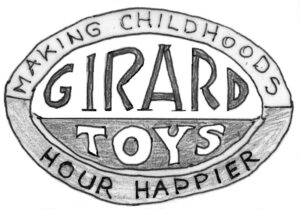 | America |
| GONG BELL | The ‘Gong Bell Mfg. Co.’ was established in 1866 by Abbe, Berton, Cone and Conklin. In 1872 they started the production of toys in East Hampton (New York). Gong Bell mainly produced wooden toys, but they made an exception for the miniature telephone. Their first model was introduced in 1920. Later on several toy dial models were sold with or without bell action and voice in receiver. In 1954 they offered a police chief ride-on motorcycle. Finally Gong Bell switched over to plastic. Trademark: a bell and the firm’s name. | 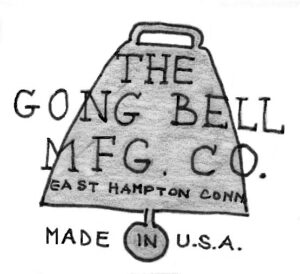 | America |
| GOTHAM PRESSED STEEL | Already active before World War II this New York firm produced mainly household objects. Still some pre-war toys made out of sheet metal are known. For example a handheld vacuum cleaner for children, marble games in the shape of a pinball machine, a baseball-, basketball-, ice hockey- and bowling game. Besides a fair attraction called ‘Skip-ball’, a fighter plane with wooden wheels shooting marbles. Trademark: the initials GPS and the name Gotham set in a triangle. | 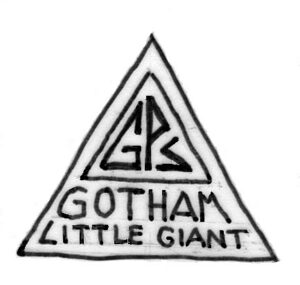 | America |
| HAFNER | In 1907 William Hafner, known for the development of a clockwork motor, approached the hardware firm ‘Edmonds-Metzel Hardware Co.’. Together with his friend William Coleman they became management. This couple introduced the thought of a mutual manufacturing of model trains and other mechanical toys under the brand ‘American Flyer’. The firm name was altered in 1910 in ‘American Flyer Mfg’ and became very successful. Just before the outbreak of World War I Hafner left the company due to a difference of opinion. In 1913 he started ‘Hafner Mfg Co’. His first models were sold as ‘Overland Flyer’ and in 1918 the first electric train set was introduced. In 1933 his son John joined the business. During the 1930s the company struggled under increased competition. In 1937 the company was sold to Alfred Gilbert. Trademark: American Flyer. | 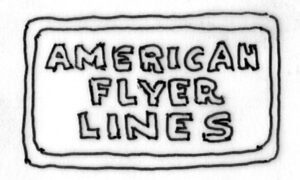  | America |
| HOGE MANUFACTURING CO | This New York firm was founded in 1906 in Manhattan. At first stationery were produced. It took till 1931 before management decided producing tin toys for instance Popeye sitting in a rowing boat (1935). Remarkable was the length of the used mechanism: 3 minutes. The powerful speedboat version even lasted 4 minutes. The same comic figure was produced in a speedboat. The ‘Toonerville trolley’, a creation of the cartoonist Fontaine Fox, was also a hit. The name of the firm was printed on the gas tank of the tricycle. Hoge even sold a luxury coupe model and a streamline electric train. In 1939 the company was taken over by Mattatuck. |  | America |
| HOWARD ELECTRIC NOVELTY | A New York firm founded by Harvey Harper and the Plass brothers in 1904. Only during a short period Howard produced electric trains in gauge 0. In 1911 toy production stopped and they continued focusing on light bulbs and radio tubes. | America | |
| HULL & STAFFORD | Toy firm originally founded as ‘Hull & Wright’ in Clinton (Connecticut). Known for its hand painted toys among others a clockwork locomotive and paddle wheel boat. Their collection mainly consisted of hand painted tinplate toys used as a roller. In 1869 Hull & Stafford took over the local business of Union Mgf. Co. They produced through the 1880s. | America | |
| IVES | In 1868, in Plymouth (Connecticut) Edward Ryley Ives started manufacturing tinplate figures set in motion by a heat source as a candle. In 1872 his brother-in-law Blakeslee joined the firm in Bridgeport and the name changed to ‘Ives, Blakeslee & Co. The collection of this pioneer consisted mainly of mechanical toys driven by clockwork. In the eighties Ives took over ‘Automatic Toy Works’ in New York. Later on they also started producing steam and clockwork trains without rails. The first models, in gauge 0 and I were put on the market after 1901. Edward Ives died in 1918 and his son, Harry, took over the business. Like Bing in Germany, Ives found themselves in serious financial straits after the Wall Street crash. In 1932 the firm was taken over by three competitors: American Flyer, Hafner and Lionel. |  | America |
| JEANETTE | The ‘Jeanette Toy & Novelty Co.’ was founded in 1932 in Jeanette (Pennsylvania). This firm produced a wide variety of toys from a phonograph till a model steam engine. Often the name of Jensen Mfg. Co. is also mentioned on the toy. It suggests a form of co-operation. Tom Jensen was a former Danish citizen who left his country for the USA. The factory temporarily closed at the start of World War II but was reopened for the production of arms. Today the still is active in the field of steam engines and power plants. | America | |
| KATZ | Henry Katz, born in New York and a boyhood friend of Louis Marx, founded his toy firm in 1928. As a former employee of Ferdinand Strauss he produced lithographed Katz Toys (planes, car models) for a short period. He was very successful with an electric train and transformer offered for one dollar during the Great Depression. Due to financial troubles he had to close his company in 1931. For a few years he got a job at Hoge. Trademark: two playing kittens over a ball. |  | America |
| KEYSTONE | The firm originally found as a company manufacturing machine etc. started in 1931 the production of pressed steel toys. As oy manufacturer from Boston they are known for producing among others a clockwork speedboat in the early 1940s. Later followed by war ships. In 1944 they purchased equipment from Kingsbury Toys. | 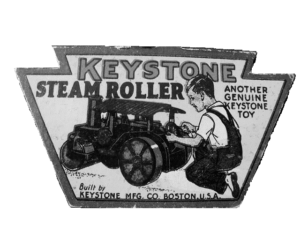 | America |
| KINGSBURY | See under Wilkins. |  | America |
| KINGSTON | This firm in Indiana produced an electric red arrow racecar during the 1920s-1930s as a floor toy. Namely a metal 11-inch car race around a round metal fence. They also put an electric stove for children on the market. Trademark: KoKoMo. | America | |
| KIRCHOF | Charles Kirchof founded this firm in 1852. A manufacturer in Newark known for its lithographed tin noisemakers (clickers). Kirchof produced a wide range of these cheap toys for special events like Halloween. Besides toys Kirchof also produced Christmas ornaments and novelties. Being active up to the 1950s. | America | |
| KNAPP | The ‘Knapp Electric Novelty Co.’ was a toy and game manufacturer founded by David Knapp in 1895. New York firm known for its transportation toys powered by wet cell batteries for example a 2-inch gauge train set. About 1929 Knapp produced ‘American Industry in Miniature’, a sort of work shop filled with all sorts of machinery (such as drills, turning lathes, saws, presses and pulling countershafts) fitted on a wooden platform. From 1931 – 1946 electric trains in gauge HO were produced. Knapp produced also accessories for steam engines. In 1937 the company moved to Indianapolis; in 1948 production ended. | America | |
| LAKESIDE TOYS | After World War II a division of Lakeside Industries started the production of toys. Only a few items were made in tinplate namely ‘Stingray’, an aquafibish terror fish friction powered. In 1964 they launched a range of Gumby merchandise. It consisted of an open jeep with two plastic figures Gumby and his pal Pokey. Both toys were related to popular US television series. Lakeside toys were also in flexible Disney characters such as Donald Duck, Goofy or Pluto. Even Laurel and Hardy or the green Hornet were sold as miniflex toys. | America | |
| LANGSON | The former Hungarian immigrant Otto Langos set up a toy business in Chicago in the 1930s. Manufacturer of tools, dies and stamping materials. Known for some toys (paper guns). Later plastic and die-cast were introduced. Trademark: the initials LMCO in a diamond. |  | America |
| LELAND DETROIT | In 1932 the Leland Detroit Manufacturing Company introduced a monorail set in gauge 0. It consisted of one motorized coach, two coaches and an oval track consisted of 12 support bases. It is probably the only toy produced. Henry Leland (creator of the Cadillac automobile) was the inventor of the toy. A similar toy was presented by the Aero Monorail Company from St. Louis. Nowadays a new reproduction is for sale by Lionel. | America | |
| LINSTROM/LINDSTORM/LINDSTROM | Confusing is the different spelling of the name. The ‘Lindstrom Tool & Toy Company’ was founded in 1913 in Bridgeport (Connecticut). They produced mechanical tinplate toys. For instance several versions of the clown ‘Johnny’, rabbit ‘Bunny’, terrier ‘Laddy’ or climbing monkeys ‘Bill’ and ‘Bruno’. Well known are the circus wagon pulled by an elephant, Mickey Mouse in a racecar, bumper car ‘Skeeter Bug’ or ‘Sweeping Mammy’. The firm furthermore manufactured table top games in several variations, boats and car models. At the beginning of World War II the production stopped. |   | America |
| LIONEL | In 1906 the young Joshua Lionel Cowen and Harry Grant started a business in New York. At first it manufactured electric tramcars, but added trains (gauge 0) and some other toys to the collection after 1910. In 1928 Lionel took over a part of Ives’ collection and increased production. In 1934 a contract with Walt Disney was signed for the production of a handcar operated by Mickey and Minnie Mouse in a clockwork and electric version. This item saved the company from Depression bankruptcy. After 1945 Lionel, sometimes compared with his British fellow worker Hornby, only manufactured trains. Financially they had their biggest success about 1953. Lionel even tried to lure girls. An electric train set was offered in soft mint colors like pink. It became a marketing disaster. During the post-war period Lionel produced a construction kit called the ‘Erector set’. In 1965 the founder died and his son Lawrence took over. In 1967 Lionel purchased the name ‘American Flyer; two years later the firm went broke and General Mills bought the production line. Trademark: the name Lionel, the letter L and since 1900 in a circle. |    | America |
| LUPOR METAL PRODUCTS | This New York firm mainly produced small car models (busses, race cars, trucks and a police car) during the forties and fifties. The collection is parable with the toys made by Louis Marx. Lupor also produced other toys like humming tops. Their items are recognizable by the initials P.D. |  | America |
| MANTUA METAL PRODUCTS | This firm in Mantua was founded by John Tylor and Jim Thomas in 1926. In the beginning they produced model boats. The firm also started the production of motors for model trains as a supplier. In 1933 the business moved to Woodbury Heights. By 1937 Mantua began selling its own model trains in gauge HO. After World War II plastic was introduced. In 1970 the company was sold and production moved to Hong Kong. Trademark: Tyco. | America | |
| MARX | In 1912 Louis Marx started his career as an employee of ‘Strauss, Man & Co’ from New York. After he had been fired he and his brother David bought this well-known toy firm in 1921. They set up their own collection of tin plate novelty toys. They succeeded in buying out a lot of his competitors in the thirties and in that way became the largest toy manufacturer in the world. For instance in 1942 Marx obtained the E.C. Carter Company followed by Unique Arts and Wyandotte Toys in the fifties. Several plants (Erie, Girard and Glen Dale) were operational. Ninety percent of the mass-produced toys were sold by large stores such as Woolworth and Kresge, or by mail order such as Sears. Well-known items: Annie and her dog Sandy, the dog Pluto or piglet Porgy. Even before World War II Marx sold space toys particularly round strip figure Buck Rogers. At the highlight Marx had over 8000 employees in America; subsidiaries abroad such as in England and even in Hong Kong and Japan were set up. Marx toys are not only recognizable by the company name but also by the trademarks ‘Marlines’ and ‘Linemar toys’ (Japan). After World War II tin-plate was no longer in and plastic toys were the future. In 1972 the concern was sold to the Quacker Oat Company for none of Marx’ children were interested in managing the company. Slogan of Marx: ‘Mechanical toys that are durable and mechanically perfect’. McDOWELL Toy firm ‘McDowell Manufacturing Co’ from Pittsburgh was operational during the twenties and thirties. Only a few toys were probably produced. In 1926 Bruno Zabel obtained a patent for a wind up car called ‘Looping the loop’. The company also manufactured a sand toy in the form of a Dutch mill and an oil well. They also produced a rifle for children and a game called ‘Mystery gun’. Mc Dowell was inspired by an old mechanical roulette game. They came out with a small version in tin called ‘The whirling Jockey Race’. A 10 cm toy in diameter with three lithographed jockeys. Production stopped in 1930s. Trademark: MAC. |  | America |
| McDOWELL | Toy firm ‘McDowell Manufacturing Co’ from Pittsburgh was operational during the twenties and thirties. Only a few toys were probably produced. In 1926 Bruno Zabel obtained a patent for a wind up car called ‘Looping the loop’. The company also manufactured a sand toy in the form of a Dutch mill and an oil well. They also produced a rifle for children and a game called ‘Mystery gun’. Mc Dowell was inspired by an old mechanical roulette game. They came out with a small version in tin called ‘The whirling Jockey Race’. A 10 cm toy in diameter with three lithographed jockeys. Production stopped in 1930s. Trademark: MAC. | 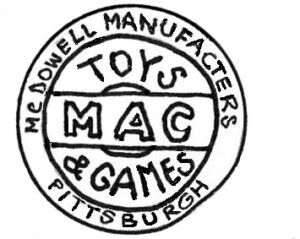 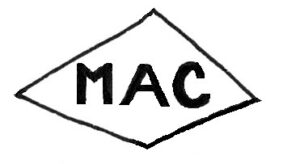 | America |
| MERRIAM | The firm ‘Merriam Manufacturing Co.’ was founded in 1851. Place of business Durham (Connecticut); Merriam manufactured handmade early American tin ware such as spice boxes, milk pails etc. They also produced hand painted toys without a clockwork mechanism. Such as animal figures, the so-called pull alongs made out of tin plate with casted wheels. In the 1870’s the firm abandoned kitchenware and toys entering a new field: metal containers. | America | |
| METALCRAFT | This corporation from St. Louis owned by George Ericson started their toy production in 1931. Their collection consisted of construction kits inspired by the success of Charles Lindbergh with his flight across the Atlantic Ocean two years before. Several models were offered such as a train, airplanes, a hangar even a zeppelin. The first item they manufactured was a tow-truck. This model was followed by several trucks. Because of the Great Depression production stopped in the 1937. | America | |
| MOHAWK | ‘Mohawk Metal Toy Co.’ was founded by Samuel Hoffman in 1919 in New York. He was a former founder of ‘Nonpareil’. They produced tin clockwork car models, trains and miniature wagons. About 1927 Nonpareil purchased the entire Mohawk plant and machinery. Founder Hoffman went back to Chein and became director. | 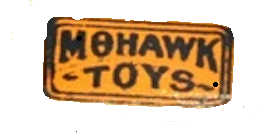 | America |
| MOUND METALCRAFT | This firm started as a gardening toll company. Later toys were added and the name changed in 1955 into ‘Tonka Toys’. Tonka produced a variety of toys for boys especially trucks. Trademark: name in an oval above water with seagull’s overhead. By 1957 the logo changed again. |    | America |
| MOVIE JECKTOR | In 1935 a firm in New York produced two different metal projectors meant for children, namely a ‘Mickey Mouse Movie Jektor’ and a ‘Mickey Mouse Talkie-Jektor’. The movie projector used paper films on wooden brackets. Duration film: 2 minutes. The ‘Mickey Mouse Talkie-Jektor’ was more advanced namely a combined record player with a clockwork motor. Besides an unbreakable double faced 78 records with music by Irving Berlin. The according filmstrips could be played by hand. Also available was a ‘Winnie the Pooh’ version. |  | America |
| MTH LELAND DETROIT | This firm introduced a 3-car monorail in gauge 0operated on 4 to 12 volts. Nowadays these items are still available. |  | America |
| NEFF-MOON | This company founded in Sandusky founded Charles Neff and William Moon. They were specialized in pressed steel car models with interchangeable bodies packaged with a single chassis. The company produced toys from 1920-1925. The firm went into bankruptcy in 1927. |  | America |
| NONPAREIL | The ‘Nonpareil Toy and Novelty Co.’ from Newark (New Jersey} was operated form 1914 till 1933. The French name referred to ‘superior to all’. The founders were all former Chein employees. Management partners were Samuel Hoffman, David and Saul Weil. The first items were several horse-drawn pull toys, later on model trains were added. Some of the manufacture was done for Ferdinand Strauss. By 1918 they started the production of car models and trucks mechanical and non-mechanical). Hoffman left the company and founded ‘The Mohawk Metal Toy Company’. In 1927 Nonpareil bought this toy firm. A year later a huge fire destroyed the factory. The restart was in Newark and later in Bloomfield. In 1933 Kirchhof Patent Company bought the firm. Trademark: firms name in double diamond. |  | America |
| NYLINT | The ‘Nylint Corporation’ was founded by David Nyland and Bernard Klint in 1937. At first the firm in Rockford (Illinois) produced kitchen utensils. After 1945 management decided to produce pressed steel toys. In 1946 Nylint introduced his ‘Amazing Car’ later followed by a range of Ford based models. In the course of years Nylint started using plastic details. In 2001 the firm was taken over by Funrise Toy Co. |    | America |
| OHIO ART | This firm was founded in 1908 by Henry Winzeler in Archbold (Ohio). In 1912 he relocated to Bryan. In 1917 started making lithographed metal toys (climbing monkeys and windmills) and tea party ets. Later on humming tops and boats were added to the collection. They also produced barns that could be used as an accessory for trains and a series of doll prams. In the sixties Ohio Art switched over to plastics. The trademark consisted of a globe and the firm name on a wimple. |    | America |
| ORIANNA METAL PRODUCTS | A toy firm founded in 1941 in Philadelphia known for his fox terrier called ‘Ori-O’. The tin plate pup was available in two versions. The wind up one had a hole for the key in the back of the dog. Orianna also produced a tin plate yo-yo and tops with high speed. The yo-yo was a typical American toy although it was invented in The Philippines. In 1928 it was introduced in the USA. The yo-yo became popular in the 1950s in Europe. Orianna also produced a small high-speed top. Trademark: Oro-O. | America | |
| ORKIN | Samuel Orkin founded his toy company about the end of World War I. In Cambridge (Massachusetts) he just produced large metal war ships of tin and steel operated by a clockwork mechanism. His toys were only sold by Borgfeldt in New York. For about 15 years Orkin sold its products. |  | America |
| PRATT & LETCHWORTH | This firm was located in 1880 in Buffalo (New York). It was founded by Samuel Fetcher, Pascal Pratt and William Letchworth as the ‘Buffalo Malleable Iron Works’. They mainly produced cast iron toys among others horse drawn carriages. Some model trains in tinplate were manufactured. |  | America |
| RANGER STEEL PRODUCTS | This New York firm produced during the 1950 a range of lithographed mechanical wind-up toys such as a train set a basketball player, a bowling alley and two billiard players. Trademark: a cowboy on horseback in a circle. |  | America |
| REEVES | The ‘Reeves Manufacturing Company’ was founded in Milford in 1888. This small company produced several boiler components and toys for only a short period. Since 1912 Reeves produced novelty toys in tin; known for its airplanes and boats. Reeves also produced an impressive roller coaster, a lithographed ‘air-go-around. Reeves stopped their production mid-1920s. | America | |
| SAND TOY | This company in Pittsburg was taken over by Wolverine in 1909 as a result of a bankruptcy settlement. | America | |
| SCHIEBLE | The firm ‘Schieble Toy and Novelty Company’ was founded by William E. Schieble in Dayton (Ohio) in 1909. The collection mainly consisted of steel plate car models without a mechanism. Only a few models were produced out of tin plate; friction motors were used. In 1931 Schieble went bankrupt and production ended. | America | |
| SCHLESINGER | This toy company founded by Leo Schlesinger is known for its clockwork tin toys (horse-drawn vehicles). In 1939 they produced Porky Pig. He employed an average of 16- workers in his factory. Later Schlesinger made open front tinplate miniature kitchens. | America | |
| SCHNEIDER | Joseph Schneider Inc. from New York. Producer of tin toys among others a clockwork racecar model with Mickey Mouse or Donald Duck. The car had rubber tires. Schneider also sold pinball marble tabletop games and a toy phonograph. | America | |
| SECOR | At first Jerome Secor started about 1871 the ‘Sewing Machine Co.’ in Bridgeport. Besides sewing machines caged singing birds like the former automata were produced. About 1878 toys were added. Production only lasted for four years. During that time only six different items were made. Clockwork figures like a full dressed Afro American playing the banjo. Looking at the toys made by Secor a comparison with Fernand Martin in France is valid. | America | |
| SIMPLEX | The ‘Simplex Typewriter Co.’ in New York introduced in 1910 a portable model for children. They produced this toy in different versions of alphabet. It consisted of a rotating keyboard. |  | America |
| STEVENS | This firm was founded in 1843 in Cromwell by John and Elisha Stevens. In the beginning they manufactured simple hand painted toys at a small scale. The rest consisted of cast iron hardware and tools. In 1869 George Brown joined the company. Two years later they started the production of toy steam engines. By 1870 production increased and Stevens employed about 80 workers. A famous item of Stevens was their train model; a floor model without a track. It was produced in tin as well in cast iron. The tinplate ones had a clockwork mechanism. In 1880 the company was dissolved (see also Brown). | America | |
| STRAUSS | New York importer of mechanical toys founded in 1914 by Ferdinand Strauss. Sales went via warehouses and wholesale dealer Borgfeldt. Known items: clockwork minstrel team ‘Ham and Sam’ playing banjo and ‘Tombo’ the Alabama Coon Jigger. Tap dancing ‘Jazzbo Jim’ on a roof was a similar toy produced about 1925. Remarkable in that respect was the comparison with ‘Pan-Gee, the funny dancer’ produced by fellow townsman C.E. Carter Co. It also goes for ‘Jenny the balking mule’ and the resemblance with Lehmann’ Zirka’. Only difference was Strauss used a donkey instead of a zebra and a farmer for a cowboy. The well-known German climbing monkey ‘Tom’ was also imitated. At first named ‘Trixo’, later ‘Zippo’. The Strauss version wore a hat instead of a fez. And there was ‘Dapper Dan’ the dancing black man. At his sixteenth birthday Louis Marx became an employee; in four years he made it to director. A difference of opinion led to the dismissal of Marx. Five years later he was back by buying the firm. Production stopped in the 1940s. Trademark: firms name (left), mechanical toys (right). Above globe with ring and text ‘known the world over’. | 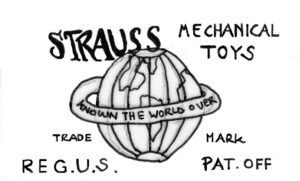 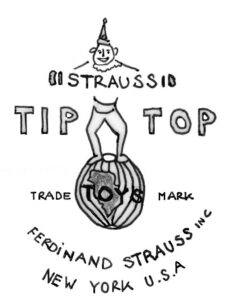 | America |
| STRUCTO | Firm in Freeport (Illinois) founded in 1908 by partners Louis Strohacker and C. Thompson. In 1911 the name changed into ‘Structo Manufacturing’. At the end of World War I the ‘Structo Mfg. Co.’ known for its erector sets introduced an impressive collection of heavy-gauged steel toys. It was only a limited edition of four different leaf spring car models in a box. Either a racecar no. 8, the bear car no. 10, a luxury model no 12 and the dump truck no 14. Structo also manufactured two tractors (br. 11 and 16) and a tank. In the beginning of the twenties Structo put instant models on the market. The private car and truck had a mechanism. The clockwork motor was activated by means of a crank. Furthermore these models had a differential and a transmission for clutching and breaking. Slogan of the firm: ‘Structo Toys make men out of boys’. In 1975 the Ertl Company took over the business. |  | America |
| T CONN | This Newark firm is known for its lithographed cheap tin toys called noisemakers. |  | America |
| TURNER | This firm was founded by John C. Turner in Wapakeneta (Ohio) in 1915. The company was known for its plate steel car models and plane sold with rubber tires operated by a flywheel mechanism. Turner gained experience working at Schieble. Presumably Turner went out of business during the forties. |   | America |
| UNION MANUFACTURING CO | Operational from 1844 till 1869 in Clinton (Connecticut). Firm was supplier for ‘Stevens & Brown’ (see also Hull & Staford). They produced tin toys and steam engines. | America | |
| UNIQUE ART MANUFACTURING CO | This firm form Newark was founded in 1916. One of the first manufactured lithographed mechanical tin toys was ‘Rap & Tap’; two boxers in a ring. Unique Art also sold comic characters like ‘Li’ l Abner and his dogpatch band’. It was based on a comic strip figure and produced in the mid-1940s. This toy looked like ‘the earlier produced Marx Merry Makers’; figures instead of mice. Unique Art also used the American soldier from World War II as an example known by his nickname G.I. For instance ‘G.I. Joe and the K-9 pups’, a 22,5 cm tall lithographed soldier carrying a flat suitcase in each hand. On the front two caged police pups. The mechanism consisted of a leaf spring. They also produced ‘G.I. Joe and his Jouncing Jeep’ and ‘Rodeo Joe’ (cowboy driving a car). In 1949 Unique Art started the production of train sets in gauge 0. In 1952 production ended by the acquisition of competitor Louis Marx. Trademark: a juggling clown. |  | America |
| UPTON MACHINERY | From 1914 after taken over the plant in St. Joseph lithographed tin toys like cars and trucks were produced. The firm also sold oy air dart rifles. Little is known about their range of toys. By 1929 the company no longer existed. Trademark: the name of the company in a circle. Tn the middle the word ‘stop’. |  | America |
| VOLTAMP | The ‘Voltamp Electric Manufacturing Co’ from Baltimore was founded in 1882 by Manes Fuld. He introduced his first toy in 1903 namely a clockwork train. Four years later followed by an electric version operating on alternating current. Locomotive, tender and carriages were made out of brass. In 1922 the company was sold to Boucher Mfg Co. Trademark: name with addition of the words ‘voltage’ and ‘amperage’. |  | America |
| WEEDEN | The ‘Weeden Manufacturing Co’ from New Bedford (Massachusetts) was founded in 1884 by William Weeden. The company offered a variety of steam engines, upright and stationary ones. Barely known is the fact Weeden also produced traction engines, locomotives, boats working by steam and a few magic lanterns. In 1889 they introduced their first steam powered toy trains. They even manufactured electrical motors and a wide range of accessories for steam engines. The firm ended their production in 1952. Trademark: the name Weeden on a small copper plate. | America | |
| WILKINS | In 1880 James Wilkins founded de ‘Triumph Wringer Company’ in Keene (New Hampshire). In 1888 he obtained a patent for a cast-iron locomotive and the ‘Wilkins Toy Company ‘ came into being. The collection consisted of a fire station, fire-engines guns and pull-along toys. Unfortunately, the firm quickly developed financial troubles and in 1894 bought by the youthful Harry T. Kingsbury. Until 1919 the name of the firm renamed unchanged and there was a large increase in model cars. Clockwork cars, racing-cars and fire engines were a distinctive feature. In 1919 the firm changed its name to Kingsbury. At the end of the twenties, when Harry’ s two sons, Chester and Edward, were taken into the firm, the first clockwork model with battery-operated headlamps were produced. They even manufactured mini versions of race models improving world record speed. During World War II they sold their machines and therefore toy manufacturing was stopped. |  | America |
| WOLVERINE | The ‘Wolverine Supply and Manufacturing Company’ from Pittsburgh was founded by Benjamin Bain in 1903. The production consisted of household goods. In 1909 they took over the Sand Toy Company. About 1913 the name changed in ‘Wolverine Toy Company’. They produced among others sand operated and mechanical tin plate toys without or driven by a mechanism. Sand toys by Wolverine were called ‘Sandy Andy’, Panama pile driver’, See Saw or Buzy Andy Trap Hammer’. They even produced sand operated toys. Fair attractions like ‘loop the loop’ or ‘Jet Roller Coaster’ were popular. Wolverine also produced a small ocean steamer, submarines, merry go-rounds, a ski jumper and ‘The Drummer Boy’. About 1928 the ‘Zilotone’ was introduced, a wind up musical toy namely a music master playing on a xylophone. Six different records produced the sound. Wolverine stopped production in the sixties of the last century. |  | America |
| WOODHAVEN | The ‘Woodhaven Metal Stamping Company’ from New York took ‘Animate Toy Co ‘ over in 1934. Woodhaven was specialized in manufacturing clockwork toy models of tractors. Not only in plate steel but also in tin. Production ended about 1939. | America | |
| WYANDOTTE | See All Metal Products Company. | America | |
| CORSARIO | Toy firm founded in 1947 by Julio Dubini. In the beginning the firm was called Dubini; from 1958 the name changed in Corsario. They specialized in car models (trucks with rubber tires). Some boats (among others submarine ‘Pirata’) were also produced. | Argentina | |
| DUBINI | (see under Corsario). | Argentina | |
| EICO | This toy firm was founded by Roberto Bronn in 1952. During some years he manufactured model cars some of them racing models like a Formulea1 car. Eico stopped in 1955. | Argentina | |
| GORGO | Toy firm founded by the brothers Vicente and Natalio Gorgo in 1953. They mainly manufactures tin car models and some motor drivers fitted with a friction mechanism. Later on they decided to switch to plastics. Production stopped in 1989. Trademark: Gorgo in a cogwheel. |   | Argentina |
| HALCÓN | The ‘Automata SA’ founded by Gerold Halcón is one of the oldest toy firms in Argentina. They produced bikes, tricycles and tin toys. In the early fifties they started the production on mechanical tin toys amongst others planes. Trademark: a bird with spread wings above a banderole with the firms’ name and a spoke wheel at the background. |  | Argentina |
| LUSLA | Since 1950 Roberto Lutz and Vladislao Slabkov produced mechanical tin toys covered by plush like Schuco like a drummer boy. | Argentina | |
| MATARAZZO & CIA | The firm ‘Matarazzo & Cia’ in Buenos Aires well known in the food industry was founded in 1934 by the Italian Constable Matarazzo. Popular was his World War I tank and a fire engine. They also produced car models (private cars and trucks), motor drivers and planes. Production went on till 1959. Trademark: circle shaped letter M and words juguetes (above) and Matarzzo (beneath). |  | Argentina |
| OMA | Trademark used by Manuel Hojman. He founded his tin toy firm in 1906. His collection consisted of moneyboxes, carousels (spindle mechanism), car models and summer toys (buckets, water cans). The factory closed in 1980. Trademark: OMA in a vertical oval. |  | Argentina |
| PAVI | Toy firm known in the 1940’s for its cars, race cars and small drums. They also produced swords, pistols. Trademark: name in a triangle. |  | Argentina |
| SAXO | Firm founded in 1959 by Antonino Romeo. They produced a range of car models amongst a convertible in hippie outfit. During the years some parts were replaced by plastic. Trademark: Saxo in a circle or horizontal oval. |   | Argentina |
| VISPA | Firms name is an abbreviation of VIola SPAdetto; founded in 1950 by Lorenzo Viola and Adino Spadetto. Among others they produced a clockwork toy formerly made by the American manufacturer Unique Art, namely ‘G.I. Joe and his Jouncing Jeep’ now called ‘Jeep loco’ under their trademark. Trademark ‘Vispa’ (since 1952) in a diamond shape. |  | Argentina |
| ARTLAG | This manufacturer of toys, located in Sydney, was founded in 1933. They produced metal and tin toys under their trademark Boomaroo from 1954 (among others train, trucks, plane). The name was a combination of the word ‘boomerang and kangeroo’. In the seventies the production stopped. Trademark: a kangaroo on a boomerang and the text ‘boomeroo toys’. |  | Australia |
| FERRIS | Firm founded in 1936 by the brothers Ferris in Sydney. In the beginning they produced car radios. Later on (1949-1958) Ferris manufactured model trains in gauge 0. Focused back on producing radios and televisions. Trademark: text ‘A Ferris product’ in a circle. LECKIE and GRAY This firm from Melbourne produced tin package. Some lithographed items like cars, planes or trucks could be used as a toy although they lack a mechanism. |  | Australia |
| LECKIE and GRAY | This firm from Melbourne produced tin package. Some lithographed items like cars, planes or trucks could be used as a toy although they lack a mechanism. | Australia | |
| ROBERTSON | This firm from Sydney produced tin tambourines. | Australia | |
| WYN-TOY | Firm or trademark manufacturing pressed steel vehicles mainly pull along. Only some models were produced with a flying wheel. Wyn-toys were only sold in Australia and New Zealand. Trademark: the shape of the continent in a circle. |  | Australia |
| DITMAR | A firm in Vienna founded by Karl Rudolf Ditmar known for its manufacture of oil lamps. In 1948 management decided to produce train sets in gauge 0 (clockwork and electric). Later on also in gauge HO. The production of Ditmar stopped in 1954. Trademark; lion within letter A. |  | Austria |
| GNADLER | In 1921 Richard Gnadler started production toy steam engines and metal toys in Vienna. He even manufactured train sets in gauge 0 and in less extent in gauge I in clockwork or electric version. Besides rolling stock Gnadler produced accessories such as stations, signals etc. Their train production stopped around 1960. Trademark: firm’s name embossed. |  | Austria |
| IGRI | In 1947 started Ignaz Richter the production of tin toys in Vienna. His assortment consisted of simple car models without a base plate but also clockwork item. He even sold a clockwork mouse and a tram with a wagon. In 1949 IGRI was taken over by the local firm of Lilliput. Trademark: IGRI in diamond. |  | Austria |
| LILLIPUT | Firm founded by Walter Bücherl in Vienna; employed six workers at the beginning manufacturing tin train sets in gauge 00. In 1949 he took over IGRI and a year later Lilliput introduced plastic. | Austria | |
| LOMA | A minor manufacturer in Vienna which produced model train sets in the period 1946 till 1952. At that time the firm was taken over by Werner Tinkl relaunching Loma sets until 1958. Trademark: Loma, Wien. |  | Austria |
| GILS | Firm founded by Gérard Gilles In Jupille in 1942. The first item he produced on a small scale was a tram. In 1943 Gilles switched over to gauge 0; producing electric model trains. He often used aluminum for his locomotives. His models were sold by warehouses in Liège and Brussels. Gilles stopped production in 1958. Trademark: capital G in circle; underneath Gils. |  | Belgium |
| EAGLE | Toy firm founded by Ben Stein in Montreal. In 1968 his production was taken over by Coleco. Known for its table hockey games. Eagle Toys also an iron for kids. | Canada | |
| DOGGENWEILER | This manufacturer of electric train models started in Santiago in 1933. It was set up the German Doggenweiler and Jorge Yrarrázaba. Originally the company produced under the trademark D & Y. By 1960 Doggenweiler stopped. | Chile | |
| CHINA CAN COMPANY | A firm founded in 1922 in Shanghai by Kiang-Yuen Shang. At the beginning they produced metal packages which were sold in China, Hong Kong and Indonesia. During the 1930s – 50s they also manufactured tin toys such as toy planes, wind-up animals (monkey and frog). Their climbing monkey looks like the one Lehmann in Germany Produced. Trademark: bowl and two rise sticks in circle. |  | China |
| HA HA TOY | Manufacturer in Shanghai founded in 1993. Producer of robots and some other toys like a rugby player. Some parts were made of plastic. In 2021 Tin couple restarted producing tin robots according old models. |  | China |
| KANG YUAN | Produced among others a tin motorcycle in the 1950s and a car model Volkswagen battery driven during the sixties. Sometimes parts are made of plastic. Trademark: K.Y. | China | |
| KOVAP | In 1946 the brothers Sedlák founded a toy firm in Semily. Their first item was a coil-spring road roller. In the period 1954/56 they introduced a tractor with gears. Despite the switch to plastic, tin toys were still produced. At the end of the eighties Kovap even had an offer taking over the production of their German competitor Kellermann. The production of plastic toys was reduced and the focus was pointed at tin items. Novy Hrádek (the former Neubürgles) became the place of business. Nowadays Kovap produces nostalgic toys. The collection consists of several tractors with or without a trailer. They also sell buses, a motorcyclist, a roller, fire engine even a cable car. Trademark: letter A as part of the firm’s name. |  | Czech Republik |
| MERKUR | In the beginning the company sold construction kits. Founded by Jaroslav Vanci in Police. In 1933 they started the production of electric train sets in gauge 0. During World War II toy production was stopped. In 1947 Merkur started again. In 1953 Merkur under the new name Kovonik moved their factory to Broumov fot the Czech government nationalized the factory. Production of metal model trains in gauge stopped in 1968. Trademark: Merkur. Since 2003 Merkur under management of Jaromir Kriz produced modern new sets in tinplate. | Czech Republik | |
| TIOKA | Firm also known as Ikaria or Chemoplast founded by I. Tioka in 1952 in Brno. They produced electric train sets in gauge O; mainly exported to the Soviet Union. In 1960 the firm got nationalized and the name changed in ‘Ikaria’. In 1968 the name changed again in ‘Chemoplast’. Afterwards the production was relocated to the former DDR (East Germany). Trademark: Tioka in horizontal oval; later the letters Ch in a triangle with curved lines. |   | Czech Republik |
| Pionér | Pionér was a manufacturer of electric model trains in gauge 0in the period 1949 till 1965. | Denmark | |
| TEKNO | In 1928 ‘Dansk Legetojs Industri’ started production in Copenhagen. They introduced ‘Ingenior’ a construction kit comparable with Meccano. Founder was the Danish firm of A. Siegumfeldt. Normally the firm manufactured scale models but for Schuco (under license) they produced a Miraco ca with clockwork motor. After World War II they switched to die-cast car models simulate to the Dinkey Toys. Some of the earlier models suffered from zinc plaque. In 1974 Tekno moved to Holland and specialized at truck miniatures. |  | Denmark |
| ACME | This firm produced a few models such as a greyhound race in the 1930’s and a kaleidoscope for children in several versions. In the 1950’s the launched a child’s drum and a money box. | England | |
| BAR KNIGHT | Firm founded in 1910 in Glasgow as manufacturing arm of the Clyde Model Dockyard (a famous local toy and mode shop). Known for its production of scaled model locomotives and steam engines. | England | |
| BASSETT-LOWKE | In 1899 Wenman Bassett-Lowke formed a company in Northampton with a friend under the name of ‘Bassett-Lowke & Co.’. In 1901 they started manufacturing model trains and worked in mutual co-operation with the German firms Bing and Carette. The golden period of Bassett-Lowke was between 1901 and 1914. The first catalogue (a limited edition) appeared in 1901 and the last one in 1963. Some Carette, Bing and Plank products were shown in the first Bassett-Lowke catalogue. In 1901 Henry Greenly joined the firm as technical adviser. Bing manufactured the more expensive, and Carette, the simpler, train models for Bassett-Lowke who were of the opinion that only copies of real trains should be produced. Bassett-Lowke was forced to produce war material during both World Wars. After 1918 the old ties with the Bing company were restored. As well manufacturing in Northampton, subsidiaries were set up in Edinburgh (1922) and Manchester (1929). In 1953 the founder died and the interest in trains disappeared. The new management continued production with industry-models (large models of the type driven by ‘miniature railways’). In 1968 a new firm, Bassett-Lowke (Railway) Ltd.’ was set up and an old tradition was restored. In the late eighties Nigel Turner bought the business. In 2008 Hornby acquired Bassett-Lowke and continued production. Trademark: in a triangle a locomotive (left) and ‘Lowko’ (right). Underneath the name Bassett-Lowke. |  | England |
| BATEMAN & CO | John Bateman had two establishments in London where he produced optical instruments like brass telescopes. He founded the firm in 1774. In the toy business he was known because of the name ‘Model Dockyard’. Besides parts for steam engines Bateman delivered mainly ship models. From 1879 he also manufactured steam locomotives heated by geest. Production stopped about 1890. | England | |
| BEESON | James Stanley Beeson started the production of model trains in 1924. The London firm was known for its perfect detailing. Beeson mainly produced locomotives and rolling stock in gauge 0. A part of his collection was sold by other makers before 1939 (Bassett-Lowke). Movie directors even used Beeson models for trick recordings in Hollywood and British films. Most of his models were produced before 1940. After World War II Beeson changed his raw materials from tin to nickel silver. Trademark: name on a plate. |  | England |
| BOWMAN | A firm in Dereham founded in 1926 by Geoffrey Bowman Jenkins and his cousin Bernard Smart. Bowman already had experience for he had produced wooden toys from 1918. Known for the manufacture of steam locomotives and rolling stock between the Wars. During the thirties production declined. After World War Ii the name and trademark were taken over. Trademark: side view of an arrow shooting Indian with feathers. |   | England |
| BRENNER | The toy firm of German immigrant John Georg Brenner & co. started in Manchester. They produced amongst others clockwork car models from 1914 till the Depression of 1929. Then they decided to continue in a different branch namely the amusement industry. In co-operation with his son Bernard Brenner successfully manufactured some slot machines. Trademark: Brenco. BRIMTOY (see also Wells) The ‘British Metal and Toy Manufacturers’ started in 1914 in London and were operational till 1923. In that year Brimtoy took the model car production over. Later on a merger in 1932 led to ‘Wells Brimtoy’. Besides clockwork cars train sets in gauge 0 were produced. In the thirties the company introduced a sidecar driven by Donald duck and Mickey Mouse. For that purpose they acquired a license of Walt Disney. The ‘Mickey Mouse handcar’ was a hand driven rail vehicle used for inspection. Another examples of Wells Brimtoys: buses, trolley buses, even animal figures. After World War II there was a lacquer of raw material. For that reason they introduced the ‘Pocketoy series’, a combination of tin and plastic parts. Three years later followed by the ‘Wellsotoys’. Some operated by clockwork other by batteries. Trademarks: two wells (a) and the column of Nelson (b). | England | |
| BRIMTOY (see also Wells) | The ‘British Metal and Toy Manufacturers’ started in 1914 in London and were operational till 1923. In that year Brimtoy took the model car production over. Later on a merger in 1932 led to ‘Wells Brimtoy’. Besides clockwork cars train sets in gauge 0 were produced. In the thirties the company introduced a sidecar driven by Donald duck and Mickey Mouse. For that purpose they acquired a license of Walt Disney. The ‘Mickey Mouse handcar’ was a hand driven rail vehicle used for inspection. Another examples of Wells Brimtoys: buses, trolley buses, even animal figures. After World War II there was a lacquer of raw material. For that reason they introduced the ‘Pocketoy series’, a combination of tin and plastic parts. Three years later followed by the ‘Wellsotoys’. Some operated by clockwork other by batteries. Trademarks: two wells (a) and the column of Nelson (b). |   | England |
| BRITAIN | Founder William Britain was born in 1830 in Birmingham. His earliest creations of mechanical toys, forerunners of the coin-operated machines, dated from about 1880. A sailor standing on a box; holding a collecting plate in his left hand and a hat in the other. When a penny was placed, the sailor would move his arm and tip the penny. At the same time he would lift his hat and bow to the giver. Other examples were a walking bear and two coolies with a sedan chair, a whisky drinking Scot and many others. To reduce costs Britain decided to switch. About 1900 Britain and his sons decided to manufacture Hollow lead toy soldiers. Therefore they changed the firm’s name to Britain Ltd. In 1905 they also manufactured accessories for steam engines, a horserace with two or three jockeys and the equestrian. This last toy consisted of a circus act, namely a woman standing on the back of a horse jumping over a stick. During the 1960s they produced a clockwork trailer. Even nowadays Britain is still in business although they switched over to plastic. Trademark: name in a rectangle. |  | England |
| BURNAC | This firm in Stoke-on-Trent produced toy steam engines in the period 1946-1949. | England | |
| BURNETT | This toy firm was founded by F. Burnett and E. Satchwell in 1905 in Birmingham. Burnett used the name ‘Ubilda’ as their trademark.; their slogan was ‘You Build It’. In 1914 they changed their trademark a bit because the company moved to London. The firm is also known for his series car models of which some as a building kit. About 1926 Burnett introduced a floor locomotive with tender. In 1939 the company went into financial troubles and Chad Valley took over the production. Trademark: St. George on horseback. |  | England |
| BUTCHER | W. Butcher founded the firm in 1866 in London. In the beginning they manufactured wooden magic lanterns with brass details and slides. At a later date they manufactured cameras. In 1902 his sons joined the company and the name ‘W. Butcher & Sons. In the period 1913 and 1923 Butcher produced construction kits like Meccano. Some parts were made out of wood. Trademark: Primus. In 1926 they merged with Houghtons. | England | |
| CAMTOY | Trademark used by the ’Cambrian Can & Drum Company’ in 1933 in Port Talbot (Wales). As a manufacturer they sold metal ware. Mechanical toys were one of the products sold by wholesale dealer Strowe & Co. The produced car models looks like the Mettoy products. Trademark: firms name in a diamond. |  | England |
| CARSON | In 1906 James Carson started the manufacture of model steam trains in Cricklewood (a town in North London). His production consisted of models in gauge I, II and III. Production stopped in 1914. | England | |
| CHAD VALLEY | This toy firm was founded in 1897 by Joseph Johnson in Harborne, the company name being taken from the river Chad that flowed near the factory. At first they only produced games and jigsaw puzzles. In 1904 on the death of the founder, the management was taken over by his son, Alfred. After World War II they started producing soft toys, in particular a great number of teddy bears, in a subsidiary factory in Wellington. The tin collection, especially car and bus models, was introduced during the thirties. After 1939, Chad Valley became widely known for the introduction of the ‘Ubilda’ car construction kit, and after the death of Alfred Johnson, Sir James Curtis took over the management. The rights to the range was from Burnett. In 1948 the ‘Ubilda’ construction kits were enlarged with a fire engine, no. 10033 and a locomotive, no. 10010. The cars, racing cars, buses, etc., were made from an aluminum alloy. In 1949 Chad Valley also produced clockwork trains in gauge 0. A few years later they decided to stop tin production and to use plastic instead. By 1960 they had 7 factories and employed 1000 people. |  | England |
| CHILDS & SMITH | A toy firm in Atherstone, a town near Birmingham. They produced simple tinplate toys; some of the were operated by battery such as a helicopter remote controlled Their trademark: Nulli secundus, a Latin word for not inferior to anyone. The company appears in directories for the last time in 1958. | England | |
| CODEC | Unknown manufacturer from Britain. Produced tin toys during 1950/60s like toy cash registers, a small clockwork car model, a car with ‘Dopey Joe’, a tin garage with cardboard backroad, a clockwork taxi. Some of the parts were made out of plastic. |  | England |
| COWAN DE GROOT | A London firm founded by S.D. Cowan and A. de Groot in 1919. At first they operated as a wholesale dealer in toys. After World War II they also produced tin toys like a by sand operated toy ‘Merry Builders’, ‘Dalek’ (a robot from the popular BBC television series Dr. Who), a telephone exchange and a clockwork taxi. Presumably they manufactured a ranch phone annex moneybox under license in the 1950s. The firm also produced cash registers for children. Trademark: Codeg. |  | England |
| CRESCENT | A London firm founded by Henry Eagles and Arthur Schneider in 1922. They started the production of tin soldiers. In 1937 the factory went to Tottenham. During World War II production of toys stopped. During the 1950s Cresent produced a clockwork toy tractor with rubber tires. The figure behind the stearing-wheel (Harry Hayseed) was made of tinplate. The same figure as the Tricky Trackman appeared sitting on a railway-lorry. Later only plastic toys were made. The company ceased trading in 1982. | England | |
| ELY CYCLE CO | About 1912 a toy manufacturer produced the ‘Gyro Mono Railway Car’ (gyroscope in mono railway). This toy always operated to the left according to the text on the cardboard packing. In the fifties ‘Progress Toy’ from Blackpool made a new attempt for a similar toy. |  | England |
| EVANS | This London toy firm produced train sets in gauge 0. R.M. Evans & Co started in 1937. They manufactured in the late 1940s and early 1950s. Components were made for other suppliers. Evens ended manufacturing large scale steam models. Trademark: letters RME in circle. |  | England |
| GLAM TOY PRODUCTS | Toy firm founded in 1935 in Porth by the German immigrant Jacob Beatus. Its collection consisted of small car models, a garage, boats and planes. The production was sold by the mass market retailer Woolworth; Glamtoys were offered unboxed to the public. Firm in 1953 dissolved. Trademark: G.T.P. | England | |
| GLASMAN | In 1921 the Glasman brothers Joseph and Hyman started the production of toys. Under the trademark Betal simple train sets in gauge 0 were produced. They used clockwork or electric motors. Betal also manufactured double deck buses and trolley buses. As extra a battery was fitted for the headlight. About 1953 Josef bought out his brother. Plastic became the main material. | England | |
| HORNBY | Hornby had an unusual start for a company, Frank Hornby, started creating toys for his own children. The result was the world-famous construction system, Meccano. In 1901 Frank Hornby, then thirty-eight years old, took out a patent for Meccano and until 1907 it was called ‘Mechanics mad easy’. In 1918 he introduced his first clockwork train to his clients. The printed trademark on the locomotive showed the initials M.L.d.L. (abbreviation of Meccano Ltd Liverpool). From 1932 till 1941 Hornby manufactured car construction kits amongst others three different versions. Clockwork models; had the firms name on the rubber tires. In 1933 Horny introduced his first ‘Dinky Toys’, which scored a real hit later. Founder Frank Hornby died in the same year, but Meccano Ltd. in Liverpool went on. In 1956 Meccano introduced a car construction kit, which consisted of a chassis with three different coachwork variations. It was followed by a set of larger scale-models. In 1964 the firm was taken over by Lines Brothers. Six years later production was stopped. |  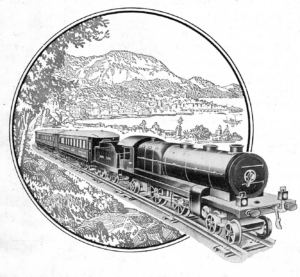 | England |
| JETCRAFT | Toy firm from Charlesworth operational from 1946 till 1953. Known for its small ship models run on a tablespoon of Methylated spirit. |  | England |
| JUBB | The firm of ‘W.H. Jubb Ltd.’ from Sheffield produced steam engines and some locomotives in the period1915-1922. Supplier for the firm of Bassett-Lowke. Trademark: JLS in a circle. |  | England |
| JUBB | William Jubb founded this toy firm in 1915 in Sheffield. He produced scale toy trains in gauge I and 0. The wagons were partly made out of wood. Due to financial difficulties Jubb decided to stop production. Trademark: JLS (Jubb Limited Sheffield) in oval. |  | England |
| LATIMER | Latimer Productions from Teddington produced a range of stationary steam engines during the mid 1940 sand 1950s. The models were named L1 till L5. |  | England |
| LEEDS MODEL COMPANY | The firm was founded by Rex Stedman in 1912. Manufacturer of a large range prewar locomotives and railroad coaches in gauge 0. The rolling stock were handmade and partly made of wood with lithographed details. At a later date electric t model trains were added. Trademark: LMC in oval. |   | England |
| LINES BROTHERS | In 1919 this toy firm was founded in London by the brothers Walter, Arthur and William Lines. They had decided to go into business independently from their father, who was one of the owners of the toy firm ‘G. & J. Lines’. Sales were not only meant for England (for instance Harrods) but also the colonies. In 1925 a second factory was opened in Merton (an outskirt of London) due to increasing sales. In 1927 the trademark ‘Tri-ang’ was registered. In 1931 lines took over the oldest and finest toy and model shop in the world, the ‘Toy Store’ in Regent Street. The pre-war collection consisted of such toys as pedal motorcars, doll’s prams, doll’s houses, rocking horses, wooden pull-along toys and last, but not least, mechanical and non-mechanical metal toys. During the thirties the collection was expanding by the introduction of Minic clockwork car models. Other interesting products were some steam lorries, a tractor and model vans with a long-running clockwork motor. Lines became a concern by buying other toy firms and the establishing of subsidiaries. During World War II toy production stopped. After 1945 counted 4,000 employees. In 1964 Meccano Ltd. Liverpool joined the Lines Group. Despite an effort the firm went bankrupt and parts were sold. |  | England |
| MALINS | Toy firm founded in 1937 by Geoffrey Malins in Birmingham. They were specialized in stationary steam engines. Later on Malins manufactured models of steam vehicles. After World War Two they revitalized the business. By 1946 a limited range of steam toys were produced. The highlights of Malins were in the 1970s. In 2024 the company closed. Trademark: Mamod (a portmanteau op MAlins MODels). |  | England |
| MARX | This firm had its origin in America. In 1932 the Marx brothers David and Louis set up a company in Dudley. After World War II they moved to Swansea. In 1967 the UK subsidiary was sold. | England | |
| MECHANEX | This firm provided small simple power boats made of aluminum. They had a plane color and were powered by a drop of methylated spirit. |  | England |
| MERSEY | ‘Mersey Model Ltd.’ was a toy firm in Liverpool founded by Ernest Claus about 1934. The factory produced a small range of steam engine and steam-powered toys (speed boats). Production started in 1936; five years later it stopped after a bombardment in May 1941. | England | |
| METTOY | The founder of this firm was Philipp Ullmann, a former director of the German firm Tipp & Co., who fled to England in 1933. He started business in Northampton with the manufacture of mechanical motorcyclists, trucks and planes. They even produced toys for girl like a tinplate doll house with garage. Between 1934 and the outbreak of World War II they gained a certain reputation for themselves. During the war they had to produce war materials. After 1945 they continued mass production of the old collection for a while. The company employed some 6000 people. From 1952 tinplate toys were replaced by plastic and ‘Corgi Toys’ was launched. |  | England |
| MILLS | Toy firm founded in 1919 by three Mills brothers in Sheffield. They produced model railways in gauge 0. The first locomotive models with clockwork; later on electric ones were added to the collection. The production of model railways stopped in the 1960s. Trademark: ‘Milbro’. |  | England |
| MOBO | In 1948 the London firm Sebel Products produced the rocking Bronco. This toy with saddle could not be steered till 1952. In that year the magic steering was introduced. By pushing a pedal the horse could move in that direction. Trademark: Mobo. PATON, CALVERT & Co Toy firm from Liverpool founded in 1887. In the 1930s they produced many toys with Walt Disney figures. Only a few were clockwork operated. Their trademark: Happynak. PEDLEY & Co. This toy firm W.R. Pedly & Co from Willenhall produced in the period 1893-1965. Under the trademark Remanco a tin pressed steel water toy pistol was sold in the 1950s. They also sold a miniature domestic model mangle and a lawn mower and pistol type gas lighters. For some toys Pedley used wood. |  | England |
| PATON, CALVERT & Co | Toy firm from Liverpool founded in 1887. In the 1930s they produced many toys with Walt Disney figures. Only a few were clockwork operated. Their trademark: Happynak. | England | |
| PEDLEY & Co. | This toy firm W.R. Pedly & Co from Willenhall produced in the period 1893-1965. Under the trademark Remanco a tin pressed steel water toy pistol was sold in the 1950s. They also sold a miniature domestic model mangle and a lawn mower and pistol type gas lighters. For some toys Pedley used wood. |  | England |
| PRESTYN | This London firm sold a wide range of toys amongst others race car ‘Sulman special’, a waggling duck or goose, two boys on a seesaw. Post war items: control tower and two circling planes, a rocking cradle with baby and peck-peck birds. | England | |
| RANDALL | Toy firm set up by J. and L. Randall in Potters Bar. Known for the manufacture of stationary steam engines and accessories from 1946 till 1955. They used two trademarks, namely Merit (general toys) and SEl. SEL is an abbreviation of Signaling Equipment Ltd. and used for technical such as electric motors, steam engines and student microscopes. In 1970 the company was sold to Letraset. |   | England |
| SEBEL | A firm in Erith near London under the name D. Sebel & Co produced a line of toys. He started at the end of World War Two producing hollow metal ride-on horses. During the ride the legs worked forwards and backwards on small wheels. They also sold tricycles; less known are the toy boats Sebel made of aluminum driven by batteries. In 1970 the company was bought by the Barclay Toy Group. Two years later production stopped. Trademark: Mobo. SYDNEY BIRD & Sons This firm from Enfield produced a range of horizontal steam engines between 1947 and 1953. These models were sold by the brand name ‘Clydon’ (an amalgamation of Sydney Bird’s two sons names Cyril and Donald. |  | England |
| SYDNEY BIRD & Sons | This firm from Enfield produced a range of horizontal steam engines between 1947 and 1953. These models were sold by the brand name ‘Clydon’ (an amalgamation of Sydney Bird’s two sons names Cyril and Donald. |  | England |
| SUTCLIFFE | In 1885 John William Sutcliffe founded a sheet-metal company in Horsforth near Leeds. His first toy item, produced in 1920, was a large battleship powered by a water-circulating engine, heated by a spirit burner. From about 1928 Sutcliffe used clockwork mechanisms specially imported from Germany. After World War II a number of small speedboats were introduced. Sutcliffe closed its doors in 1982. Trademark: steering wheel of a boat bearing the name of the firm. |   | England |
| TRI-ANG | See Lines Brothers. | England | |
| TRIBE & AUSTIN | This Liverpool manufacturer sold steam engines and a steam wagon in the period 1919-1921. | England | |
| WALKER | Joseph Walker from Birmingham introduced a hand painted figure sitting behind an easel holding a pencil. By turning the disc in the platform a portrait occurred on paper, Its showed the silhouette of an contemporary personality like statesman Gladstone, lord Wellington or queen Victoria. Walker also manufactured a Hindu snake charmer smoking a pipe. By pushing down the handle the pipe bowl disappeared in the soapy water. The next moment a bubble appeared. In the same period Walker used the patent of the climbing monkey in the palm tree. The variant, namely a climbing miller produced by a German competitor, became a huge success. Trademark: the initials J.W.; underneath the letter B in a sort of shield. WELLS (see also Brimtoy) In 1919 toolmaker Alfred Wells began manufacturing tin toys on a small scale in Islington (London). In 1929 he moved to Walthamstow and designed very popular clockwork trains sold by Woolworth’s. At the end of the twenties Wells produced cars, planes, fir-engines and shooting-games in addition to trains and stations. In 1932 the London firm Brimtoy Ltd. was taken over. Hereby the collection was expanded with train sets, large vehicles like buses, trucks, racecars and a postal car. Following a large order by the Royal Air Force Wells changed over to the manufacture of war materials. In 1945 the ‘Wells Brimtoy Distributors Ltd’, was founded. One of their models called ‘The wonder car’ looks like a Schuco model. They also produced tin toys for girls. Items like cookers or a carpet sweeper were offered under the trademark ‘Welsotoys’. At the end of the fifties the great flow of cheap Japanese toys increased, gave difficulties. Machinery was moved to another factory in Holyhead for the production of household goods. Clockwork toys were made at the London factory in Walthamstow. In 1965 the founder died, the firm ran into financial difficulties and was taken over by ‘C.M.T. Wells Kelo Ltd’. |  | England |
| WELLS (see also Brimtoy) | In 1919 toolmaker Alfred Wells began manufacturing tin toys on a small scale in Islington (London). In 1929 he moved to Walthamstow and designed very popular clockwork trains sold by Woolworth’s. At the end of the twenties Wells produced cars, planes, fir-engines and shooting-games in addition to trains and stations. In 1932 the London firm Brimtoy Ltd. was taken over. Hereby the collection was expanded with train sets, large vehicles like buses, trucks, racecars and a postal car. Following a large order by the Royal Air Force Wells changed over to the manufacture of war materials. In 1945 the ‘Wells Brimtoy Distributors Ltd’, was founded. One of their models called ‘The wonder car’ looks like a Schuco model. They also produced tin toys for girls. Items like cookers or a carpet sweeper were offered under the trademark ‘Welsotoys’. At the end of the fifties the great flow of cheap Japanese toys increased, gave difficulties. Machinery was moved to another factory in Holyhead for the production of household goods. Clockwork toys were made at the London factory in Walthamstow. In 1965 the founder died, the firm ran into financial difficulties and was taken over by ‘C.M.T. Wells Kelo Ltd’. |  | England |
| WHITELY TANSLEY & CO | In 1916 Ernest and James Whitely founded a toy firm in Liverpool. They started the production of clockwork cars. About 1920 Whitely produced stem-engines only for a short while. Their collection consisted of trains, tank ‘Barney E1, several car models (trucks, buses, sedans etc.). In 1923 one of the owners died. The firm continued under a new name: ‘Garnett, Whiteley & Co.’. Trademark: Whitanco. |  | England |
| WINDSOR MODELS | This London firm is known for producing train sets in gauge 0 during the 1930s. | England | |
| AUTAJON ET ROUSTAN | AUTAJON et ROUSTAN A maker of toy cars and vehicles active in Paris between both World Wars. Used materials: lead and tinplate. They went out of business in 1947. Trademark: A.R. |  | France |
| AVOIRON | Henri Avoiron, the successor to Petitnicolas, was a Parisian manufacturer who produced from 1893 to 1922. Some of his toys incorporate lead castings. Trademark: H.A. |  | France |
| BARRE | A Parisian firm founded by Hyppolyte Barre, Rue Morand 21 The collection consisted of steam ships. Trademark: H.B. in circle. | France | |
| BICHON & BARRAL | Firm formerly known as L. Chenel, Rue de Thorigny 4 in Paris. Manufacturer of a wide range of car models. They produced electric toys from 1922. | France | |
| BONNET | The Parisian firm founded by Victor Bonnet took over the production of Georges Flersheim in 1919. In this way Bonnet possessed the creations of Ferdinand Martin. The collection consisted of several car models and animal figures (frock, crocodile, pigeon). They also sold hand painted cyclists, trucks, fire engines, cranes even canons. Bonnet used a pull mechanism for the Renault racecar or a leave-spring for tracker ‘Auto-transports’. One of the Bonnet brothers, Robert, was manager of Jouef for a while. In 1965 stopped production. Trademark: VéBé. |     | France |
| BRIANNE | Parisian firm situated Boulevard Saint-Martin founded by engineer Lucien Brianne about 1900. This company not only produced electric model trains but also accessories like stations, It is said that Brianne produced a gift for the French nation handed over to the Russian tsar. Production stopped before World War I. | France | |
| BRUNAT | Marcelin Brunat founded a toy firm in 1844 in Paris and was located in the Rue de Belleville 15. Next to children trumpets blow toys in the shape of a bird were offered. Also animal figures were produced. Brunat was the successor of M. Dandrieux. | France | |
| C.I.J. | See Citroën. | France | |
| CAMELIN | Emile Camelin manufactured musical toys for example small lithographed tin music boxes in Montreuil-sous-Bois. Firm production: 1910-1940. Trademark: E.C. |  | France |
| CHERET | E. Cheret, Rue Magenta 33 in Paris. Unknown toy importer by profession. | France | |
| CITROËN | André Citroën was the founder of the toy firm producing a great many perfect scale models of cars. They were launched under the trademark ‘Le jouets Citroën’ and were mostly of scale 1:10 and sometimes 1:7. The factory in which these models were produced stood in Briare. During the years 1926-36 several Citroën car models were produced. In 1936 the firm C.I.J. (‘Compagnie Industrielle de Jouet’) took over production. In the twenties this toy firm had already introduced some lovely clockwork model cars such as an Alfa Romeo. The manufacture of the Citroën toy car models went over to J.R.R. just after World War II, but only a few Citroën trucks model T 45 were produced by this firm. |  | France |
| CLÉMENT | Parisian firm from Paris producing a submarine that returned to the surface of the water by means of an oxygen tablet. Clement was active in the 1910s. | France | |
| DE ANDREÏS | In 1922 the Italian Giacomo de Andreïs moved to France and started a firm in Marseille. He produced lithographed tin plates for advertisement purposes (signs) and toys. In 1936 his son Mario de Andreïs registered the trademark EGDA. In 1951 the factory moved to e new premises. They produced a simple truck model in various versions (amongst others a military ambulance and a fire-engine). The trucks had different printing and no mechanism. In 1961 the firm has taken over by Carnoud & Forges. Trademark: EGDA. |  | France |
| DESSEIN | Didier Dessein from Paris produced among others hand painted ships made of in or zinc. He also had train sets with or without clockwork mechanism in his collection. About 1876 Georges Potier took over the firm. Dessein was rewarded at the World Fairs in 1867 and 1878 by winning gold medals for its toys. Trademark: D.S. (see also Lefevre). |  | France |
| DONOT | Jean Rabier Donot, who was in charge of ‘Jouets Citroën’, set up his own business in 1937. Besides tin car models like Citroën he also produced a race boat. In the mid-sixties the factory closed. The cooperation with Citroen lasted till 1965. Trademark: the initials JRD. In a X-mas tree and the Citroën-logo. |  | France |
| EDOBAUD | Firm founded by Edouard Baud in Villeurbanne in 1928. Production was taken over by Oyonnax in 1930. Manufacturer of scientific objects such as electric trains and accessories (signals, bridges, cross -overs). They also produced a construction kit and accessories for steam engines. About 1938 production stopped. |  | France |
| EDOBAUD | Edouard Baud (1928-1939) was a minor manufacturer of electric model trains almost gauge I in size. Several metals were used. Edobaud located in Oynaxx also produced scientific toys. Even accessories like crossing barriers, signals and even a water tank were manufactured. The production was sold by Galeries Lafayette a warehouse in Paris. | | France |
| FAIVRE | In 1860 Jules Edmond Faivre founded a firm specialized in mechanical tin toys for instance a figure riding a tricycle. A man decently dressed in a costume; the clockwork mechanism between the back wheels. Hand painted model trains became the most important items, but clockwork cars were also produced. Their trademark, FV, became well known and registered in 1876. The Edmond brothers and Fernand Lefevre took over the firm. Seven years later Roussel and Dufnen were directors. The firm of Faivre stopped after World War I. Trademark: F.V. in vertical ellipse. |   | France |
| FOURNEREAU | In 1931 Jean-Edmond Fournereau from Seine-et-Oise took over Marescot. During the years he manufactured model trains and building kits. Fournereau was also the publisher of ‘Loco Revue’, the oldest model magazine in France. In 1950 his son took over; firm stopped in the sixties. Trademarks: front of a steam locomotive; black square at the background. Initials J.F. on a spoke wheel. |  | France |
| GASPARD & GAUBIER | Post war toy manufacturer of small clockwork car models from Paris. During the 1950’s they produced a tiny plane circling above a hangar with a weight as counterpart Trademark: GG. |  | France |
| GEM | This firm was founded by Georges and Ernest Meril in Marseille in 1945. In the beginning they produced just wooden toys. Their train sets in gauge 00 were manufactured in cooperation with the German supplier Konrad Dressler. Their tin collection consisted of simple car models without mechanism. GEM also sold a friction driven open racecar. This 45 cm model had rubber tires. Trademark: GEM. |  | France |
| GIL JOUETS | Parisian firm founded by Gilbert Dutrou. They mainly produced model ships. In the beginning run by flat batteries, later on remote controlled. Till the seventies Gil sold a variety of nautical toys; civil ones (trawlers, speed- and tugboats) as well as military ones (destroyers, submarines). His toys were sold by a select group of Parisian shops. Trademark: firm name with big letter G in double diamond. |   | France |
| GMP | A manufacturer founded by Gilardi, Mouraux & Poittier: electric trains (1951-1951). |  | France |
| GUTMANN & CIE | Although founded by Mery Gutmann in 1906 in Nuremberg the firm went to France. In the thirties they not only produced paint-boxes but as toys (car and plane models). For example a big streamline car nearly 35 cm long. Also simple race cars (two versions), an ambulance, steam locomotive and a truck called ‘colli expres’. In 1950 Gutmann introduced his crash car at the Lyon Industrial Fair. It became very popular in England and the United States. Not a novelty for Gutmann already launched something similar thirty years earlier. Trademark: Memo and a face of a child in a circle. |  | France |
| HELLER & COUDRAY | Parisian firm founded in the beginning of the 20th century. Richard Heller was a manufacturer of electric and scientific goods. They delivered train sets and accessories (stations, signal boxes, bridges), ships, steam engines and magic lanterns. | France | |
| JML | Jouets Moderne Lyonnais, Jouet Magnin Lyon or Jouets Mécaniques de Lyon were the names used by a toy firm which manufactured motorcyclists during the thirties and forties. They produced four models in different sizes (from 12 till 35 cm long). The clockwork mechanism used was mounted at the back wheel. They also sold versions with a sidecar or cargo bike and planes. Trademark: JML. |  | France |
| JOUEF | Originally Jouef manufactured powder-boxes, cooking pans, pipes. After World War II the Parisian firm specialized in mechanical and electrical toys. In 1949 they introduced their racetrack ‘Trans-sahara’. They also produced toy planes and tractors. In 1951 Jouef (abbreviation of Le Jouet Francais) showed their first mechanical train in gauge HO. Followed in 1955 by the ‘Southern Express’, their first electric version. They slowly changed over to the use of plastic for their toys. After several take over the firm was bought by Hornby in 2004. Trademark: Jouef. |   | France |
| JOUETS DE PARIS | In 1902 Dufrien and Roussel started a toy firm in Paris. In the beginning they produced mainly trains, ships and some car models. Seven years later they went bankrupt. In 1909 the local firm of ‘La Société Industrielle de Ferblanterie’ (S.I.F.) took over the production after a huge fire in the factory in -blancreuil. Their trademark ‘Jouets de Paris’ remained (see also S.I.F.). |    | France |
| JOUETS MECANIQUES DE FRANCE | Toy firm founded in 1946 by Jean-Marie Moheng and Pierre Moheng in Marseille. In 1952 they started cooperating with Armand Walther. Between 1950 and 1957 they produced model trains in co-operation with the German manufacturer Conrad Dressler for France. In 1957 they took over GEM and stopped production in 1972. Trademarks: JMF or Wamoo. |   | France |
| JOUSTRA | This firm was founded in 1935 by the André and Paul Kosmann brothers in Strasbourg. The used mechanisms were originated from the Savoie. Their pre-war collection consisted of a variety of car models but also some planes and ships were manufactured. Joustra was very successful in those days. After World War II the collection counted about 200 items. Gradually tin was changed in plastics. In 1999 the firm was sold to Heller Models and moved to Normandy. Trademark: Jouef is an aggregation of Jou(ets) and Stra(sbourg). The building shown is the local cathedral. |   | France |
| JOYAX | Toy Firm founded by Francis Lan in 1946 in Marseille. In the beginning wooden toys were produced later followed by tin ones. They produced simple train sets, car models. Joyax even bought foreign model motorcyclists (like Einfalt) in order to expand their collection. In the beginning of the eighties firm disappeared. Trademark: Joyax in diamond. |  | France |
| LA HOTTE ST NICOLAS | A firm located in St Nicolas d’ Aliermont founded by the brothers Denis. In the beginning they produced clocks. After World War II they changed to toys among others a scooter, a lift truck and an ice seller on a cargo bike under the name La Hotte. The firm also manufactured boats, planes, car models and tractors. Later on they used plastic as a basic material; production ended in the sixties. Trademarks: a flywheel with the head of an elephant; in 1947 replaced by St. Nicolas. |  | France |
| LAPIERRE | Auguste Lapierre produced magic lanterns in Paris from 1848. In 1876 his son Edouard took over the business; new models were introduced. In 1883 the Lapierres opened their own shop in Paris. In 1902 Edouard sons Maurice and Rene joined the firm. The name was changed into Lapierre frères et Cie. In 1908 they emerged into Demaraia-Lapierre. | France | |
| LEFEVRE | Edmond and Fernand Lefevre in the Rue Aumaire 15 were the successor of Dessein, Faivre & Potier. The collection of hand painted toys consisted of soldiers, dolls stoves and also trains, tricycles, coaches and ships. Trademark: FV/DS. | France | |
| MALTÊTE & PARENT | Charles Maltête founded a firm producing mechanical toys about 1850. In 1876 he decided to join forces with George Parent. They started a toy firm situated in the Rue Debelleyme 19 in Paris. The collection consisted of (rowing) boats, trains, cyclists and animals (mechanical fishes and swans). In 1880 the co-operation stopped and Parent went on his own. The ship models driven by steam were followed in 1882 by electric versions. About 1900 simple clockwork trains were added to the collection. Several patents were obtained. Unknown when the production stopped; probably short after the turn of the century. |  | France |
| MARESCOT/FOURNEREAU | Toy firm founded about 1919 by Robert Marescot in Vesnet. Known for his extravagant highly detailed train models in gauge O. In the beginning clockwork driven later electrical ones. The firm was taken over by Jean Fournereau in 1931. | France | |
| MARTIN | Fernand Martin started in 1880 on the Boulevard Ménilmontant 90 in Paris. Within a few years he employed a number of workers, mainly female, for the assembly of his toys. Martin’s creations were excellent examples of hand painted tin toys with a clockwork mechanism. Sometimes a twisted rubber band was provided as a mechanism. From 1895 his toys mainly were covered by a costume made of cloth. Like some other manufacturers Martin had a nose for current events for instance the theft of the Mona Lisa from the Louvre. Another example is the discover ace of the North Pole. Martin produced about 800,000 toys over the years. In 1912 the company was taken over by Georges Flersheim who sold it in 1919 to Bonnet & Cie. Till 1937 some Martin toys were still sold (see Bonnet). |  | France |
| MARTINAN & LARNAUDE | Manufacturer located in Paris; firm founded in 1920. Manufactured clockwork car models, planes, tanks and trains. After World War II even American car models battery driven. Trademark: ML. |  | France |
| MÉCAVION | Pre-war manufacturer of simple construction kits available as gyro-plane or double decker. Founded in 1925 by Heller & Maurice Coudray in Pouilly later in Fourchambault. In 1947 the factory moved to Arsonval near Troyes. Mécavion went out of business in 1955. | France | |
| MIGAULT | Fernand Migault had a factory in Briare and produced watches and some toys such as a carousel and a fish (carp). Trademarks: initials MF and clowns head in cog-wheel or LJM. Abbreviation of Les Jouets Migault. Migaults was also named regarding the toy manufacturer CIJ (Compagnie Industrielle du Jouet) founded in 1920. |  | France |
| PAPIN | Toy firm founded by the brothers Armand & Charles Papin from Versailles. They sold a pair of clowns. Trademark: AP entwined and ‘marque deposé’. |  | France |
| PÉAN | Firm founded about 1890 by Charles Auguste and his brother Jules Émile Péan. Subsidiaries in Paris and the North French town of Creil. In 1908 they produced four acrobats made out of composite at a horizontal bar (no mechanism pure gravity). Trademark P.F. |  | France |
| PINARD | Parisian firm founded in 1900 by Eugéne Pinard and located in the Rue Charlot 24. Supplier of hand painted car models, some driven by a driver. Pinard also manufactured a model of a plane (see also Righetti & Pinard). | France | |
| PINTEL | The Parisian firm of M. Pintel manufactured car models (flywheel) and also animal figures on wheels and train sets. | France | |
| RADIGUET | In 1880 Arthur Honore Radiguet expanded his collection with optical materials and models driven by steam or electricity. In 1882 partner Georges Jules Massiot joined the Parisian firm. Radiguet produced among others hand painted boats and ships. Details were often made out of brass. Probably production ended in 1902. Clyde Model Dockyard (Glasgow) sold the products of Radiquet & Massiot in the United Kingdom under their own name. RICHARD et CO Firm founded in probably Paris by Albert Richard. Known for its car models. Trademark: RCP and clown figure. |  | France |
| RICHARD et CO | Firm founded in probably Paris by Albert Richard. Known for its car models. Trademark: RCP and clown figure. |  | France |
| RIGHETTI & PINARD | Toy firm in Paris known for its hand painted car models and planes. They probably produced in the period 1900-1920. | France | |
| ROITEL | See Rossignol. | France | |
| ROLLET | Before World War II founder Charles Rollet introduced a toy model car with trailer called ‘Transport rapide’. Followed by a tank and a crane. Later on his son joined the business. In the 1960s Rollet produced space toys like an electric flying saucer called ‘Virevolte’ with plastic parts. Trademark: C.H.R. |  | France |
| ROSSIGNOL | In 1868 Charles Rossignol founded a firm in Paris. In the beginning the collection consisted of cast-iron toys, later on expanded by steam engines and accessories. On a later date hand painted tin toys (car models, tramways, carousels, planes, ships) were added. In 1889 the founder died and the name was changed into ‘Société Veuve Ch. Rossignol et Cie’. Rossignol was one of the first manufacturers who switched to lithographed tin. From now on detailing was possible. About 1920 trains were added, although without tracks. Just before World War I the first Rossignol trains in gauge 0 were introduced. Followed by electric versions. In 1930 the firm name was changed in ‘Roitel-Rossignol & Cie ’due to the fact that Roitel was one of the designers. Between 1932 and 1938 Rossignol manufactured many car models; a battery was added for the lightning. In 1962 production stopped. Trademark: C.R. |   | France |
| ROUSSY | Toy firm founded by Louis Roussy with partner Rene Trubert about 1927 in Paris. Supplier of model trains in gauge 0. The factory also produced lead soldiers even electric car models after 1936. In this field Roussy had to compete with the German firm Tipp who also sold electric car tracks. The current was supplied by a slide contact at the bottom of the car. Roussy is also known for its mini version of the Micheline. This forerunner of the subway was a train car running on rubber tires over a track. In 1949 the firm was taken over by M. Chauvel. Trademark: boy dressed in a sailor suit sitting on a model train called ‘Le rapide’ and the initials LR. |   | France |
| S.I.F. | Abbreviation of ‘Société Industrielle de Ferblanterie’, a consortium of toy firms founded in 1899 in Paris by Jules Villers. By 1906 the company expanded and a large factory was opened. In 1909 they took over ‘Le jouets de Paris’ (see above). The collection consisted of car models and was followed by the introduction of model trains in gauge 00 in 1925. At the end of the twenties their first electric train models were sold. The factory was located in Montreuil-sous-Bois. Next to train sets J. de P. also produced submarines and boats. Instead of fantasy versions real scale models sometimes larger were introduced. In 1965 they closed down the factory. Trademarks: SIF, followed by J. de P. and JEP after 1932. |   | France |
| SAINT MIHIEL JEUNE | A Parisian toy firm founded in 1880 as Saint Mihiel. After 1906 named Saint Mihiel Jeune. They produced penny toys (car, plane and train). Trademark: SMJ. |  | France |
| SFA | Abbreviation of ‘Societé de Fabrication et d’ Assemblage’, a toy firm founded in 1936 in Montreuil. A supplier of car models and motor cycles. Like their German counterpart Schuco SFA produced ‘Le singe patineur’ (a monkey covered in cloth on a clockwork operated step). In 1964 they produced a flying saucer. Their production stopped in 1960. Trademark: SFA. |  | France |
| SIMON & RIVOLLET | From 1890 this Parisian firm produced pewter/tin castings for penny toys. Trademark: S.R. | France | |
| TANTET & MANON | Louis Manon started in 1879 in Paris a small toy firm. A year later Pierre Tantet joined the company. They produced hand painted tin toys. Next to train sets also a variety 0f horses and carriages, cyclists and car models. Even animal figures with friction mechanism belonged to the collection. For instance an amusing mouse sitting on a cat. In 1902 ‘Jouets de Paris’ bought the firm. |  | France |
| VÉBÉ | (see Bonnet) | France | |
| VULLI | This firm was founded in 1945 by M. Joseph Vullieme. The first Mont-Blanc toys in tinplate were introduced in 1947. Besides clockwork figures, friction cars a variety of toys was produced. Later on plastic was used like remote controlled planes. Trademark: Mont-blanc. |  | France |
| ADAM | Carl & Richard Adam founded a firm in formerly east Prussian Koningsberg (nowadays Kaliningrad) in 1893. A year later their trademark is registered. Carl Adma was a brilliant inventor but no businessman. In 1895 Lehmann from Brandenburg took over the production due to financial troubles by Adam. Not only the machinery but also the patents were obtained. It is remarkable that Lehmann used his own logo next to that of Adam. Trademark: a dancing female figure. |  | Germany |
| ADRIAN UND RODE | Firm founded in 1872 by Karl Adrian and his partner Heinrich Gustav Rode. The factory in Velbert was known for its toy guns and pistols. In the fifties Adrian und Rode sold Mekanik, a building system comparable with Meccano. Export to different countries. They stopped production in 1967. Trademark: name and initials. |  | Germany |
| ALBERSDÖRFER & BERGMANN | This Nuremberg firm situated in the Raabstrasze was well known for its lithographed carousels with small planes. In the beginning they offered hand painted toys; later on they switched to lithographed tin. A founding year is unknown. The toy production ended in 1934. |  | Germany |
| ANDREE | Firm in Gotha founded in 1880; producer of steam engines and magic lanterns. | Germany | |
| ANDRES | Max Andres from Schwenningen am Neckar was active from 1928 till 1975. In the beginning they started as a manufacturer of clocks. About 1931 they began their own production of clockwork mechanism. Under the trademark ‘Alpha’ Andes introduced building kits like Meccano in a broad variety. Between both World Wars Andres sold a canon building kit for kids. |  | Germany |
| ARNOLD | In 1906, in Nuremberg, Karl Arnold started producing hand painted accessories for steam engines. From 1910 on they switched to lithographed tin. Thereafter Arnold acquired a patent on built-in flint mechanisms. In the years before World War II the collection contained small boats, submarines, fire engines and the earlier mentioned accessories for steam toys. Apart from a standstill during World War I, tin plate toys were produced until the late fifties. After Karl Arnold’ s death in 1946, the management was taken over by a son-in-law, Christian Ernst. Ernst joined the company in 1935. In those days the firm produced particularly such toys as clockwork cars, tractors etc. Lots of success Arnold had with the application of a remote control by means of a cable. In the 1960s Arnold introduced a range of ‘Rapido’ S gauge (= 9 mm) model trains. In 1995 Arnold became financial difficulties and was taken over by Rivarossi. BeBu Trademark for Jacob Berg from Mainz Budenheim. He founded the ‘Blechwarenfabrik KG’ in 1926. They produced tins for the food industry. After the ending of World War II Berg decided to manufacturing toys, among other helicopters made of tin. Soon afterwards they decided to stop with this trail. |   | Germany |
| BeBu | Trademark for Jacob Berg from Mainz Budenheim. He founded the ‘Blechwarenfabrik KG’ in 1926. They produced tins for the food industry. After the ending of World War II Berg decided to manufacturing toys, among other helicopters made of tin. Soon afterwards they decided to stop with this trail. |  | Germany |
| BECKH | In 1939 Ottmar Beckh took over the production of the Nuremberg firm of Adolph Schuhmann. He was forced to sell because of political pressure. Immediately military toys were added. In 1949 Beckh continued the manufacture of toy trains in gauge O. In the fifties he switched over to HO. He also decided using plastics as basic material starting by parts of the locomotive. In 1973 production was ended. Trademark initials OB (1) and locomotive with capital C (2). |   | Germany |
| BELLMANN & CO | In 1922 this firm started production in Berlin. In the beginning they produced all sorts of items made of wood, metal and bakelite. Later Bellmann manufactured toys consisted of several materials. After 1945 Bellmann had a factory in Ansbach near Nuremburg. Wellknown is the Accident car nr. 505. This model collapsed hitting an object. Because their knowledge Bellmann was one of the first German manufacturers who used plastic as raw material. They continued production till 1977. Trademark: Initials BC or Belco. |  | Germany |
| BERKENKAMP & SCHLEUTER | Toy firm from Nuremberg founded in 1864. At the beginning accessories for dolls and summer toys were made. Even after World War II they were active as supplier of car models. Prewar trademark: B & S with abbreviation NGB (Nuremberg). After 1963 they used the trademark B & S. |  | Germany |
| BETZ | In 1920 August Ludwig Betz decided the production of toys in Jena. Short-lived Betz manufactured clockwork trains in gauge I. Despite technical improvements such as an automatic ……. Betz also had problems with zinc plaque. Production was stopped in 1924. Trademark: ABJ. |  | Germany |
| BILLER | In May 1935 a former Bing-Werke employee (engineer) Hans Biller went to the Chamber of Commerce. He listed himself as a manufacturer of tin toys. A part of his machinery was originating from the bankrupt firm of concurrent Johann Philipp Meier, known for his penny toys. Biller introduced clockwork railway sets. He also sold a model racecar with adjustable front wheels. During World War II the factory was bombed for Biller made war material at that time. After 1945 Biller produced cranes, racecars and helicopters, but the railway sets were the most important items. Biller toys were provided with a logo consisting of a key en the capital letter B. At the beginning of the sixties Biller also switched to plastic as a basic material. In 1977 management decided to stop production due to foreign competition. Trademark: locomotive (10 and capital B with winding key (2). |   | Germany |
| BING | In 1863 Ignaz and Adolf Bing started a wholesale business in household goods and toys in Nuremberg under the name ‘Gebrüder Bing’. In 1879 they started production on their own; changed the name into ‘Nürnberger Metall- und Lackierwarenfabrik Gebrüder Bing (see a). The initial trademark b was used on toys during the period 1900-19. The intertwined initials G.B., trademark c also indicated a Bing toy. Meanwhile Bing employed over 4000 workers. In 1919 the B.W. trademark was introduced. One of the first actions of the successor Stephan after the death of Ignaz was the establishment of ‘Concentra’, their own sales organization. Several divisions were set up, including stocks and ample-rooms, were established all over Europe. During World War I Bing worked on many orders for the army and increased their staff. In 1920 had about 10,000, three or four thousand involved with toy manufacturing. The Wall Street crash in 1929 meant the downfall. Concentra fell into financial difficulties. Despite an annual sale of about 27 million DM Bing was in serious trouble. Stephan Bing had to leave the firm. In 1932 the production was stopped. Competitors like Bub, Falk and Kraus took over the production equipment. Bings’ collection included not only mechanical toys but also optical and electric material. Trademark (5) was used in 1933 for the last time incorporated with the Bub trademark. |      | Germany |
| BIRKMANN | Toy firm in Nuremberg; active 1850-1880. Known for its hand painted carriages. | Germany | |
| BISCHOFF | Joseph Bischoff founded his toy firm in 1899 in Nuremberg. He mainly produced lead soldiers and a range of penny toy vehicles. Production stopped in 1938. His trademark: two crossed swords and his initials J.B. |  | Germany |
| BISCHOFF | The toy firm of Wilhelm Bischoff in Dresden started in 1910. Their production mainly consisted of steam engines upright and stationary ones. Often the initials will be found on the pressure gauge. Bischoff also produced parts of hand painted ships. Production stopped in 1930. Trademark: W.B.D. | Germany | |
| BLOMER & SCHÜLER | In 1919 Richard Blomer and Leonhard Schüler started the production of mechanisms. About 1930 they started the production of mechanical tin plate toys. The first item they introduced was an elephant called ‘Jumbo’. Animals were their favorite prewar items for they also manufactured a walking bulldog called ‘Bully’. In the U.S. Zone-period Blomer & Schuler produced a jockey on horseback. After World War II they specialized in roundabouts. Some helicopters were produced as well as a turkey spreading its wings. Financial problems occurred. Before 1940 their sales went via wholesale dealers and new competitors from Japan and Hong Kong arrived. In 1974 Herbert and Adolf Schüler decided to stop production.T rademark: elephant Jumbo and initials B & S. |   | Germany |
| BLUMHARDT | Heinrich Blumhardt founded ‘Blumhardt & Cie’ in Stuttgart in 1830. The collection consisted of stoves, ships and train sets. In 1971 they were taken over by Bernard Hehr. Since 1968 he started a small collection of replicas of Märklin trains in gauge 0 and some car models in Schwaikheim a place near Stuttgart. | Germany | |
| BOCHMANN | Carl Bochmann founded his firm ‘Fabrik feine Metallspielwaren’ in Dresden. His prewar collection consisted of train sets mainly in gauge 0 although they also sold some in gauge I. Bochmann also produced model train accessories such as stations, signals etc. Some car models are known. Toy production lasted twelve years; the factory was bombed during World War II. In 1956 the company was incorporated in the VEB Prefo and plastic toys were made. Trademark: Cabo. |  | Germany |
| BOLZ | In 1875 Lorenz Bolz founded his firm in Zirndorf, a village near Nuremberg. In 1880 het started the production of zinc tops but gradually Bolz switched over using tin as basic material. Their exports went mainly to the United States. In 1913 the firm developed the top with pump mechanism, followed in 1924 by the introduction of the first 4-note chords top. The technique was developed and in 1917 Bolz showed a humming-top with 20-note chords. After World War II, Paul Henkel, a son-in-law of the founder, took over the management along with his wife Anni. Besides the humming-top production, which was approximately 90 per cent of the total sales, Bolz, also manufactured tin musical boxes and summer toys such as buckets, spades and watering cans. The new safety regulations were partly the reason Bolz switched over to plastic. Trademarks: LBZ or Elbezet. The firm is still in business. |   | Germany |
| BOSENECKER | Toy manufacturer in Nuremberg. They produced cheap train sets for the wholesale (Ullmann & Engelmann. No trademark. | Germany | |
| BRANDSTÄTTER | In 1876 Andreas Brandstätter founded a firm of the same name in Zirndorf. In the beginning he produced cashbox mountings and locks. Later on he switched to the manufacturing of tin toys. The collection consisted of moneyboxes, cash desks and toy telephones. In 1921 the business was taken over by his son Georg. In those days Horst and Michael Brandstätter used ‘Geobra’ as trademark. After 1954 plastic became the main material used in toy manufacturing. This resulted in the introduction of Playmobil in 1970. |  | Germany |
| BUB | In 1851, in Nuremberg, Sigmund Bub started producing tin toys with or without clockwork. In 1883 his son Karl joined the management. About 1905 Bub started producing clockwork trains. Electric specimen was introduced before World War I as a result of the co-operation with Carette. In 1933 Bub was one of the competitors who took over a part of Bing-Werke. In the catalogue of the same year Bub put his own initials next to those of Bing. Sales went via wholesale. In an attempt to avoid import costs Bub set up a factory in Aylesbury together with Tipp. From 1938 the English division was operated by son-in-law Albert Huck. During World War II the factory was bombed several times. After 1945 they started to rebuild and Bub introduced an electric train in gauge S (=32 mm.) in 1951. It was a failure and even switching the gauge did not prove to be successful. Bub stopped production in 1966. Trademark: a windmill and initials K.B. |   | Germany |
| BUCHNER | Supplier of hand painted toys such as boats and ships without a mechanism. Their horse-drawn carriage had a mechanism. Founded in Nuremburg around 1836. Trademark: |  | Germany |
| BÜHLER | In 1860 the firm was founded by the brothers Bühler at Triberg located in the Black Forest. The factory produced milled toy clockworks. In 1924 they decided to set up a division in Nuremberg, because they were too far away from their clients such as Bing, Hess, Tipp and Schreyer. In 1927 Bühler used the coil-spring clockwork for the first time, followed in 1929 by a friction mechanism. Over the years many variations have been made. According to the wishes of manufacturers the standard clockwork mechanism ranged in size from 0,12 mm to 0,35 mm. Nowadays clockwork motors are still made and the Bühlers’ trademark (a spruce-fir) is to been seen on many keys and mechanisms. CAROGATTI (Mechanische Institut) In 1872 C. Carogatti from Konigsberg offered locomotes powered by steam. At that time Otto Moewig was the owner. |  | Germany |
| CARETTE | In 1886 the Frenchman Georges Carette started production in Nuremberg under the name ‘George Carette et Cie’. As his partner Hopf had connections with Bing. Carette became an early supplier of Bing, but later on he went his own way. At the International Exhibition of 1993 he was the first manufacturer who offered an electric train. Paul Josephtal, his new partner, had connections with an English colleague, Wenman Bassett-Lowke. A sort of co-operative started and Carette manufactured all the railway-carriages and even some locomotive models for Bassett-Lowke. By about 1910 Carette was also producing clockwork cars, boats and planes. The folding windscreens and handbrake were particular details on some model cars. After the outbreak o World War I, curette had to flee to his native country, because he was still a French citizen. In spite of all the efforts by Josephtal, the factory had to close in 1917. The firm was taken over by Richard Bauer; the founder died in the twenties in France. Several trademarks. |     | Germany |
| CAROGATTI (Mechanische Institut) | In 1872 C. Carogatti from Konigsberg offered locomotes powered by steam. At that time Otto Moewig was the owner. | Germany | |
| CASIGE | The name is a compund from Carl Sieper (founder) and Gevelsberg (factory) and known for its toy sewing machines. In the beginning only keys were made. The first toy was manufactured in 1902; production stopped in 1975. Trademark: a huge German eagle with a key. |  | Germany |
| DANNHORN | This firm was founded by Max Dannhorn in Nuremberg in 1872. He produced toys made out of lead and tin for instance tops and magic lanterns. Dannhorn also manufactures hand painted tin toys like a dancing pair with a violist. In 1921 production was ended and Bing took over. Trademark: a pine tree with a hunting horn and the initials M.D. |   | Germany |
| DEUERLEIN | In 1889 Josef Deuerlein founded a toy firm in Nuremberg, His hand painted production of trains and accessories of steam engines was sold by the wholesale dealer Ullmann & Engelmann in Fürth. In 1901 the firm was taken over by Carl Schorn followed by Oscar Wolf in 1918. Martin Fuchs finally took over in 1930 and business moved to Zirndorf. | Germany | |
| DIETRICH | Toy firm in Ludwigsberg known for its doll stoves. | Germany | |
| DISTLER | In 1900 Johann Distler decided to start production in Nuremberg. In 1921 the founder died and the direction of the firm was taken over by Braun and Mayer. The collection was extended considerably. The pre-1914 tin toys offered were penny toy road vehicles. In 1935/36 the members of the board had to flee to England for political reasons. Ernst Völk took over the Distler production and two years later he also bought Trix. At that time the collection consisted of cars, planes, trains (gauge HO), railway stations and novelty toys. Despite a short revival after World War II partly because of a Porsche car model operated by a battery, Distler decided to stop in 1962. Trademark: the initials J.D. and a teasel later followed by a globe with JDN. |     | Germany |
| DOLL & CO | In 1898 tinsmith Peter Doll started with his partner Isaak Sondheim. In the early years they manufactured all sorts of stationary stem-engines and accessories. The co-operation lasted till 1909; Doll left the firm. Sondheim became the only owner; the name of the firm kept unchanged. In 1911 his nephew Max Bein joined the management. About 1927 the expert Reichel joined the Doll team from Bing. Not only steam engines, but also novelty toys and trains were produced. By 1923 the Doll company was led by Bein and Sondheim. In 1936 the Doll production was taken over by the bigger Nuremberg firm of Fleischmann. Persons of Jewish origin were according of the Nazi regime not allowed to have possessions. Fleischmann still continued to make trains under the Doll Trademark. Two years later they decided to reduce the production. |  | Germany |
| DRESSLER | Konrad Dressler, a former worker of Jean Schoenner, decided in 1918 in Fürth to work for himself. Till about 1935 the collection consisted of roll bells drawn by animal figures made out of wood and covered with cloth (plush). Dressler also offered summer toys (sand forms, sprinkle- and sand trucks). The production was aligned for the export. In 1929 the firm started with the production of tin flint-canons and other military items. Dressler choose for wooden or Elastolin composition guns, kitchen- or Red Cross carriages. In 1937 the first clockwork armed reconnaissance vehicle was made. After World War II Dressler switched in 1946 to simple train sets in gauge 0. The KD trademark was registered in 1948. In 1952 his son Rudolph joined the company. Dressler produced tin toys till 1956. Then they decided to use plastic. Because a suitable successor was not available the factory was closed in 1970. |  | Germany |
| EBERL | Hans Eberl was the founder of the Nuremberg firm about 1900. In the beginning hand painted toy figures like a frog, cricket, clown or dancing bear were produced. After the switch to lithographed tin Eberl introduced the ‘Ebo Motor’ a clockwork car with a brace on both sides. Wound up at first the car made speed, then turned sideways, fell again on its wheel and continued the ride. Eberl manufactured a variety of car models. He also created the stately peacock ‘PAO-PAO’ (coil spring), the horse drawn cart ‘HOT-HOT’ (coils spring), the clown ‘TA-RA-RA-BUMM’ driving a car or the chicken ‘GIK-GAK’ with a chick as coachman. He also was responsible for an elephant with kornak and a street organ. Production stopped in 1929; taken over by Richard & Co. Trademark: H.E.N. (Hans Eberl Nuremberg). |  | Germany |
| EICHNER | Toy manufacturer from Nuremberg founded in 1834 by Georg Leonhard Eichner. He produced hand painted horse drawn carriages. In 1860 his son Johann Philipp joined the firm and the name changed into ‘Blech- und Lakierwaaren-fabriek von G.L. Eichner’. Later on Phillip called himself Jean. In 1880 he had to close down because the increased competition of toys mass produced. A year later he joined Lehmann as his partner at the start in Brandenburg. He died in 1884 and Lehmann became the sole owner. | Germany | |
| EINFALT | In 1922 the brothers Georg and Johann Einfalt and partner Heussinger founded the firm in Nuremberg. Georg was a former worker of Distler (uncle) and Johann was employed by Bub. Nearly the whole collection was exported, partly by wholesaler Kohnstamm. The tin toys made by Einfalt were animal figures, car models (some without a clockwork), roller coasters, small planes and clockwork steamrollers. Until 1935 some of their novelty toys were marked G.E.N. Later on they changed it to ‘Technofix’ and it became their trademark. After World War II they continued their basic material. Under new management, led by the sons Alfred and Johann junior, they switched to plastic. In 1978 they stopped the production. |  | Germany |
| EINFALT & KOTSCHENREUTHER | Toy firm from Nuremberg. During the twenties they produced car models, ships, submarines. In 1933 the firm was taken over by Hörndlein. Trademark: Ei-Ko. | Germany | |
| EISENMANN & CO | Joseph Eisenmann manufacturer from Fürth, started in 1875 as a wholesaler, known for his Lehmann look-alike cockchafer. He also sold a wind-up plane revolving a tower. In 1908 he established his own factory in England named The Chiltern’s Toy Works. In Cheltam he produced soft toys. Trademark: Einco. | Germany | |
| ERDEL | Toy firm founded by Leonhard Erdel & Co in Zirndorf. Production of simple toys started about the end of World War I. Sells went by wholesale. Known for its clown on barrel. | Germany | |
| FALK | In 1895 former Carette employee Josef Falk decided to work on his own. The lion’s share of the Falk collection was formed by steam engines including accessories and magic lanterns. As one of the first manufacturers he sold hot air motors. By taking over a share of the bankrupt firm of Jean Schoenner in 1910 or 1912, Falk expanded his own collection of ships, submarines and trains. Remarkable are the magnetic tin toys. After World War I Falk sold some steam engines with a combined Bing logo as prove for his co-operation. In 1935 the firm was taken over by Ernst Plank; otherwise the whole business would have been forfeited. Several trademark amongst the Kaiserburg tower. |     | Germany |
| FEWO | In 1950 Arthut Fehn and his partner L. Wolf started a troy firm in Coburg. They produced mechanical toys made out of metal and fabric. In 1951 They moved to Dörfles a place nearby. When Wolf left the company the name changed into FECO. |  | Germany |
| FEYERABEND | A post war manufacturer from Reichenswand (near Nuremberg). Founder Wilhelm Feyerabend was successful with a music car despite his small production. Trademark: Feyco. FISCHER (Georg) In 1903 Georg Fischer started the production of tin toys in Nuremberg. In the beginning the factory moved away several times. The assorted collection contained small and simple mechanical lithographed penny toys (with or without clockwork mechanism). Fischer only used a pull mechanism for two toys: a climbing monkey and a plane. 80 percent of the collection was exported before World War I. Later on Fischer organized his own sales. During the mid-twenties train sets (even without tracks) were sold. After World War Ii they specialized in model trains. Plastic was used for tires of car models. By 1949 Karl and Werner Fischer were the proprietors. In 1963 the latter stepped down and replaced by Margaretha Fischer. Four years later Werner Fischer continued the ‘Georg Fischer Blechwarenfabrik’ as sole owner. Trademark: the initials GF or a crowned seahorse. FISCHER (Gustav) Gustav Fischer started his ‘Blechspiel und Metallwaren-Fabrik in 1879. As place of business he choose for Zöblitz. They produced mainly toys for girls such as stoves with accessories. Fischer also sold electric models for real cooking. After World War II the Fischer factory was located in the DDR and the firm transmitted into a Volks Eigener Betrieb (VEB). From this period a train model with tipping wagons is known. Trademark: a crowned sea horse. From 1936 ‘Efzet’ was used. After the reunification the production ended. FISCHER (Heinrich) In 1908 Heinrich Fischer, known as a toy manufacturer of trains, started production in Nuremberg. He also manufactured car models. In all probability Fischer introduced the first toy cars with battery-operated headlights. Novelty toys were also produced. One of his best-known toys was exclusively made for the United States; the ‘Toonerville Trolley’ in 1922. A year later Fischer obtained a patent for a fat lady sitting in the back of a truck, also for the American market. Fischer ended his production in 1931/32 because of an incorrect calculation on a small clockwork train set. Trademark: a fish. |  | Germany |
| FISCHER (Georg) | In 1903 Georg Fischer started the production of tin toys in Nuremberg. In the beginning the factory moved away several times. The assorted collection contained small and simple mechanical lithographed penny toys (with or without clockwork mechanism). Fischer only used a pull mechanism for two toys: a climbing monkey and a plane. 80 percent of the collection was exported before World War I. Later on Fischer organized his own sales. During the mid-twenties train sets (even without tracks) were sold. After World War Ii they specialized in model trains. Plastic was used for tires of car models. By 1949 Karl and Werner Fischer were the proprietors. In 1963 the latter stepped down and replaced by Margaretha Fischer. Four years later Werner Fischer continued the ‘Georg Fischer Blechwarenfabrik’ as sole owner. Trademark: the initials GF or a crowned seahorse. |   | Germany |
| FISCHER (Gustav) | Gustav Fischer started his ‘Blechspiel und Metallwaren-Fabrik in 1879. As place of business he choose for Zöblitz. They produced mainly toys for girls such as stoves with accessories. Fischer also sold electric models for real cooking. After World War II the Fischer factory was located in the DDR and the firm transmitted into a Volks Eigener Betrieb (VEB). From this period a train model with tipping wagons is known. Trademark: a crowned sea horse. From 1936 ‘Efzet’ was used. After the reunification the production ended. |  | Germany |
| FISCHER (Heinrich) | In 1908 Heinrich Fischer, known as a toy manufacturer of trains, started production in Nuremberg. He also manufactured car models. In all probability Fischer introduced the first toy cars with battery-operated headlights. Novelty toys were also produced. One of his best-known toys was exclusively made for the United States; the ‘Toonerville Trolley’ in 1922. A year later Fischer obtained a patent for a fat lady sitting in the back of a truck, also for the American market. Fischer ended his production in 1931/32 because of an incorrect calculation on a small clockwork train set. Trademark: a fish. |  | Germany |
| FLEISCHMANN | In 1887 Jean Fleischmann started an engraving company in Nuremberg. At the beginning he produced bronze figures and plates and Plank und Uebelacker belonged to their clients. In 1898 het launched his trademark: a trumpeter on a dragon boat. This meant the start of the toy production. The collection consisted of floating, magnetic tin toys such as geese, ducks, fish and small boats. A little piece of iron was soldered into the mouth of the creature or in the front of the boat and, by means of a magnet, it was possible to pull the toys through the water. Later on clockwork mechanisms were used. In 1917 the founder died and his wife Käthe and Jeans brother Jobst continued the business. From 1920 all Fleischmann toys were fitted with a trademark. In 1928 the firm Leonard Staudt was taken over. Staudt had to stop production because no successor was available. Fleischmann took over roundabouts with built-in musical boxes and mechanical figures like dancing clowns etc. In 1933 after the falloff the Bing empire Fleischmann took over workers. In 1936 another expanding was realized by taken over a lot of Doll models. In 1940 the sons Johann and Emil Fleischmann took over and their only interest became the production of trains. In 1967 they introduced an auto race called ‘Ralley Monte Carlo’. In 1948 they introduced their electric gauge 0. In 1952 Fleischmann stopped producing ships followed by steam engines in 1969. In 2019 Fleischmann trainsets are taken over by Roco. |  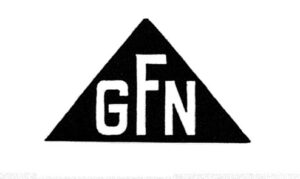 | Germany |
| FÖRTNER & HAFFNER | Both the Förtner family (Nuremberg) and Haffner family (Fürth) possessed a factory where tin figures were made. In 1928 they decided for a close co-operation in the ‘Vereinigte Spielwarenfabrik Andreas Förtner und J. Haffner’s Nachfolger’. This Nuremberg firm manufactured flat tin soldiers, roll bells, children’s scales and cash desks. In 1927 the firm was taken over by Stephan Bing and partners; the firm’s name was changed to ‘Vereinigte Spielwarenfabrik’. With the introduction of the Trix construction kits, the name was changed to ‘Trix’. Trademarks: JHN, AF or Anfoe. |   | Germany |
| FUCHS | In 1919 Martin Fuchs started in Zirndorf, a little village near Nuremberg. Until 1925 he manufactured goods such as celluloid baby rattles. The next stage in development was the manufacture of zinc tops that were hand-made and painted. Fuchs also extended his collection by taking over some Bing articles, such as some roundabouts and a Ferris wheel. The last hand-made humming-tops disappeared about 1935 and tin became the basic material. In 1930 Fuchs took over the local firm of Deuerlein. Since 1947 his son Friedrich joined the firm. In 1950 the founder retired, and died in 1953. Toys exported from Fuchs were always sold by way of the wholesale trade. From the beginning all the Fuchs models were labeled; a new logo was introduced in 1955. Some items for example a washing machine with built-in dryer operated by means of battery. At the present time humming-tops still represent the most important part of the collection. In 1985 tin was replaced by plastic. Peter and Eberhard are the present directors. Trademark: MFZ. |  | Germany |
| GÖTZ & SOHN | This Fürther firm was founded in 1876 by Christian Götz. In 1906 his son Konrad joined management. Before World War I the collection consisted of hand painted mini dolls houses like a bathroom. Military goods were manufactured during both World Wars. After 1945 under management of Georg Götz switched their collection. From now on clockwork car models and a fairy attraction in the shape of a non-stop roller coaster were produced. Still mini kitchens equipped with washing machine, oven and refrigerator were produced. Götz belonged to the first group of toy firms that switched over to plastic. In 1966 the firm was declared bankrupt. Trademark: Göso. |  | Germany |
| GREPPERT & KELCH | This Brandenburger was founded in 1919 by Greppert & Kelch. The production mainly consisted of carriages, car models (race cars and trucks), motorcycles etc. In 1920 took over ‘Metz & Duncker’ and ‘Tellus Werke’. The firm name changed into ‘Vereinigte Blechspielwaren-Fabriken Gundka’. The main part of the production was sold to other countries. In 1924 nearly 500 people were employed. In 1930 H. Hille took over and a year later parts of the local Oro-Werke were merged. After 1945 toy production was continued but only on a smaller scale. In 1953 the firm was expropriated and changed in a VEB. Trademark: G & K. |  | Germany |
| GRÖTSCH | One of the few post war toy manufacturers in Fürth. In 1954 Georg Grötsch, a former employee of Friederich Beck, started the production of simple model trains. He introduced electric ones in gauge 0. Same parts were still made out of tin. Grötsch also produced accessories like a signal box. From 1958 train sets in gauge HO. Gradually plastic was used. Production in Nuremberg (1970-1978). In 1978 Grötsch decided to stop. Trademark: GGF or GGN. |  | Germany |
| GÜNTHERMANN | The founder, Siegfried Günthermann, started in 1877 by manufacturing tin toys in Nuremberg. On a modest scale hand painted toys were produced, later on followed by lithographed items. The main collection was sold to America. After the death of the founder, Arnold Weigel, who meanwhile had married the widow of Günthermann took over management. In the period before World War I particularly car- and race models, tramcars and planes were produced. In 1920 Weigel died and Leonhard Günthermann continued the business. During World War II the factory was hit three times. In 1951 it was rebuilt for the last time. The post war collection consisted of car models, buses and steamrollers. The iron wheels were replaced by rubber tires. Fourteen years later Günthermann jr. decided to retire on account of his old age. This fact ment the closing of the factory. |   | Germany |
| HAHN | In 1912 Adolf Hahn was the founder of this toy firm in Nuremberg. He produced lithographed novelty toys. Such as a saxophone playing clown, a clown with a guitar, a maid behind a pram and a gentleman with two dogs. About 1948 Hahn produced a toy called ‘Samba’ (dancing dogs). Hahn also produced mini kitchen accessories for girls. | Germany | |
| HAKING | Toy firm (Metallspielwaren) known for its cranes in several versions. Trademark: name of firm as band around globe. |  | Germany |
| HAMMERER & KÜHLWEIN | This toy firm started about 1909 in Fürth by Johann Hammerer. Due to inflation the firm was taken over by Moritz Saalheimer. Mid 1920s he also acquired Kuhlwein, a firm specialized in carton package. The then collection consisted of tin planes. Hammerer & Kühlwein also manufactured penny toys without clockwork mechanism, car models, tanks, motorcycles and a waddling brown bear. Sales went via wholesale dealer Moses Kohnstam. By now the factory moved to Nuremburg. Because of his Jewish background Saalheimer could not proceed any more during the Nazi-regime. He sold the firm before he got into trouble. After 1948 the new owners produced a motorized porter with trunks, planes and a motorcycle. The tin wheels were replaced by rubber tires. Production ended in 1962. Trademark: HK. | Germany | |
| HAUSMANN | Originally Emil Hausmann was a wholesale dealer in Nuremburg. He was already producing toys before World War II. On modest scale he manufactured tin toys continuing after 1945. So he sold two musical clowns and a helicopter. Trademark: the initials EHN or EHA. |  | Germany |
| HAUSSER | This firm - better known under their trademark Elastolin - was founded by the brothers Max and Otto Hausser in 1904 in Ludwigsburg. Two years later the name changed into ‘O. & M. Hausser’ because his sons Otto and Max joined the company. In 1937 the toy firm moved to Neustadt nearby Coburg. In those days the collection mainly consisted of military toys. It was made from Elastolin (composed material) and offered in the colors of the national socialists or foreign forces. In exceptional cases tin accessories ware offered. Such as a motorcycle with sidecar; the co-driver behind a machine gun. Impressive was the tracked vehicle with linen hood for transport or the four-wheel drive. Another example was the delivery lorry. After 1957 no tin toys were produced. Meanwhile the focus was to cowboys and Indians. From 1969 on Elastolin was replaced by plastic. In 1983 Haussr went bankrupt. |  | Germany |
| HEHR | See Blumhardt. | Germany | |
| HELLER & SCHILLER | Founders of this toy firm were Viktor Heller and Ernst Schiller. They started in 1925 in Obersleutendorf (former Sudetenland). Nowadays the village is called Horni Litvinov (Czech Republic). The collection consisted of summer toys, car models, little trains, planes and streetcars. In 1938 management was taken over by Kurt Schmidt & Co. because of political reasons. They added train sets in gauge 0. Stations and platform were sold as accessories. In 1942 the firm had to make war material. After 1945 nothing was heard from this firm. Trademark: Husch. |  | Germany |
| HESS | Matthias Hess belonged undoubtedly to one of the oldest German manufacturers. He started in Nuremberg in 1826. He was one of the first presenting trains made of steel although without a mechanism (penny toys). A few years later followed by mechanical ones. In 1866 Johann Leonhard Hess took over the running of the company after the death of his father and increased sale. The Hess firm derived their reputation from their ‘Hessmobiel’ (clockwork cars). These models used a crank putting a flywheel in motion. Hess also produced a cyclist, tractor and several ships. Battleship ‘Dreadnought’ detached to several submarines was special made for export. A canon is known and also accessories for a steam engine and some penny toys. In 1909 Johann died and the third generation (four sons) joined the company. In 1934 Hess closed after more than 110 years. Trademarks: J.L.H. and H. | 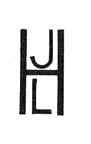 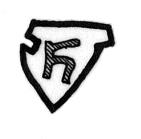 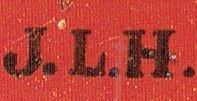 | Germany |
| HOCH & BECKMANN | This nearly 100 year old Nuremberg firm was known for its merry-go-rounds, bumper cars, motor cycles and planes. Their collection was sold by local wholesales such as Moses Kohnstam. In later years their vehicles had rubber tires. Production stopped about 1959. Trademark: HB or HOBE. | Germany | |
| HÖFLER | Johann (Jean) Höfler together with his brothers Leonhard and Georg started in 1923 a toy firm in Fürth. Their collection mainly consisted of roller coasters. In 1936 Georg left the firm and started a business by himself. Sales went on after World War II. New items were added like a ferris-wheel mechanical animals but mainly car models. In 1954 visionary son-in-law Ernst A. Bettag changed management completely. He sold the machinery. In 1956 the firm name changed in BIG and from that time only plastic toys were manufactured. | 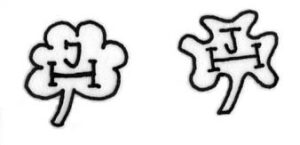 | Germany |
| HOMMOLA | In 1897 Berhard Hommola started the production of steam engines and hand painted accessories. Trademark: city coat of arms and Ho. |  | Germany |
| HÖRNDLEIN | The firm of Fritz Hörndlein from Fürth took the Nuremberg firm ‘Einfalt & Kotschenreuther’ in 1933 over. Under their own name Hörndlein introduced a prewar clockwork model of the KdF car, the precursor to the Volkswagen Beelte. This toy with Buhler clockwork motor was produced between 1938 and the early 1940s. Trademark: the letters VW in a wheel. After World War II they came back with a much simple version. No lithographed toys anymore; the tin wheels were replaced by rubber tires. In 1954 the firm was taken over by Streng & Co. | Germany | |
| ISSMAYER | In 1861 Johann Andreas Issmayer start don his own, after working for a while with his father. At the beginning he manufactured floating, magnetic tin toys and some children’s cooking-ranges. Johann Konrad, a brother, was also active in the factory. Till about 1870 hand painted animal figures dominated the collection. From 1879 the production on trains, many of which went to the United States. Also steam engines and accessories were added. In 1922 the founder died and Georg Weiszenberger, a son-in-law, took over the business. He died in 1926 and his son August became director of Issmayer. Unfortunately, he could not prevent its closure in 1935/39 due to the political circumstances in Germany at that time. Probably the export went via Jewish wholesalers, although Issmayer had a different religion. Trademarks: a winged wheel or JAJ. |   | Germany |
| KEIM & CO | Toy manufacturer founded in 1866. The official name in 1900 was ‘Nürnberger Blechdosenfabriek Keim & Co’. Management consisted of Gustav Heidecker and his partner Hellmann and Neumann. They produced mainly gramophones for children, tops and summer toys. In the thirties car models, planes were added. In 1937 Keim took over Wilhelm Krauss. After World War II still simple clockwork trains in gauge 0 were introduced. In 1955 electric versions were introduced. Hans Heidecker decided in March 1961 to end the production and the facilities were closed. |  | Germany |
| KELLERMANN | Georg Kellerman started as an employee of Bub; in 1910 he opened a business in Nuremburg. Three years later he was joined by a business partner. They specialized in the production of penny toys. Later on they put simple mechanical toys on the market. In 1920 their trademark CKO was introduced. Four years later his son, Willy, joined the firm and he was the one who took over in 1931 after his father’s death. In those days wholesale dealer Moses Kohnstam exported nearly the complete production. During World War II they produced war material like their colleagues in the field. After 1945 the situation was changed. Kellermann produced on a smaller scale. From 1954 they introduced the Rollo series. Four years later grandson Hellmuth joined the firm but even he could not prevent the closure in 1979. |  | Germany |
| KIENBERGER | At the end of 1910 Hubert Kienberger founded a firm in Nuremberg for the production of penny toys and simple mechanical tin toys. The collection contained such items as ladder-trucks or covered wagons pulled by horses, lambs and donkeys on wheels. A few months later, Georg Levy became a partner and the name changed to ‘Kienberger & Co’. A billiard player introduced by Kienberger became a real hit, with 90 per cent of sales to the export market. In 1916 both partners separated and Levy started for himself. In the twenties the Kienberger collection consisted of trains, cars and motorcycles. The founder died in 1938 and his daughter Irmgard took over the management. The factory was bombed in 1943, but production restarted in 1949. Since 1972 the company was managed by a grandson. The chosen trademark ‘Huki’ was formed by the first two letters of the founder’s name. |    | Germany |
| KINDLER & BRIEL | In 1895 the firm Kindler & Briel was founded by Wilhelm Kindler and Adolf von Briel in Böblingen. Their toy collection consisted of toys produced for boys (trains, stations, Signal boxes etc.) and girls (bathtubs). Much of this was exported long before World War I. The most important buyers came from Switzerland, England and the United States. After the death of Kindler, his sons, Willy and Paul, took over the business. Production increased and they decided to specialize in tin railway accessories. In World War II toy production stagnated and in the last days of the war the plants were destroyed. After 1945 Kindler & Briel worked hard to rebuild their company. In 1956 they started using plastic. In 1973 a mayor fire destroyed the factory; Kindler & Briel rebuilt it. Trademark: father Christmas carrying a bag filled with presents on his back. |    | Germany |
| KLEIN | The firm of Conrad Klein in Nuremberg offered electric demonstration models and toys was founded the 1880’s. Besides electromagnetic- and dynamo motors, models for telephony Klein sold ship models run by a dynamo motor, electric trains run on a wet cell and accessories for steam engines. It is still unknown if Klein was a manufacturer or a wholesale dealer. Trademark: a fist seen from the front and signs of electricity; three small stars (above) and the initials C.K/ (underneath) in a horizontal oval. Production was stopped before World War I. |  | Germany |
| KOCH & HOFMOCKEL | Toy manufacturer from Nuremberg founded in 1902. They produced simple tin toys among others packaging for children’s shops. In the sixties Koch & Hofmockel switched over to plastic (mini cars, cowboy and Indian figures in surprise bags). Trademark: KoHo. | Germany | |
| KÖHLER | In 1932 Georg Köhler started the production, on a small scale of mechanical animals in Nuremberg. They were specialized in selling picking birds. A remarkable detail was the tail mostly made out of felt (later replaced by plastic). Until World War II the collection remained unaltered. In 1942 the founder died and Fritz Collischan took over. After 1948 Köhler enlarged his collection and bigger sales resulted. Plastic parts were added. In 1997 Köhler stopped production. Trademark letters GNK in a triangle. | 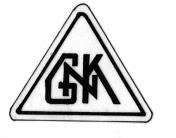 | Germany |
| KOHNSTAM | In 1875 Moses Kohnstam started a wholesale business in Fürth. He also sold tin toys to smaller merchants. Kohnstam put the trademark Moko on his items. Together with his sons Emil and Julius he expanded by setting up divisions abroad. By 1894 Kohnstam had locations in Milan, Brussels and London. Because of his Jewish background the firm was closed during World War II. Both sons emigrated to England. |  | Germany |
| KÖLLISCH | In 1880 Bernhard Köllisch started his ‘Spiel- und Metallwarenfabrik’ in Nuremberg, Toys ware only a part of his collection for he mainly sold magic lanterns and steam engines. In 1922 the founder died and a year later his company was taken over by Fritz Neumeyer. | Germany | |
| KRAUS | This firm was founded in 1910 by Joseph Kraus and his nephews Milton and Forcheimer. In the beginning clockwork trains followed by electric copies ware manufactured. The trademark used, ‘Fandor’, was a combination of the first three letters of Joseph Kraus’s mother and aunt, namely Fanny and Dora. Kraus’ collection was mainly exported. After World War I the brothers Forcheimer left Germany and went to America. With financial support of Kraus they founded Dorfan in 1924. A form of co-operation started between the both. Moreover Fandor sold not only toys; car models were added to their collection. In the beginning of the thirties Fandor introduced electric trains. Kraus flew from Germany because of the growing power of the Nazi regime and in 1937/38 the firm was taken over by Keim & Co. It was only for a short time for Kraus ended production in 1939. |  | Germany |
| KRAUSS | In April 1923 Wilhelm Krauss, also known from ‘Krauss, Mohr & Co’ and ‘Mohr & Krauss’ started production. The focus was still on steam engines and accessories. At the end of the twenties Krauss became a supplier for Falk. He also produced some car models and a motorcycle even available with a sidecar and a female passenger. Sales went over wholesale dealers. In 1938 the machinery were taken over by Keim & Co probably for political reasons. Trademark: initials in a circle. |   | Germany |
| KRAUSS, MOHR & CO | In 1895 Wilhelm Krauss found a small factory in Nuremberg. Together with his partners Emil Bell, Mathias Lechner and Johann Mohr they started ‘Krauss, Mohr & Co’. The collection consisted of simple steam engines, hot air motors and accessories. Sales went via the wholesale dealers. Used trademark: K.M. & Co. In 1902 an end came to the co-operation; Krauss, Mohr and Lechner retired. Bell continued the business under the name ‘E. Bell & B. Breitenbach’ untill1909. Trademark: an eagle with spread wings and the initials K.M. & Co in oval and underneath ‘made in germany’. |  | Germany |
| KÜHNRICH | In 1901 Georg Kühnrich started a tin- and toy factory in Waldheim. He produced hand painted horse drawn carriages. During World War I production stopped. After 1918 he restarted but from now on he sold tramways, car models even trains. Kúhnrich also manufactured accessories for steam engines. In 1925 production stopped completely. | Germany | |
| LEHMANN | Ernst Paul Lehmann, the founder, started together with his partner Jean Eichner production in Brandenburg in 1881. The hand pained tin toys were manufactured by ‘Lehmann & Eichner’. In the beginning the designs were bought and patents were unknown. In 1884 Eichner died and Lehmann became the owner. He introduced his own developed lithographed toys. Lehmann also became very keen on the protecting of patents; developed the coil-spring mechanism. He also took over the machinery of the local firm Adam. In 1913 Lehmann produced another novelty, the first one-rail railway. In the same year his nephew Johann Richter joined the firm. Until then Lehmann toys were labeled with trademark a. Then the initials EPL were combined (trademark b). In 1934 the founder died and was succeeded by Richter. In those days Lehmann ran short of material and were forced to manufacture smaller toys, the so-called Gnome series. Lehmann became one of the leading toy manufacturers in the world. During World War II toy production stopped for a while. In 1948 Richter was expropriated and the Russian occupier succeed as ‘VEB Mechanische Spielwaren Brandenburg’ (see MSB). Meanwhile Richter fled to the Western Zone. In 1951 he started in Nuremberg again with his sons. They had to rebuild a new collection because they had left everything behind in Brandenburg. Tom the climbing monkey, the Gnome tops, the Na-Nu and the cable railway were the only old items. These Lehmann items were different in size, and the lacquer finish was different from the articles before both world wars. In 1956 Johann Richter died and his sons Eberhard and Wolfgang took over the management. Meanwhile the VEB-firm in Brandenburg continued the production. In 1968 Lehmann introduced the LGB railway; LGB stands for Lehmann Gross Bahn. It was produced in plastic and available in gauge G (= 45 mm). Unfortunately, the model train industry came in decline and in 2006 Lehmann went bankrupt. The firm was purchased by Märklin. Trademark: a screw press after 1896 with the initials EPL. |   | Germany |
| LEVY | Up to 1916 Georg Levy was joint proprietor of Hubert Kienberger’s toy factory. In 1920 /21 he started his own production in Nuremberg and sold his goods to exporters and wholesale dealers. His collection consisted of penny toys but also trains, car models and animal figures were manufactured. In 1934 Levy had to sell up for political reasons. He fled with his family to England and settled down in London. The firm continued to exist under the name ‘Nürnberger Blechspielzeugfabrik Nachfahren’ (trademark N.B.N.) and was managed by Karl Ochs. Despite his efforts he could not prevent the closure of the factory in 1971. |  | Germany |
| LIEBMANN | Firm from Stadtilm founded in 1942 by Carl Liebmann in Stadtilm as a supplier for the war industry (planes). In 1948 the Russian occupier dismantled the factory. Liebmann switched to the manufacture of train sets in gauge 0. In 1952 he left the DDR and his company continued as a Volkseigener Betrieb (VEB). In 1956 gauge S was introduced and management decided to switch to plastic. In 1964 production stopped. |  | Germany |
| LINEOL | This firm led by Oskar Wiederholz, a former employee of ‘Reil & Metz’, started production in 1906 in Brandenburg. The collection compiled by a model maker very much looked like the toys made by colleague/competitor Hausser. Ahead both World Wars military items were added over the usual animal zoo figures. In those days Lionel sold a few clockwork operated army tin trucks and an ambulance. Lionel toys distinguish from Hausser toys by its rectangular pedestal. The arrival of Russian troops in 1954 put an end to the firm. Soon the Volkseigener Betrieb (VEB) restarted production and Lineol switched to plastic. Trademark: three walking ducks. |  | Germany |
| LUTZ | The firm of Ludwig Lutz in Ellwangen an der Jagst goes back to 1846. In the beginning Lutz manufactured hand painted tin (funeral wreath with porcelain flowers); they even exported. In 1857 partner Josef Englert joined the company. For this purpose at first the name changed in ‘Englert und Lutz’. Later on the firm started to produce mechanical hand painted tin toys. In 1883 son August took over the business and expanded the collection. The main part was exported and sales went via the wholesale of Bing. At the end of the eighties troubles occurred. In 1891 Märklin took sales, machinery, stocks and designs over. Some people remarked that the first model train introduced at the Fair in Leipzig was a Lutz design. No item bearing the Lutz name was ever found. | Germany | |
| MAIENTHAU & WOLFF | Pre was manufacturer of metal products housed in Nuremberg. His collection of toys was small. Known for its race boat driven by electric in 1927 Trademark: initials M & W and underneath N (Nuremberg) in a circle or Mawo. |  | Germany |
| MANGOLD | Georg Adam Mangold started production of mechanical tin animals on 2 January 1882 in Fürth. In 1920 his son Hans took over and expanded the firm. Their ‘Gama’ trademark was introduced about 1924. Until World War II about 70 per cent of the collection was exported to other countries. During the war toy manufacturers was stopped in order to make war material. At the end of 1945 they started again on a small scale and with the currency reform soon turned the corner. In 1948 they were already exporting. Mangold was one of the leading forces concerning the Fachmesse für Spielwaren (Toy Fair) in Nuremberg. In those days, shortly after the war, a few Schuco items were made under license by Mangold such as the turn-over car no. 100. The present day collection includes cranes, tractors, model cars and racetracks. In 1971 Trix was added to the Gama concern. |  | Germany |
| MARKES & CO | In 1904 Carl Markes founded Markes & Co. in Lüdenscheid. They began by producing bicycle accessories, and then in 1932 introduced tin toys under the ‘DUX’ trademark. These were mainly model cars and plane construction kits, some of which were clockwork driven. After World War II a construction kit like Meccano completed the collection, but plastic took the place of the old basic material. Trademark a swallow named dux in a circle. |  | Germany |
| MÄRKLIN | Theodore Friedrich Märklin was born 1817. In 1859 he started manufacturing a number of toys such as children’s cooking-ranges together with his wife in Göppingen (near Stuttgart). After the death of her husband in 1866 Karoline continued the firm. A few years later she also died and her sons Karl, Wilhelm and Eugen had to continue penniless. In 1880 the name changed to ‘Gebrüder Märklin’. Among the toys they manufactured were doll’s carriages, ships, merry-go-rounds, zeppelins and humming-tops. Their first trains consisted of locomotives with carriages, but without rails. They had to be pulled along on a string. This meant the start of the production of model toy trains. In 1891 the Lutz firm from Ellwangen an der Jagst was taken over and a part of the collection added. A year later Emil Fiz and later Richard Safft were added to the board of directors. Again the name changed: ‘Märklin & Cie’. In 1923 Fritz Märklin, a son of Eugen, joined the firm after he had worked for several years in the United States. A license was given for producing the known Meccano system. In 1928 Märklin employed over 900 workers. In 1934 Märklin launched car construction kits with optional clockwork motor in several versions. A year later Eugen retired and the same year an electric train in gauge HO was introduced. During both World Wars war material was made. After 1946 the production of car kits continued until 1953. In 1954 Märklin ended the production of steam engines. The focus was on mass-production tin and later plastic trains. In 1997 the firm of Trix was taken over followed by the bankrupt LGB (Lehmann) in 2007. In spite of these expanding Märklin became insolvent and in 2013 the firm was taken over by the Simba Dickie group. |     | Germany |
| MEIER | In 1879 Johann Philipp Meier founded his toy firm in Nuremberg. In 1894 he registered his trademark ‘dog and cart’. By the end of the century Meier had succeeded in developing his factory, where so-called penny toys were manufactured. In this field Meier was one of the leading Nuremberg firms. Exports were handled via the wholesale trade. Founder Johann Meier died in 1911 and Jean Weinberger took over the management of the firm. It seemed as if production ended in the mid-thirties. In 1935 the machinery was sold to Hans Biller. |  | Germany |
| METZ & DUNCKER | Toy manufacturer from Brandenburg; in 1882 founded as ‘Reil & Metz’. Export to England, South America and Australia for instance horse drawn carriage. In 1920 the production was taken over by ‘Greppert & Kelch’. | Germany | |
| MOHR & KRAUSS | In 1902 the former partners Johann Mohr and Wilhelm Krauss started on their own (see also Krauss, Mohr & Co.) in Nuremberg. In the Hochstrasze they produced models of steam engines as before. Till 1914 the steam engine production was expanded by planes (spindle movement), tractors etc. In 1917 Krauss became the sole possessor of the firm for Mohr had died. In April 1923 ceased to exist under its previous name and became Krauss. Trademark: an image of a steam engine and the initials M & K. |  | Germany |
| MOSCHKOWITZ | In spring 1919 Max Moschkowitz founded a toy firm in Nuremberg. He started with a small collection of mechanical tin toys and in 1920 he established a division in England. In 1921 he introduced his trademark for the first time. During World War II production ceased. After 1948 he re-started and continued until 1971 when he decided to close down the German factory. Trademark: MMN. |  | Germany |
| MSB | Abbreviation of ‘Mechanische Spielwaren Brandenburg’. It was a successor of the Volks Eigener Betrieb (VEB) founded in 1956 after the departure of Richter (firm of Lehmann). The same happened to the Oro-Werke. Industrial designer Manfred Schindler introduced several items over the years (car models, tractors, bulldozers etc.) for this firm in the DDR. He even successfully created a clown sitting in a bumping car. |  | Germany |
| MÜLLER | Toy firm specialized in toy sewing machines founded about 1875 in Berlin-Kreuzberg by Friedrich Wilhelm. Muller. In 1953 electric sewing machines were introduced. Production stopped in 1977. Trademark: Regina. |  | Germany |
| MÜLLER | Leonhard Müller belonged to one of the small toy manufacturers in Nuremberg since 1895. He sold his goods via wholesale dealer Moses Kohnstam. His collection mainly consisted of toy lanterns. In the beginning of the thirties Müller stopped production. He used his initials L.M. as a trademark. |  | Germany |
| MÜLLER & KADEDER | A Nuremburg toy firm operational between 1900 and 1912. They produced not signed clockwork toys. Hand painted as well as lithographed merry-go-rounds and motorcycles sometimes with sidecar were offered. Because planes hardly existed hot air balloons and zeppelins were their example of aviation. Trademark: a balloon with basket and the letters M and K. |  | Germany |
| MUNCK | Jean Munck, a former partner of ‘A. Wahschaffe’ (till 1883), founded his own toy firm in Nuremberg (Hauptmarkt). He was well known for his collection of hand painted merry-go-rounds and his clockwork mouse. Trademark: JMN. | Germany | |
| NEUHIERL | In 1920 Joseph Neuhierl founded his firm in Nuremberg. In 1934 this producer moved to the nearby town Fürth. In the beginning only car and plane models were manufactured. During the thirties he added military toys to his collection. In 1955 his son Heinrich joined the company. Till about 1956 tin toys were produced. After J. Hilpert took over the name changed into Carrera; a switch to plastic for this material came into fashion. By 1963 they introduced the ‘Carrera race-track’. Production stopped in 1972. Trademark: JNF. |  | Germany |
| NEUMEYER | In 1903 Frits Neumeyer took over the bankrupt firm of Köllisch in Nuremberg. The ‘Metallwarenfabrik Neumeyer’ was known for his steam engines. In 1904 the acquired a patent for a steam engine; he also produced optical toys. Probably sales went via the wholesale dealers. After a while Neumeyer switched to the manufacture of Zundapp motors and mopeds. Trademark toys: a star and the Latin spelled ‘opus coronat laborem’ (the crowns snacks). |  | Germany |
| NIEDERMEIER | In 1904 Philipp Niedermeier from Nuremberg acquired a patent for a steam locomotive. In 1933 he took over the firm of Saalheimer & Strauss. Tin trumpets were the main items before that time. During World War II the factory was destroyed. It took Niedermeier till 1949 before production re-started in the Schönnerstrasze. The new collection mainly consisted of car models, motorcycles, animal figures (dog, bear and bird) and moneyboxes. Clockwork toys like a gyroscopic mono railway were introduced in the fifties. This way of transport in real kept a prototype because of the tumble difficulties with sharp turn. In 1960 the firm moved to Parsberg. A year later management decide to stop production of mechanical tin toys because of the competition from Japan and Hong Kong. |  | Germany |
| NIER & EHMER | The ‘Nier & Ehmer Metallwarenfabrik’ in Beierfeld was founded by Arthur Nier and Max Ehmer in 1907. They produced originally parts for cars and bicycles. In 1925 they decided to produce a range of clockwork tin toy gramophones; also models for adults. Often an image of playing children used at the base. After World War II during DDR period the name was changed in MEWA a VEB-company. Trademark: Nirona. | Germany | |
| NÜRNBERGER BLECHSPIELWARENFABRIK | Karl Ochs successor of Georg Levy bought this toy firm in 1934. They produced amongst others a circus elephant playing with celluloid balls. However on a differ platform. They also sold picking ducks and clowns. After World War II they also produced cranes. Production stopped in 1971. A part of the collection included machinery was taken over by Joseph Wagner in Brunn. He produced on a small scale; even his own clockwork mechanisms. Wagner was the last German who produced tin toys; the factory was closed in 1971. Trademark: N.B.N. | Germany | |
| NUSSLEIN | On 4 November 1899, Michael Nüsslein founded his firm in Zirndorf. He had gained some experience before by working in a metal-printing factory for a number of years. In 1922 he took his son Ludwig into partnership. His collection consisted of humming tops musical boxes, rolling bells and magic lanterns. Their items were sold by wholesale dealers from Nuremberg and Fürth. In 1964 Nüsslein decided to close down the factory. Trademark: two heraldic lions holding a humming top. |   | Germany |
| OTTENJANN | Toy firm founded by August Ottenjann in Oldenburg. They sold cheap toy trains in gauge 0 for only a short while. Operational probably between 1949 and 1951. Trademark: OJA or OAO. |  | Germany |
| PIKO | In 1949 this former VEB-company produced their first tot called Pico Express; it was launched at a fair in Leipzig this electric trainset in gauge HO. At first production took place in Chemnitz; in 1952 the factory switched to Sonneberg also DDR. During the 1970s PIKO incorporated several competitors. They also introduced a tin steamroller. Meanwhile plastic was introduced; remote controlled cars, sewing and washing machines for children were introduced. Even after the fall of the Berlin wall in 1989 Piko was still in business. Trademark: PIKO. | Germany | |
| PLANK | In i866 Ernst Plank founded his firm in Nuremberg. In the beginning only steam-engines and magic lanterns were manufactured. About 1890 the first steam-trams were added to the collection later followed by clockwork specimen. In 1882 Plank probably invented the first electric model train. He produced another novelty, namely a sort of amphibious vehicle (a boat on four wheels that could flow). This clockwork toy operated as well on the floor as in the water. Never the less the emphasis was on selling optical toys. Plank went into financial straits in the thirties and the firm was taken over by the Schaller Brothers from Nuremberg; production was reduced. The new owners specialized in NORIS film projectors at home. |  | Germany |
| PROTTENGEIER | Hans Prottengeier was the one who took the initiative founding a toy firm in Zirndorf in 1938. In 1958 he launched his HPZ-car at the Toy Fair in Nuremberg. It was a simple lithographed clockwork car with a remarkable movement. The chauffeur, carrying a briefcase, got out of the car. This action was carried out after handling a handle on the trunk. It was a success. No other toys were mentioned made by Prottenger. In 1975 the firm went broke. Trademark: HPZ. |  | Germany |
| RAHNHÖFER | Christoph Rahnhöfer in Nuremberg was the owner of a small factory in Obere Kanalstrasze. He produced steam-engines and accessories. About 1955 producing was stopped. A part of his collection was taken over by Moschkowitz. | Germany | |
| REHBACH | About 1900 founded by Hugo Rehbach in Nuremburg; known for its monorail in 1910. They also produced steam engines. Trademark: palm of a hand and initials HR. |  | Germany |
| REHSE | Toy firm founded about 1914 by Heinrich Rehse in Leipzig specialized in model trains in gauge O and steam engines. During their production they switched over to gauge HO. Besides several materials were used such as brass, plastic. After the end of World War II during the DDR-period still toys were produced. Trademark: train and RHL in a circle. |  | Germany |
| REIL & BLECHSCMIDT | Partners of this Brandenburger toy firm in the Bauhofstrasze were Reil, (Woldemar) Blechschmidt and Müller. Their lithographed tin toys often had a coil spring. The collection consisted of vehicles msuch as tramways, planes, street rollers and boats. For girls they produced small dolls houses and tin furniture. The company was last mentioned in the 1922th address book for toy manufacturers. Trademark: Oro-Werke or Orobr. |  | Germany |
| REIL & METZ | Toy firm from Brandenburg founded in 1882 (see ORO-Werke). | Germany | |
| RICHTER | The firm of Richter was located in Brandenburg. Amongst other they produced a limo with driver. Trademark: initials R. & Co. B under an Art Nouveau crown and a clover in each corner. |   | Germany |
| RISSMANN | In 1907 Wilhelm Rissmann reported the take-over of ‘Martin Ettinger’ in Nuremburg. He was well known for his clockwork train sets. Rissmann also produced other toys. Trademark: Ri-Co (clown with spread arms) of initials FM in shield. |  | Germany |
| ROCK & GRANER | One of the oldest toy manufacturers from Nuremberg. The factory was founded in 1813 in Biberach an der Risz by Christoph Gottfried Rock and Johann Wilhelm Graner. The tin collection consisted of hand painted dolls house furniture, horse drawn carriages, moneyboxes and castles. In 1825 Rock left the firm. About 1837 more than 100 employees were listed. Between 1896 and 1900 clockwork trains in several gauges added the collection. Graner continued but did not switch over to mass-production. In 1896 the factory was handed over to Oskar Egelhaaf from Ulm. One of the changes was the trademark (Rock u. Graners Nachfolger). In 1904 production ended due to disappointing sales. One year later models and machinery were sold to Georg Kühnrich in Waldheim (see Waldheimer Blech- und Spielwarenfabrik). Trademark Rock & Graner: a heraldic beaver holding a flag with the inscription R & GN 1813. The initial N stands for Nachfolger (successor). |   | Germany |
| ROHRSEITZ | In 1881 Karl Rohrseitz founded his firm in Zirndorf. At first Rohrseitz manufactured rattles of zinc or brass, which were nickel-plated. Shortly after the turn of the century his son Fritz joined the company and handled the export of practically the whole collection of rattles. During World War I export was at standstill. After 1918 the market changed and so Rohrseitz started producing tin musical boxes. They became very popular items, and were soon being exported to England and America. Many boxes and seaside toys such as watering cans, buckets and molds were added to the collection. In 1925 Rohrseitz introduced his trademark. In 1930, the humming-top, which became the most important item, was introduced. These tops were available in various sizes. Pictures were lithographed in the top. After World War II only the humming-tops and moneyboxes continued to be manufactured. Plastic replaced tin for reasons of safety. Trademark (from 1925): initials KRZ, capital letter R within gear. |  | Germany |
| ROSENBAUM | Karl Rosenbaum founded his toy firm in Nuremberg in 1900. Known for its models of ships. Trademark: K.R.N. | Germany | |
| RUFF | Hans Ruff from Zirndorf produced tin toys between 1928 and 1975. The factory belonged to the minor manufactures. Ruff sold spirit stoves for children under the name ERZET. During the periode made in Western Germany he produced an autotransporter. Trademark: HRZ in a triangle) |  | Germany |
| RÜHL | Robert Rühl from Fürth marked his tin toys with a trademark from 1946. Post-war items were produced with plastic details like ‘Express Johnny’ nr. 32, a stork flying around his nest or the jockey on the sulky. In 1971 the production in Sommerstrasze ended. Trademark: capital R in a diamond. |  | Germany |
| SAALHEIMER & STRAUSZ | Adolf Saalheimer and Justin Strausz were partners. In 1911 they founded their toy firm in Nuremberg. In the beginning they produced moneyboxes; some of them had a mechanism. The most important buyer abroad was the English warehouse Woolworth. In 1923 Saalheimer stepped down and Strausz continued the business. Especially after World War I business was booming. In the twenties the collection expanded. After 1929 car models and motorcycles were introduced. Stiil moneyboxes were sold by Saalheimer & Strausz. In 1935 Strausz died. Two years earlier Philipp Niedermeier had taken over the firm. Trademark: the entangled letters S stood for success. |  | Germany |
| SARAN | About 1905 Fritz Saran founded a firm In Berlin. Sold tin model trains. Trademark: Effess. |  | Germany |
| SCHMID | In 1923 the brothers Max and Ludwig Schmid set up a toy firm in Nuremberg. In the twenties they produced a typewriter for a child. During the thirties they decided to add military toys to their collection. Schmid is known for the boy jumping on a trunk or sledge with clockwork mechanism (see patent from 1937). The figure was not made out of tin but composition. After World War II the firm continued. More than half of the collection was exported. In the sixties Schmid switched to plastic. In 1963 he formed a co-operation with his colleague Streng (Strenco). In 1971 the firm was taken over by Conrad. Trademarks: at first the initials GSN in a circle or a capital S in black and a small letter G in a square. From 1933 the word Gescha in italic and at the background a tilted square. |     | Germany |
| SCHOENNER | In 1875 Jean Schoenner started manufacturing mechanical and optical toys in Nuremberg. At first he offered several magic lanterns, later followed by a range of steam engines. The first-known Schoenner train was to be seen in a catalogue of 1887. It was a steam train for the American market and included a cowcatcher. The train also had a tender and was available in two gauges namely I and II (65 and 115 mm). Schoenner also manufactured trains driven by clockwork. His railway accessories consisted of stations, signals, bridges, etc. A few years later, Schoenner started producing steam ships, particularly armed ships. In 1891 Adolf Dihlmann joined the company. In 1904 a second factory was built in Muggendorf, a village between Bamberg and Bayreuth. Five years later the founder died and this meant the end. A part of the collection was taken over by Falk. Trademark: a star and a winged wheel together with the initials J.S. |  | Germany |
| SCHOPPER | Johann Georg Schopper the founder of a toy firm in Zirndorf produced tin toys since about 1928. In the beginning the collection consisted of dolls kitchens, stoves and accessories. After World War II clockwork merry-go-rounds, planes and moneyboxes were produced. In the course of years tin was replaced by plastic. Schopper is still in business. Trademark: Huge letter S in circle. |  | Germany |
| SCHREYER & CO | In 1912 the Nuremberg firm ‘Schreyer & Co.’ was founded by Heinrich Schreyer and Heinrich Müller. Six years later Schreyer left the firm, Müller continued and the name remained unaltered. In the beginning only car models were manufactured. During the twenties the collection was expanded with a new kind of toy, namely tin toys that were entirely or partly covered with plush. Animals especially, such as monkeys and birds, were produced. In 1929 the world-famous peck-peck bird was shown to the public. The used Bühler clockworks were changed to Schuco versions. Schuco, a trademark derived from the first three letters of the firm name. About 1935 they produced the first toy car made in one piece. Another unusual point the car could not fall from the table because a specially constructed fifth wheel. During World War II machinery was used for the war industry. In 1958 the founder died and the firm was taken over by his son Werner Müller and Alexander Girz. Despite the worldwide success of the Schuco car and the introduction of a coil spring management decided to switch to plastic. In 1976 the firm was bought by an English concern; three year later it was all over. |  | Germany |
| SCHRÖDEL | In 1846 Johann Schrödel started a bookbinding firm and carton factory in Nuremberg. After a couple of years they started manufacturing games. Around the turn of the century Schrödel went into the manufacture of tin toys, specializing in the field of shooting-games. Their trademark ‘Ideal’ was printed on their toy guns, rifles and pistols. A pea was the ammunition. After World War II plastic was used more and more. At present Schrödel is still in business. |   | Germany |
| SCHRÖDER | In 1912 Wilhelm Schröder founded his firm in Lüdenscheid. In the beginning only aluminum spoons and forks were produced. After World War II management decided increasing the collection by manufacturing steam engines. Later on they introduced a steamroller and trains in gauge G. The firm is still in business. Trademark: Wilesco. |  | Germany |
| SCHUH | Leonhard Schuh founded his toy firm in 1921 in Fürth. He produced trumpets for children and music boxes. In 1961 he went out of business. | Germany | |
| SCHUHMANN | The firm of Adolf Schuhmann started in 1907 in Nuremberg. He produced simple tin toys amongst others trains. The collection contained railways with or without a clockwork, railway accessories, construction kits (‘Combinator’) and car models. This Jewish firm was taken over by Beckh in 1939. Trademark: letters AS intertwined. |   | Germany |
| SEIDEL | In 1881 Michael Seidel founded a toy firm in Nuremberg. At the turn of the century his trademark namely a Capricorn, was introduced. The toy collection before World War I consisted of tin rattles. Later on, children’s tea sets, moneyboxes and toy telephones were added. In 1908 Georg Seidel, a son of the founder, took over the management and enlarged the collection by introducing clockwork boats, tractors with trailers and some tanks. During both the World Wars Seidel had to make war material. In 1939, Gerhard Hamann, a brother-in-law, joined the board of directors. In 1949 Seidel started producing small steamboats, driven by candle due to a lack of material. Later on they were replaced by clockwork mechanism. In the second half of the fifties even Seidel switched over to the use of plastic. In 1982 the firm was taken over by Martin Fuchs. |  | Germany |
| SPITZBART | About 1855 Johann G. Spitzbart founded this firm in Nuremberg. He produced hand painted magnetic floating toys and boats with or without a mechanism. | Germany | |
| STAUDT | In 1867 Georg Leonhard Staudt founded a firm in Nuremberg in which hand painted tin toys were produced. Twenty years later, his sixteen-old son, Heinrich, became an apprentice. About the turn of the century the Staudt collection consisted of items such as fortress, mechanical ships, roundabouts, musical clowns dressed in real clothes (just like his French colleague Martin), bears and some planes. In the 1888 catalogue he even offered a locomotive driven by clockwork with carriages or accessories for steam engines. In 1928 Fleishmann took over the firm because there was no successor. |  | Germany |
| STOCK & CO | In 1896 Walter Stock and his brother-in-law Carl Adrian founded the ‘Fabrik mechanischer Blechspielwaren und Metallwaren’ in Solingen. In the beginning only household goods were manufactured. Later on they started the production of toys. This firm became known for its inspired ‘copies’ of Lehmann models such as ‘Jim’ walking trolley man, a porter behind a two wheeled cart loaded with a trunk. The edition of Lehmann was porter ‘Adam’ and his hand truck. Another examples: ‘Paddy’s Pride’ a pig drawn tub with a butcher as driver. Or ‘Jolly-Pals, a cart drawn by a bulldog and a monkey as driver. Several lawsuits were fought out between both firms. In 1932 the founder died and his son Rudolf took over. Production had to stop in the thirties and later on the firm was taken over by Paul Hartkopf, an employee of Stock. He only continued a small part of the collection namely Xmas angles. Trademark: two crossed walking sticks. |  | Germany |
| STOLLWERCK | A world-wide manufacturer of chocolate and sugar confectionery founded in 1839 in Cologne. The business flourished in Germany; the scope later was on Europe and America, At the turn of the century Stollwerck established factories in Berlin, Bratislava. London and New York. Stollwerck sold a lithographed mechanical bank. It was a 16 cm high miniature vending machine sold in the 1880-1890s. In 1905 they introduced a mechanical bank (Sparautomat ‘Victoria’) for children. The 16 cm high bank contains small pieces of chocolate. By using a coin the user could receive chocolate as reward. This object was probably produced by supplier s like Friedrich Reiche from Dresden or Issmayer in Nuremberg. The text was printed in the English, French, Deutsch and Dutch language. Referring to their 1901 catalogue they sold a open car (booth was filled with chocolate) and locomotive | Germany | |
| STOLPE | An unknown manufacturer of car models using trademark W.S.N. | Germany | |
| STRENG | In 1954 Ludwig Streng took over the production of Hörndlein in Nuremberg. The collection consisted of several car models. About 1955 he switched to plastic. In 1963 Streng formed a co-operation with his colleague Schmid (Gescha). In 1971 the firm was taken over by Conrad. Trademark: the Kaiserburg tower and the word ‘Strenco’ in a circle. | Germany | |
| STRIEBEL | Toy manufacturer from Biberach an der Riss founded by Gottfried Striebel. They produced hand painted tin toys like stoves, ships and model trains. Production between 1840 and 1850. | Germany | |
| TIPP & CO | The firm Tipp & Co. in Nuremberg was founded in 1912. The name of the firm derived from Miss Tipp who initially sat on the board of directors. Her partner was Carstens In 1919, after a few changes in the management. Philipp Ullmann became the exclusive proprietor. In 1933 due to the political situation Ullmann had to leave and went to England like many others. From 1933 to 1945 Tipp was managed by a former Bing director, Ernst Horn. Tipp was famous for his military toys. Several bombers, tanks, guns and anti-aircraft guns were shown in their catalogue. Until 1942 they still manufactured toys, but after that only war material. Meanwhile Ullmann had founded the firm Mettoy in London. After World War II het regained control of Tipp & Co. His son Harry expanded the collection drastically. Some prewar items returned like the motorcycles. Because Harry Ullmann was confronted with the problem of managing two toy firm in two different countries he decided to stop Tipp’s production in 1971. Trademark: the letters TCO |  | Germany |
| TRIX | In 1927 Stephan Bing and his Oppenheimer and Erlanger took over the firm of Andreas Förtner & Haffner over. They started in Nuremburg by producing some tin toys. The name was changed into Trix when they had a big success with a metal construction kit of the same name in about 1935. From that moment they also produced small 16,5 mm gauge trains (designed by Kahn). In the same year Bing went to England, where he founded an English subsidiary company. Bassett-Lowke became the sole agent of the products of Trix Ltd. In 1938 the German company was taken over by Ernst Völk, the man who had also taken over Distler two years earlier. The entire factory in Nuremberg was destroyed during World War II. Fischer and the engineers Insam and Bayer handled the reconstruction. They continued manufacturing model trains. In 1971 production was taken over by Mangold. The same happened in England after having passed through several hands. Trademark; the firms’ name put in metal construction pieces. |   | Germany |
| TUCHER + WALTHER | In the beginning this firm, founded in 1978, was known for the leftover production of Schuco und Biller. From 1979 they produced their own tin toys. In 1992 the changed from Nuremberg to Emskirchen. Their collection consisted of items ones produced by Tipp & C, Blomer & Schuler. Tucher + Walther ended their production in 2009. Trademark: company name with winding key. |  | Germany |
| UEBELACKER | At the end of 1871 Leonhard Uelbelacker founded a small firm In Nuremberg. His toy production consisted of metal ships and floating magnetic toys. For example a hand painted paddle steamer. Something similar however without blades called ‘City of New York’ was exported. Trademark: the Roman god Neptune. |  | Germany |
| VEB BRANDENBURG | When Johann Richter was expropriated as owner of Lehmann the name changed into in ‘VEB (Volkseigener Betrieb) Mechanische Spielwaren. The DDR-successor produced among others the boy on a tricycle ‘Heini no. 507’. Probably the VEB was the predecessor of the MSB (Mechanische Spielwaren Brandenburg). Trademark: the letters VEB under a gear or a winged letter V. |  | Germany |
| VEB DRESDNER METALL SPIELWARENFABRIK | Known for its toy vehicles operated by a clockwork motor. In 1972 they merged in the combination Prefo. | Germany | |
| VEB METALLWARENFABRIK STADTILM | Initially founder Carl Liebmann produced parts of Luftwaffeplanes during World War II. In 1949 he launched his first model train in gauge O at a fair in Leipzig. In 1852 he fled wit his family to the West. His factory in the DDR was taken over by the VEB Metallwarenfabrik Stadtilm and toy production restarted. From 1956 this successor produced sets in gauge S and plastic details were introduced. In 1964 came an end. | Germany | |
| VIELMETTER | Philip Vielmetter was a merchant from Frankfurt who, as far as we know, is responsible for the manufacture of a single tin toy. The version of ‘The artist’ looked like the creation made by the English manufacturer Walker. It was an English patent acquired by Vielmetter. Because he lacked experience this particular toy was manufactured by Märklin. The discs necessary for the drawing contained typical German examples like statesman Bismarck and emperor Wilhelm. Trademark: |  | Germany |
| VOIT | In 1919 Fritz Voit founded a toy firm in Zirndorf producing musical instruments out of tin (trumpets and clarinets). In 1941 his son Erwin joined the company and the collection was expanded after World War II with mechanical toys (clockwork). For example car models, the man with the trunk, the maid behind the pram and several small doll prams. Voit stopped production about 1969. Trademark: a sitting boy wearing a hat playing the flute in an oval. The initials FV carved in the seat. |  | Germany |
| WAGNER | Joseph Wagner was the last German who produced tin toys. He started his business in Brunn, a village near Nuremberg. In the seventies he took over a part of the production of the Nurnberger Blechspielwarenfabrik included machinery. He also used material manufactured by Blomer & Schuler. His collection consisted of elephants, motorcycles, merry-go-rounds. Trademark: a globe with initials J.W. WALDHEIMER BLECH-und SPIELWARENFABRIK Originally the brothers Damm started production in 1876. In 1901 the firm was taken over by George Kühnrich. In 1905 he took over production from Rock & Graner, BIberach an der Risz. In 1909 he employed 160 workers. During World War I no toys were manufactured. In 1918 he restarted. From that time on he produced clockwork train sets and model cars in Waldheim till 1926. |  | Germany |
| WALDHEIMER BLECH-und SPIELWARENFABRIK | Originally the brothers Damm started production in 1876. In 1901 the firm was taken over by George Kühnrich. In 1905 he took over production from Rock & Graner, BIberach an der Risz. In 1909 he employed 160 workers. During World War I no toys were manufactured. In 1918 he restarted. From that time on he produced clockwork train sets and model cars in Waldheim till 1926. | Germany | |
| WALTHER | M. Walther from Nuremberg was a manufacturer of novelty toys (flat figures). Trademark: | Germany | |
| WELLHOFER | I.A. Wellhöfer founded his firm in 1825 in Nuremberg. Toy manufacturer who used brass, sheet metal, tinplate and wood for his toys. Known for his steam engines. Trademark; the initials I.A.W. and N (Nuremburg) along a stabilizer and a wheel. |  | Germany |
| WIMMER | In 1928, in Nuremberg, Heinrich Wimmer started manufacturing mechanical animals, cars, planes, etc using clockworks from Bühler. A few years later, he decided to start producing trains. After World War II some animal figures were sold imprinted ‘Made in U.S. Zone Germany’. Under the influence of his son, Ernst, who joined the company in 1956, trains became the only article they produced. The founder died in 1970 and his son continued till 1976 when production was stopped. Trademark: HWN and two smiling faces. Trademark; HWN. |  | Germany |
| WÜNNERLEIN | Fritz Wünnerlein, a manufacturer from Zirndorf founded a factory in 1906. In the beginning only moneyboxes were produced. The post war collection was advanced: clockwork cars, clowns, a workman rolling a crate, a basketball player. Wünnerlein produced until the sixties. Trademark: Wüco. |   | Germany |
| WÜSTENDÖRFER | Wüstendörfer from Fürth is one of the oldest toy manufacturers. Johann Phillip started production around 1875. In 1905 his son Ernst Paul took over the business. Management changed about 1921 and again after World War II. About 1970 production ended. The collection consisted of tin summer toys, accessories for dolls like bathtubs, beds etc. Trademark: PW and date 1835. |  | Germany |
| ZEUKE & WEGWERTH | This toy firm was founded by Werner Zeuke and his partner Helmuth Wegwerth in East Berlin in 1946. They produced electromagnetic toys such as boats and trains. Simple electric train models in gauge 0. At a later date Zeuke & Wegwerth switched to plastic as basic material. In 1972 the firm became a VEB and the name changed into ‘Berliner TT-bahnen’. The production was mainly sold in the DDR. In 1993 the firm went bankrupt. |   | Germany |
| ZIMMERMANN | Georg Zimmermann started in Zirndorf in 1880. In 1912 the firm gave work to more than 700 employees mostly female workers. In 1972 after three generations Zimmermann they stopped the production. Trademark: the initials ZZ (Zimmermann Zirndorf) in a circle. |  | Germany |
| ANANIADES | One of the oldest toy manufacturers founded by Ananias Ananiades in Athens. They were known for their dolls but also produced tin toys (rattle) during the period 1930-1950. Items like ‘Strutting Sam’, motorcycles, car models with rubber tires, space station, flying saucers etc. Besides tin also plastic parts was used. Trademark: AA in circle. |  | Greece |
| FINO | Company directed by Christos Papaevangelou producing tin toys after World War II. They produced in tin a cowboy on horseback, a money bank, a train platform. Fino also produced mechanical animals covered with fabric. In 1972 the founder died and his nephew Evangelos took over. | Greece | |
| BLEIN-TOYS | Company from Bergen selling wonder Mouse ‘Tippy’ for ƒ 0,75 in 1947. Lithographed toy. | Holland | |
| MARJO | Dutch toy manufacturer of a streamline model car. Trademark: italic firm name in a vertical oval. | Holland | |
| MERKELBACH | This Firm established in Amsterdam originally produced soap. Son Jacob Merkelbach however was more interested in magic lanterns, optical instruments, photo cameras. Their first magic lantern was sold to princess Wilhelmina of Oranje in the 1880s. After World War II the production of magic lanterns was stopped. | Holland | |
| RUCO TOYS | Producer of a gyroscope top called ‘Dancing Clown Tol’ and manufactured in the thirties according to the price of ƒ 1,75 on the carton packaging. Trademark: firm name with addition ‘made in Holland’ and colors Dutch flag. |  | Holland |
| MARX | This American firm had several factories even in Japan and the former English colony in the 1960s and 1970s. Toys manufactured in Japan were sold under Linemar toys. | Hong Kong | |
| TIN’S TOYS | The ‘Tins’ Metal Manufacturing Ltd. was founded in 1965 by Tin Pok Sin. The collection consisted of car models. The base plate was always made of plastic. The export to the USA went to K-Mart. During the eighties the firm moved from Hong Kong to Shenzhen (China) producing die-cast toys. Trademark: capital letter T or WT. | Hong Kong | |
| LEMEZAGUGYAR | Toy manufacturer in Budapest; operating since 1948. The firm produced amongst other tracks like the German firm Einfalt, a clown on a step, planes and motorcycles, Lemezagyuar also manufactured the track Rakodo-Vonat. Later on car models, partly made of plastic, were added to the collection. In 1954 the factory became a part of the ELZETT group. Production stopped at the end of the nineties. Trademark: capital L or a squat diamond with ‘e. Flim Lemez’ inside. |  | Hungary |
| ALEMANNI | Milan toy manufacturer founded in 1908. Former employee Leonida Alemanni took over the production of Lampugnani from Milan. Therefore the name changed into ‘Leonida Alemanni Casalpusterlengo’. In 1911 a new factory was opened in Castiglione d’ Adda. During World I toy production was ended in favor of war material. They produced among others penny toys (cars, locomotives) and an Italian version of the Lehmann climbing monkey called ‘Bobby’. After the death of the founder in 1944 the company Alemanni was run by two of his sons. They started producing clockwork versions of cars, buses, trucks even trains. Later on replaced by electric trains. The complete firm name was mentioned on the wheels of the car. Alemanni used the abbreviation L.A.C. for the train sets. At the end of the fifties production ended. |  | Italy |
| BELL | Toy firm in Milan founded by Vittorio Belloni in 1919. They manufactured tin toys with or without mechanism. Bell is known for his penny toys and figures (pull along). The mechanical items had a clockwork mechanism for example a cart drawn by a donkey with a male goat as driver. In the 1940s they produced summer toys. Even after World War II Bell sold car models under their trademark: Belloni. |  | Italy |
| BRAGLIA | Toy firm from Milan founded by Robert Braglia in 1913. Little is known about the pre-war collection. After World War II they not only manufactured clockwork and electric trains in gauge 0 but also racecars. Especially a Ferrari building kit with rubber tires was introduced. Trademark (trains): Brai. |  | Italy |
| CARDINI | This firm from Omegna was founded in 1916. The toy production in a town north of Milan started in 1922. Despite the fact that they were only in business for six years, Cardini was one of the leading Italian toy manufacturers. Their collection consisted of trains, ships, planes and cars. A coil-spring was used and on the tires Pirelli was printed. Remarkable detail: the printed carton packaging could be used as garage. The trademark was always embossed. In 1928 the directors decide to stop production. Trademark: winged arrow and the firm name formed a circle. |  | Italy |
| CENTOLA | Toy firm founded by Frederico Centola in Bologna in November 1934. They manufactured among others simple motor cycles, cars and airplanes with a clockwork motor. Centola employed over 120 persons mostly female. In 1947 the factory moved to Roseto. Trademark: F.C.B. (abbreviation of Frederico Centola Bologna). After 1947 trademark F.C.R. (Frederico Centola Roseto). Production stopped in 1952. |  | Italy |
| DOMO | Toy firm founded in Bologna in 1946 by Corrada Domini and Fernando Monti. Instead of tin they produced toys in aluminum. Models were made with remote control. Manufacturer of car models such as Alfa Romeo F1 racecar. In 1940 they introduced a construction kit of it. During the mid-fifties DOMO switched to plastic. Production ended in 1961. | Italy | |
| ECO | A toy firm manufacturing a clockwork ocean steam liner called ‘Saturnia’. |  | Italy |
| ELLETREN | The name was based on the Italian words ‘treni elletrici’ and set up by Armando Ravasini in 1946. In the basement of his house near Milan he produced his first handmade electrical driven 0-gauge train. His products were sold in Italy in Milan and Turin. Later the products were distributed by Fulgurex. Since 2008 Elletren reintroduced tinplate trains. |  | Italy |
| F.R. | Toy firm from Roma producing a range of clockwork car models. | Italy | |
| GEM | This Italian firm, an abbreviation of Giocattoli Ellettro Meccanici, carried the same name as a French toy manufacturer. GEM was established by Francesco Biaggi and model train sets were produced in gauge 0. The models were made by steam or in a electric version. In 1947 they introduced H0/00 scale trains. In the 1950s production was stopped. | Italy | |
| GIOIA | Toy firm from Florence founded in 1899 by Giacomo Gioia. In the beginning they produced metal ware; decided in 1890 to manufacture toys. | Italy | |
| I.N.G.A.P. | In 1919 the firm of I.N.G.A.P. was founded by Giovanni Casale, Giorgio Zattla, Pietro Zinelli and Tullio and Anselmo Anselmi in Padua. The name was an abbreviation of ‘Industria Nazionale Giocattoli Automatici Padova’. In 1921 they introduced their trademark. Their first mechanical toy, a small train set, was produced about 1925. The I.N.G.A.P. toys were nearly always driven by a coil-spring mechanism. A leaf spring was used in penny toy car model like PD 608. In 1926 tanks were added (nos. 413 and 414). The latter model had a flint mechanism in the barrel. In 1933 the following planes were added followed by locomotives. In 1936 ‘Pinocchio’ (no. 770) and ‘Felix the cat’ (no. 765) were introduced. I.N.G.A.P. also sold planes and trains in gauge O. After World War II new items in the collection were some Alfa Romeo and Ferrari racing cars. In the course of time also planes (models with propellers) were made; even a mini version of a Vespa scooter (no. 809) was available. In 1950 owner Mario Benacchio decided to stop production. In 1972 the firm was taken over by Eurotoys. All I.N.G.A.P. car models had tires ‘Superflex’ printed on them. Trademark: I.N.G.A.P. in a diamond. |   | Italy |
| INCO GIOCHI | L’industria costruzione Giocattoli was founded in Torini in 1947 by Alessandro Quercetti a former fighter jet pilot. Their first model was a frock covered in felt originated from Germany. Soon afterwards simple tramway tracks and little speedboats were produced. Inco manufactured mechanical toys including train sets, animals, ships and novelties. In 1949 tin toy production stopped. Trademark: locomotive and name firm. |  | Italy |
| INGAT | A toy firm in Turin founded in 1947. The name was an abbreviation of ‘Industria Nazionale Giocatolli e Affini Torino’. Production stopped at the end of the fifties. Trademark: head of a lion in two concentric circles. | Italy | |
| LAMPUGNANI | Toy manufacturer from Milan founded in 1901. Seven years later the firm was taken over by Alemanni. | Italy | |
| LIMA | Lavorazione Italiana Metalli e Affini (abbreviation for Lima) is a toy firm founded in 1946 in Vicenza a town near Venice. Lima produced a series of small clockwork car models (truck, race car, ambulance) and motorcycles even a little speedboat driven by battery. Later when plastic came into fashion Lima started the production of train sets. | Italy | |
| LOLLINI | Toy firm founded by Giovanni Lollini in 1922 in Bologna after he had taken over Rappini. They produced a small size series of car models, a bus, a tank and a motorcycle without any mechanism. Production stopped in 1961. Trademark: G.L.B. | Italy | |
| MARCHESINI | In 1908 Agostino Marchesini started a small toy firm in Bologna. He produced among others car models in various sizes. A range staring from small simple models without mechanism till advanced race models. Marchesini also manufactured some planes as a penny toy. In 1928 Umberto Rappini joined the company and a new factory was opened. Afterwards his sons Giuseppe and Giovanni joined the board. In the beginning the tires were made of tin. At a later date it was changed into rubber or plastic. Exceptional is the use of composite for drivers in a racecar. Trademark: AMB or AM-BO. |   | Italy |
| METALGRAF | This Milan firm was founded in 1910; first they produced tin package. In 1920 Metalgraf started their toy production; the first car models were manufactured. They also sold some small planes without mechanism. Toy production stopped during the end to the 1930s. Metalgraf is still in business, Trademark: a figure sitting on the back of Pegasus, a winged horse. |  | Italy |
| N.I.G.A.M. | Abbreviation of Nuova Industria Giocattoli and Affini Milano. This Milan manufacturer was in business during the fifties. For a short period they produced cast iron race models and a few mini versions of sport cars. The last were steering by activated a hand-held injector. Besides tinplate they also used bakelite. Trademark: NIGAM in diamond. |  | Italy |
| O.P.S.E.T. | This small toy manufacturer introduced the robot ‘Nando’. An ingenious toy operated by a small balloon inside. By squeezing a ball the robot’s head moved sideways and shuffled forwards. This pneumatic mechanism was an early effort of remote control. This toy is extremely rare; even reproductions are available. | Italy | |
| OMAG | See Omas. | Italy | |
| OMAS | Founded as a metal foundry in 1900 by A. Bruno from Turin. Over the years they switched to the production of tin toys. In 1932 he introduced a small version of the well-known Fiat model ‘Balilla’ in a construction kit. The scale was 1:10 and had no mechanism. In 1948 the name was changed into OMAG. It seemed as if production stopped in the fifties. | Italy | |
| OMICRON | A minor manufacturer producing a clockwork open Lancia model sports car in the 1940s. It is a bit strange for a Lancia Omicron is a type of bus produced by the car firm in the 1930s. | Italy | |
| PERABONI | Toy manufacturer in Bologna. They produced car models in tinplate with clockwork motor. Later they switched to plastic toys. | Italy | |
| PINOTTI | This toy manufacturer was founded in 1946 by the brothers Pinotti in Castiglione d’Adda. In this place nearby Milan they produced among others cars and motor cycles. Production ended probably in the 1950s. Trademark: Pino in a diamond. |  | Italy |
| RAPPINI | Toy firm from Bologna founded in 1897 by Mauro Rappini and known for its car models. Rappini was taken over by Lollini in 1922. | Italy | |
| S.I.G.M.A. | This Turin toy firm signed its products with an abbreviation of its name. S.I.G.M.A. produced a Roman chariot. The horse was made of tin and the warrior from Elastolin. The toy ‘VInvictus’ became an American patent in 1922. A leaf spring was mounted between the hinged legs. Trademark: firms’ name, Turin and Italy in double circle. |  | Italy |
| SAFAR | During the 1950s or 1960s this Milan firm produced an electronically controlled tin racing car. It was sold in a cardboard box and the track was shaped in the form of an eight. |  | Italy |
| SIRE FERRARI CASALPUSTERLENGO | Toy firm funded in 1934 by Siri Ferrari in Casalpusterlengo, a town near Milan. Better known as Siro for their scooters and motor cycles. After World War ii they restarted production. In 1984 the business stopped. Trademark: the letters FSC in a circle or triangle. |   | Italy |
| SUPERLUX | Toy firm founded in 1947 by Mario Galetti in Milan. He introduced a twoseater model car with real leather top and unholstering. The car had electric headlights and interior lighting. This model had a Swiss license plate and rubber tires.. | Italy | |
| VENTURA | A toy firm known for its car models during the 1950s. Besides clockwork versions also remote control via a metal string were made. During the sixties tin was replaced by plastic. Trademark: a spider in a web in an oblong triangle with the point facing downwards. |  | Italy |
| AK- Circle | Trademark: AK within circle with addition ‘made in Japan’. |  | Japan |
| ALPS | The firm ‘Alps Shoji Ltd. was founded in 1948 in Tokyo by a former employee of Kuramochi Shoten Shoten means ceompagny). Amongst others the produced space toys like a robot with a television screen. Many toys were driven by batteries like the streamline car called ‘Lincoln Futura’. IDuring the 1950s some parts were mad of celluloid. In the early sentries Alps ended production despite a switch to plastic. Trademark: ALPS with addition ‘made in Japan’ and at the back the silhouette of three mountain tops. |  | Japan |
| AOSHIN SHOTEN | Till the seventies they manufactured friction powered tin toys for instance a Batmobile with a plastic figure behind the steering wheel. Later on they switched over to cast iron action figures. Trademark: ASC, namely (A)oshin (S)hoten (C)ompany in diamond. |  | Japan |
| ASAHI | Firm from Tokyo founded in 1948. Asa means morning and Hi means light. They manufactured a wide variety of clockwork toys as well as battery driven ones. Besides tinplate they also used diecast. Trademark: Santa Claus carrying a back with the initials ATC. They went out of business in the 1970s. |  | Japan |
| ASAKUSA | Firm from Tokyo founded in 1950. They produced battery and friction operated tin toys like robots. Trademarks: A1 or ATD in circle. |   | Japan |
| BANDAI | Bandai from Tokyo was founded in 1950 by Naoharu Yamashina. At the moment no. 2 on the world ranking of toy firms. Originally started as a wholesaler. Tin as raw material switched into plastics. Trademark: gothic capital B and small letter C (see also Popy). |  | Japan |
| BILLIKEN SHOKAI | Toy manufacturer founded in 1976 known for the several versions of a walking figure for instance a clockwork robot. They also sold DC figures like Batman and the Joker. Billiken also produced wind-up monsters like Godzilla. |  | Japan |
| DAISHIN | Toy firm in Tokyo. Some items of their car models were made out of plastic. Trademark (1): firms’ name in diamond. Trademark (2): DSK in diamond. |   | Japan |
| DAITO | Producer of car models especially buses. Trademark: firms’ name in oval; underneath addition ‘made in japan’. | 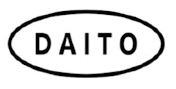 | Japan |
| DAIYA | Daiya from Tokyo founded in the fifties famous for its collection of space toys like flying saucers and robots. Trademark: firms’ name in diamond. | 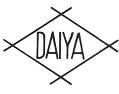 | Japan |
| EGAWA | Toy manufacturer also operational shortly after World War II according the print ‘made in occupied japan’. Egawa is known for his version of the Lehmann beetle. Trademark: bell and letter E. | 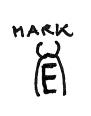 | Japan |
| EIICHIRO TOMIYAMA | Pre-war manufacturer of car models founded in 1924 by Eiichiro Tomiyama. They manufactured numerous toy airplanes. After World War II the company produced a U.S. B-28 Bomber friction toy. In 1953 the name was changed in Tomy. Trademark: | 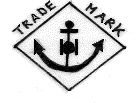  | Japan |
| ENOMOTO | Pre-war toy manufacturer. Trademark: five-pointed star in half circle. EXELO a Unknown toy firm; produced tin toys during 1960s. Space toys friction driven like bubble gun, Mars car etc. Trademark: name in an oval. |  | Japan |
| EXELO | Unknown toy firm; produced tin toys during 1960s. Space toys friction driven like bubble gun, Mars car etc. Trademark: name in an oval. |  | Japan |
| FUJI PRESS KOGYOSHO | Firm from Tokyo. Produced mainly mechanical tin toys (animals and clowns) covered with plush. Trademark: MM in front of mountain. |  | Japan |
| FUKUDA | Firm from Tokyo founded in 1947. In 1955 the name changed into Fukuda Seisakusho. Sometimes celluloid was used for some parts. In 1964 the name was changed again into Fukuda Press Kogyo. Trademark: R.F. in diamond. |  | Japan |
| GAKKEN | Toy manufacturer who mainly produced for the home market. Trademark: firms’ name within a capital G or within a rectangle. |  | Japan |
| HADSON | Importer of toys like car models, planes. Some of their models were produced with rubber tires. Trademark: anchor. |  | Japan |
| HAJI | The Haji firm was founded in 1951 also none as Mansei. Mainly known for vehicles. Trademark ‘HAJI’ in oval. Production probably ended in the 1960s. Trademark: Haji in horizontal oval. See also Mansei. | Japan | |
| HAYASHI | A manufacturer of several models of delivery vans. Trademark: letter H caught in a diamond shaped by four arrows. |  | Japan |
| HIRO | Trademark: firms name in a diamond. |  | Japan |
| HISIMO/HISHIMO | Trademark: capital letter T and on either side smaller capitals H and C. |  | Japan |
| HORIKAWA | Horikawa was founded in Tokyo in 1959. They introduced among others a car model and ‘Super Space Giant’ (robot). This firm is also responsible for battery models like ‘Mr. Husler’ and ‘Fighting Robot’. Over the years they switched to plastic. A combination is the changeman. When the plastic monster head is opened a human head appears. Trademark: S.H in diamond. |  | Japan |
| I.Y. METAL | Trademark: the letters I (small) and Y (large) with stylistic wings. |  | Japan |
| ICHIKO | Manufacturer from Tokyo known for its American model cars. Trademark: flag and letter PU; sometimes 4U. |  | Japan |
| ICHIMURA | Toy firm in Tokyo. Trademark: side view Indian with feather headdress. |  | Japan |
| ISHIZUKA | Trademark: Ishi in cursive within circle or T.N in diamond. |  | Japan |
| KAMIYA | Also known as Kamiya Seisakusho. Trademark: the letters KK in diamond. |  | Japan |
| KANAME | Manufacturer of car models friction ones as well as remote control. Trademark: the letter K.S. in a three-parted triangle. |  | Japan |
| KANTO | Toy firm from Tokyo founded in the fifties. It is also possible Kanto produced prewar friction powered tin toys. Trademark: central a small circle and ‘Kanto toys’ round. Total in bigger circle. |  | Japan |
| KASHIWAI | Also known as Lucky Toy. Trademark: letter K fitted in tumbled square in a bigger circle. |  | Japan |
| KAWANO | ‘Kawano Toy Seisakushu’ was a pre-war toy manufacturer. The Kanto earthquake in 1923 made a prematurely end of production. Trademark: the letters K.S. in a shape formed by four overlapping arrows. |  | Japan |
| KOCHIBE | Trademark: strangled letters CK. |  | Japan |
| KOHNO KAKUZO | Known for its prewar zeppelins and car models. Trademark: the letters KK situated on the ends of a two bladed propeller. |  | Japan |
| KOISO SEISAKUSHA | This toy firm produced tin toys with celluloid part. Trademark: KIS in diamond. |  | Japan |
| KOKYU | Firm settled in Tokyo. Trademark: letter K in flower with five leaves. KOMATSUDO Manufacturer of prewar toys among others locomotives and ships? After World War II they produced space toys (flying saucer and robot ‘Lilliput). and a pop pop boat. Trademark: the letter KT in a diamond formed from crossed swords. |  | Japan |
| KOMATSUDO | Manufacturer of prewar toys among others locomotives and ships? After World War II they produced space toys (flying saucer and robot ‘Lilliput). and a pop pop boat. Trademark: the letter KT in a diamond formed from crossed swords. |  | Japan |
| KOSUGE | Tin toy firm founded by Marsuzo Kosuge before World War II. By 1935 he was known as ‘The Car Man’ because his firm produced several clockwork model cars. After 1945 he started again in Kyoto. The first item they manufactured was an American jeep. Later he moved to Tokyo and became a partnership with Marusan. Several trademarks. They produced several contemporary cars such as Ford, Chevrolets or Cadillac. Around 1964 Kosuge changed tin components with plastic ones. |  | Japan |
| KURAMOCHI | This firm from Tokyo is known for its prewar car models. During the 1920s and 1930s Kurimochi produced a wide range of toys in tinplate, lead and celluloid. They also produced besides a simple pop pop boat a seaplane. Largest supplier of export to England and the U.S.A. Trademark: the letters C.K. in diamond. |   | Japan |
| LINEMAR | Linemar was the Japanese import partner of the American toy firm Louis Marx. One of the few factories who manufactured stationary and right up steam engines. Linemar is also known for its space toys. Sometimes limited series like ‘Atomic Robot Man’ (8000 items). The co-operation with Marx lead to lower costs (Japanese production) and higher profits (Sales in the USA). Trademark: firms’ name splited and addition toys in circle. Carton packaging also bearing the MARX logo. |  | Japan |
| LUCKY TOY | See Kashiwai. | Japan | |
| MANSEI | Toy firm in Tokyo during the 1950s. See Haji. |  | Japan |
| MARUGO SHOTEN | Trademark: number 5 within a circle. |  | Japan |
| MARUMIYA | Toy firm founded in 1943 by Katsumasa Miyazawa. Name changed in 1989 to Metal House Ltd. Trademark: Miya in circle. | Japan | |
| MARUNAKA | Trademark: letters S.N. in diamond of which the crossed ends. |  | Japan |
| MARUSAN | Toy manufacturer founded in 1947 by the brothers Haruyasu and Minoru Ishida and their brother-in-law Yasuo Arai. Supplier of tin and optical toys. In 1950 the name was changed in ‘Marusan Shoten’. In the beginning company operated as wholesale dealer. Marusan introduced a jeep as construction kit. Toys were produced over a period of many years in celluloid and tin; later also in plastic. In 1958 the firm went into bankrupt; in 1968 the factory was closed down. Trademark: SAN in circle. Restarted as Marusan Co. Ltd. |  | Japan |
| MASUDAYA | Production of mechanical clockwork tin toys started in 1924 in Tokyo. Masudaya also manufactured toys operated by battery. A Volkswagen model as construction kit was introduced. Trademark: capital letter T and strangled M in diamond. |  | Japan |
| MASUO | See Masuya. | Japan | |
| MASUTOKU | Firm founded in 1934 by K.K. Masutoku in Tokyo. Manufacturer of a large collection in celluloid and tin toys. In the fifties clockwork mechanism changed by batteries. Trademark: M.T. = abbreviation for Masutoku Tokyo in diamond. |   | Japan |
| MASUYA | Toy manufacturer also known as Masuo founded in the 1950; best known for its friction toys. Trademark: letters MS whereby the smaller S is crowned by an angle. |   | Japan |
| MEIHO | Toy company used battery or friction operated for their toys. Trademark: name in globe, |  | Japan |
| MEIKO | Trademark central in open circle. |  | Japan |
| METAL HOUSE | In 1951 established in Tokyo (Katsushika), later moved to Misato. This toy firm is still in business. Trademark: a robot. | Japan | |
| MIKUNI | Toy firm produced tin toy animals and birds. Trademark: head and neck of a hobby horse in combination with letter M. |  | Japan |
| MITSUHASHI | Trademark: letter M in a triangle. |  | Japan |
| MIURA | Manufacturer settled in Tokyo. Trademark: letter M in three concentric circles. |  | Japan |
| MIZUNO | Abbreviation of ‘Nihon Alps Mizuno Seisakusho’. During the 1960’s lot of America model cars battery driven; some equipped with a spotlight on the roof. Even a taxi version was produced. Trademark: letter M. |  | Japan |
| MOMOYA | Known for its Air Force Jet Fighter with friction work and rubber tires, a row-boat. Trademark: peace between two leaves. |  | Japan |
| NAITO | Manufacturer founded in the sixties. Supplier of aliens in the shape of waggling robots. Trademark: letters AN in diamond. |  | Japan |
| NIHON BOEKI | Post war toy manufacturer. Trademark: three letters K in a square and fitted in a diamond. |  | Japan |
| NIKKO GANGU KOGYO | Toy firm mainly producing planes; also manufacturing car models. Complex trademark with letter N and possible K surrounded by a bigger letter G. |  | Japan |
| NOGUCHI SHOTEN | This firm founded in the 1960s is known for its clockwork robots; sometimes fitted with a flint mechanism. Trademark: letter N in triangle with a small black diamond in the top. | Japan | |
| NOMURA | Manufacturer from Tokyo founded mid-forties among others producing a white gorilla. Battery operated, a waggling figure covered in textile. Trademark: T.N. |   | Japan |
| OHTA | Small short-lived toy manufacturer founded in the 1950s. Trademark: letter K in circle (dark background). |  | Japan |
| POPY | A toy firm founded in 1971 by Bandai and famous for its characters and vehicles. At later date Popy used vinyl and diecast metal. Because the sales of robots went down the firm was incorporated into Bandai in 1983. | Japan | |
| ROSKO | Rosko Toys produced toys such as a bartender, balloon seller ‘Gino’, old man ‘McGregor’ (battery operated), but also robots. Trademark: capital R and above in a smaller corps rosko. Left of the R the torso of a boy with stretched right arm. |  | Japan |
| S.Y. TOYS | S.Y. Toys was founded in 1950 in Tokyo. Till 1964 their toys were produced with their trademark SY later followed by Yone. |  | Japan |
| SAITO | Firm from Tokyo producing among others a tramway, planes. Trademark: S² in diamond. |  | Japan |
| SAKAI | About 1935 this firm offered electric trains in gauge 0 all over the world. For commercial reasons the company used several names. See SEKI/SAKAI. |  | Japan |
| SANESU | Trademark: three letters S on a balloon with at the background a globe. At the bottom a banderole and the text ‘international’. |  | Japan |
| SANKEI | Firm settled in Tokyo founded in the 1950s. Trademark: letter K within three concentric circles parted in four. |  | Japan |
| SANYO | Toy firm known for its friction car models; even penny toys. Already busy during the 1950s. Trademark: S in triangle shield with Sanyo in banner. |  | Japan |
| SATO | Known for its tin toys. Trademark: the name ‘sato’ and toys’ in a triangle with curve sides. |  | Japan |
| SEKI/SAKAI | The firm Seki was already founded in 1934. They manufactured electric model trains in gauge 0; export to several countries. Besides accessories other toys (ships) were produced. Seki exported to different buyers under several names. So was Stronlite used for England and Markalin for the Australian market. Even after World War ii the firm was operational. On the way they switched over to plastic. Trademark: several. | Japan | |
| SHIOJI | Firm from Osaka with trademark S.S.S. on a globe and addition ‘international’ on a banderole. |   | Japan |
| SHOWA | Toy firm from Tokyo. Trademark: firm’s name within a decorative plaque. |   | Japan |
| SHUDO | This firm grabbed the current events by introducing the NASA ‘Apollo astronaut’. Trademark: firm’s name and the letter S circling round the World. |  | Japan |
| SNK | Toy firm already operational just after World War II according car models ‘Made in occupied japan’. They also produced a robot in the mid-seventies. Trademark: two small circles in big circle; underneath S.N.K. | Japan | |
| SUZUKI | Trademark: firms’ name on a banderole across a circle. At the background a sign in the circle. Probably Suzuki produced before World War II. |  | Japan |
| SUZUKI & EDWARDS | Manufacturer of American car models. Trademark: S & SE in diamond and addition ‘made in japan’. |  | Japan |
| SWALLOW | Swallow Toys co. is a manufacturer from Tokyo. Producer of tin toys (cowboy in barrel). Trademark: bird silhouette with the letter toys. |  | Japan |
| TADA | Toy firm producing amongst others cap gun rifle, machine guns and action figures like Astro Boy. Tada also sold space toys operated by batteries. Trademark: ATOM. |   | Japan |
| TAIYO | Trademark: side view of a walking robot with firms’ name underneath. |  | Japan |
| TAKATOKU TOYS | Firm located in Tokyo. Supplier of tin toys in the early days before they switched to plastic. In 1983 production stopped. Trademark: T.T. in diamond. |  | Japan |
| TANIGUCHI | Firm founded in Tokyo. Trademark: TS in diamond. |  | Japan |
| TATSUYA | Trademark: letters T and S in diamond. |  | Japan |
| TOHKO | Toy firm and producer of car models. Trademark: TOHKO-TOYS in oval. |  | Japan |
| TOMIYAMA | Originally this firm in Tokyo was founded in 1924 by Eiichiro Tomiyama before World War II. In 1953 the name changed in ‘Tomy’ and plastic became the basic material. Trademark: styled head of a cub (till 1964). | | Japan |
| TOPLAY | Toplay Ltd from Tokyo founded in 1956. Well known for a large collection of wind-up tin toys such as a skating chef. This toy is produced with trousers in cloth. The three fingers symbolic for the founders Yoshio Udagawa, Yukio Miyakawa and Yasuo Kushida. Trademark: T.P.S.= abbreviation Tokyo Playthings. |  | Japan |
| TOYLAND | Manufacturer of mechanical tin toys fitted with celluloid details. Trademark: firms’ name in the shape of a sun. |  | Japan |
| TOYODO | Pre-war toy manufacturer; they also produced penny toys. Produced among others a peck-peck chicken and a plane. Trademark: Toyodo & Co in a rectangle and border adornment. |   | Japan |
| TSAHI | Unknown manufacturer; used tinplate as well as celluloid. |  | Japan |
| USAGIYA | Firm founded in 1950 in Tokyo; name is translation for rabbit. Before a rabbit head was used as a trademark. |  | Japan |
| WACO | Firm manufacturing robots as well as car models sometimes operated by battery. During the sixties Waco produced a tank a robot and a space station. Trademark: horizontal rectangle, underneath ‘waco’ and globe as ellipse. |  | Japan |
| WAKASUTO | Firm Wakasuto Boeki used letter W in circle as a trademark. |  | Japan |
| WAKIMURA | This toy firm was founded before 1940. Well known is their toy tank from World War I with a soldier armed with a rifle. Trademark: U and W in diamond. | Japan | |
| WU TOY | Trademark: letters WU in diamond. |  | Japan |
| YAMADA | H. Yamada from Tokyo was a pre-war manufacturer. Trademark: magnified letter H upon letter Y within circle. Former trademark is a bell like Lehmann. |   | Japan |
| YANOMAN | This firm produced toys before World War II. After lots of space toys. Oldest trademark: letter Y integrated in letter M in circle. |  | Japan |
| YONE(YA) | Firm founded in 1950 in Tokyo. They produced a couple of clockwork robots such as ‘Captain’’ and ‘King’; also an owl. The versions of ‘Smoking Space Robot’ and ‘Electro man’ operated by batteries. Yone also sold ‘Big chef Joe’, a clockwork driven serving waiter with chef’s hat. Later on they switched to plastic. Trademarks: S.Y or Yone in diamond. |   | Japan |
| YONEZAWA | Yonezawa from Tokyo was founded in the fifties; known for their lithographed toys; taken over by Sega in 1992. Trademark: the letter Y within lotus flower consisted of five leaves. |  | Japan |
| YOSHIYA | Firm settled in Kobe; also known as Kobe Yoko Ltd (1950-1970). They produced tin toys related to space travels and robots, a streetcar and a wind-up space elephant. Trademark: KO of K.O.T. in diamond. |  | Japan |
| PLASTIMARX | In 1948 Manuel Diaz Barreiro set up a toy factory called Artefactos Plasticos. The American Louis Marx got a controlling interest in the company in 1955. That’s why the name changed into Juguetes Marx until 1957. At that time the name changed again: Plastimarx. Plastic toys were produced in coproduction with Fisher Price. Plastimarx still used metal for their toys for instance clockwork locomotives (trainsets) or vehicles, a tank etc. Similar tinplate toys were available in the USA. Plastimarx was still in business till 1991. Trademark: V-shape with name. |  | Mexico |
| TRUJILLO | During the 1960’s this firm produces metal car models and trucks. These toys had rubber tires. Trademark: T |  | Mexico |
| CRANKO | In 1947 Donald Cranko started making gauge 0 model steam trains in Havelock North. In 1952 he succeeded producing the Mighty Atom powered by a single oscillating cylinder in the cab. Besides trains they also manufactured steam rollers and boats. Production of Cranko trains ceased in the mid-1950s. Trademark: CMR or the name on the locomotive. | New Zealand | |
| FUN HO | Jack Underwood started making toys in the 1930s in his garage in Wellington. In 1942 he added cast aluminum toys as a sideline. In 1945 the factory was moved to New Plymouth. Several materials were used such as lead and diecast. A tinplate yellow cab is known. In 1987 the factory finally closed. Trademark: Fun Ho; a head of a clown. |  | New Zealand |
| HERCULES STEEL PRODUCTS | Firm settled in Wellington and known for its broad range of tinplate toys. They produced toys such as trucks and a steamroller from 1945 till 1960s. | New Zealand | |
| BAKKE | Toy firm in Oslo produced car models (fire-engine, truck) and train sets. Trademark: double circle. In outside circle the word ‘bakke norway’. |  | Norway |
| HALVDAHL | Toy firm in Trondheim. | Norway | |
| KRØGER & STENSRUD | Toy firm in Oslo founded in 1946; stopped production in 1952. The collection consisted among others of a clockwork race boat, a sports car on a chassis of aluminum. Trademark: KS. |  | Norway |
| LAMO | Toy firm in Stavanger produced simple train sets in gauge O. They also sold a touring bus, a VW bus powered by a friction motor in 1956. Trademark: key in mechanism in circle and two banners with ‘lamo’ and ‘leker’. |  | Norway |
| AML | In 1940 Armindo Moreiro Lopes, a former employee of José Augusto Junior (JAJ), started for himself in Alfena. He produced among others a variety of handmade car models (trucks and race cars, busses), scooters, planes and min sewing machines. The production of the ‘sustainable’ toys was made of used tin of the sardines industry. Production stopped in 1975. Trademark: A.M.L. | Portugal | |
| JAJ | In 1923 José Augusto Junior produced his first toy namely a rattle dressed with little pebbles found in the boarders of the river Leça in Alfena | Portugal | |
| LENIN MEMORIAL FACTORY | A toy firm in Moscow producing clockwork tin toys such as a motorcycle with sidecar, swimming goldfish, baggage-cart, train station, airport, ski-lift and a garage. In the 1970s a plane with plastic propeller was produced. Some of the parts were made out of plastic. Trademarks: turned letter V and M in circle or LMZ. |  | Russia |
| LENINGRAD METAL WORKS | A manufacturer in former Leningrad now St. Petersburg. Trademark: Turned letter V and stylistic M. |  | Russia |
| MOSKABEL/MOSVABEL | Toy firm in Moscow produced train sets in limited editions (Inspired by Märklin models). They started the production of electric train sets in gauge 0. Moskabel also produced accessories like signals, cross-overs and bridges. Operational: 1951-1969. Trademark: the initials MEP (Cyrillic for the Ministry of Electrotechnical Industries). | Russia | |
| NORMA | This toy firm in Tallinn, the current capital of Estonia, was founded in 1891. They produced photo material for amateurs, metal accessories. In 1932 Norma started the production of tin toys. 95% of the produced simple lithographed toys were meant for kids in the USSR or other countries under the influence of the communist regime. Norma is still in business, but in the sixties they switched to plastic as basic material. Meanwhile Norma toys were operated by batteries. |  | Russia |
| DAE JIN INDUSTRAL | Toy firm founded in 1955. Known for wind-up and battery operated covered with plush animals. Trademark: Jamina. |  | South Korea |
| MTU | Toy firm producing a variety of tin toys during 1960s – 1980s with plastic details. For example helicopter, robot, cyclist, space ship, cowboy on horse. Trademark: MTU in diamond. |  | South Korea |
| CLIM | Unknown manufacturer: produced a jeep in the 1970s. The tin toy with a machine gun at the back had two soldiers made out of plastic. |  | Spain |
| ELECTROTREN | A toy firm (a successor of Josfel) founded by Jaime Forellac in 1951 in Alcala de Henares, a suburb of Madrid. Known for its model trains. Produced electric tin trains and carriages in gauge O till 1954. Later on gauge HO and plastic was introduced. In 2004 Electrotren was taken over by Hornby, | Spain | |
| GEYPER | Antonio Péréz Sánchez was one of the founders in 1945. Firm from Xirivella (Valencia) known for its car models. In 1955 they introduced a metal construction kit called ‘Cadako’. The collection consisted of humming tops and electric trains. |  | Spain |
| JOSFEL | A company established by Josa Feliu during World War II in Barcelona. The firm produced model trains in gauge 0. The production was taken over in 1951 by Eletrotren. |  | Spain |
| JYESA | In 1936 JYESA (abbreviation of ‘Juguetes y Estuches Sociedad Anónima’ was founded. Next to mechanical tin toys this firm also manufactured trunks. They produced model trains in gauge HO. Even after World War II the production continued. During the fifties tin car models were introduced such as trolley buses and planes. During the years they switched over to plastic. Trademark: letters JYE in a double shaped edged circle. |  | Spain |
| LA ISLA | This firm founded by Rogelio Sanchiz or Sanchez, was known for its tin toys based on American comic figures. Sanchez sold its products without licenses. In 1936 production stopped for he died as a volunteer in the Spanish Civil War. Trademark: a building in a circle. | Spain | |
| MORENO | One of the oldest toy firms in Spain founded by Luis Moreno in Madrid. Specialized in hand painted horse drawn carriages and streetcars. The figures were made of terracotta. Trademark: a man in folk costume with a huge flag in his right hand bearing the initials L M. Between the letters a screw press comparing with the Lehmann trademark. | Spain | |
| PAYÁ | In 1905 the brothers Emilio, Pascual and Vicente Payá took over the bodywork workplace of their father. Three years later production of mechanical tin toys started in Ibi, a small village not far from Alicante. A year later the first clockwork models were introduced. The first clockwork train was sold in 1918 followed by electric versions. Payá also manufactured a wide range of animals, planes and cars. Even a tram and several penny toys were offered. Only a limited amount of toys had a mechanism. During World War I production stopped. Afterwards trains in gauge Ho were launched. During the Spanish Civil War the firm produced ammunition. After 1945 a second factory was opened in Alicante. They switched over to plastic during the fifties. In 1984 Payá had to close due to bankruptcy. Nowadays copies of former Payá models are sold in a limited edition including a book (Payá SCVL). |     | Spain |
| PAYVA | The name looks likes Paya and was also founded in Ibi. Salvador Pascual Garcia was the first employee of Paya. Learned the trade and started in 1912 his own business together with his brother-in-law Gaspar Valls Verdú. Payva started as a metal factory and supplier of machines (ice cream). After World War II he used tinplate as well as plastic. In the 1960s Payva started the production of toys mainly jeeps friction powered in several versions. Trademark: Payva (the first two letters of their second surnames). |  | Spain |
| PICÓ | In 1942 Manuel Picó Gisbert and his son-in-law started the toy firm ‘Picó y Cia’. Before he run an ice cream factory in Cordoba. They produced stollers and small rocking chairs as well as car and plane models. In 1998 the French multi concern Smoby took over the business. | Spain | |
| RICO | In 1930 Santiago Rico Molina, Agapito Bernando Verdú and Jaime Esteve Bastant formed the management of the taken over firm Verdü Rico y Compania (V.R.C.). The firm’s name was changed into RICO S.A. and Ibi still housed the factory. The collection consisted of model buses, cars and trucks, carrying from the beginning the trademark R.S.A. Rico not only produced mechanical toys, but also tin kitchens and shops. Later Rico added dolls to their collection and, after World War II, they changed over to plastic products. |   | Spain |
| ROMAN | This firm in Ibi started production of a large range in toys. Some of the vehicles (cars and motorcycles) were made of tinplate. Later plastic (Charley Chaplin) and batteries was introduced. SANJUAN Y CIA (Compania) Toy firm from Ibi founded by José Sanjuán, Antonio Gonzalez and Manuel Picó in 1925. The collection consisted of tin car and planes models. Two years later Gonzalez left the firm and the name changed: Sanjuán y Cia. In 1932 Picó y Cia continued till the outbreak of the Spanish Civil War. Trademark: S & C (for instance the postman on the motor bike). VERDÚ RICO Y CIa (Compania) This toy firm from Ibi was founded by ex-employees of Payá namely Agapito Verdú, Miguel Pina and Jaime Esteve Bastant in 1910 In four years the firm’s name changed three times. In 1917 agent Santioga Rico Molina joined the management. Three years later the factory closed. The collection consisted of several car models, a cargo bike, a monkey on a tricycle, a climbing monkey, a fireman. Trademark: a double-decker made out of tarpaulin, wood, steel cables and spoke wheels in an oval and the initials V.R.C. |  | Spain |
| SANJUAN Y CIA (Compania) | Toy firm from Ibi founded by José Sanjuán, Antonio Gonzalez and Manuel Picó in 1925. The collection consisted of tin car and planes models. Two years later Gonzalez left the firm and the name changed: Sanjuán y Cia. In 1932 Picó y Cia continued till the outbreak of the Spanish Civil War. Trademark: S & C (for instance the postman on the motor bike). |  | Spain |
| VERDÚ RICO Y CIa (Compania) | This toy firm from Ibi was founded by ex-employees of Payá namely Agapito Verdú, Miguel Pina and Jaime Esteve Bastant in 1910 In four years the firm’s name changed three times. In 1917 agent Santioga Rico Molina joined the management. Three years later the factory closed. The collection consisted of several car models, a cargo bike, a monkey on a tricycle, a climbing monkey, a fireman. Trademark: a double-decker made out of tarpaulin, wood, steel cables and spoke wheels in an oval and the initials V.R.C. |  | Spain |
| ALGA | Toy firm in Vittsjo and founded in 1919. Known for its board games. About 1975 Alga produced one model of steam engine mounted on a Meccano platform. Trademark: firm’s name in a circle. |  | Sweden |
| ELCO | Toy firm founded in 1937 in Gagnef: originally set up for the production of lightning. After 1915 Elco (an abbreviation of E. Liss and Co) decided manufacturing toys till 1952. Just known for its small toy scales and car models with trailers. | Sweden | |
| ESKADER | Toy firm set up in 1931 in Stockholm known for its steam engines They produced also ships about 1965. Trademark: winged logo. |  | Sweden |
| KONSUM | Pre-war manufacturer of tin toys (double decker plane and truck) without any mechanism. These toys were mend as a cookie jar. No trademark. | Sweden | |
| BUCHERER | The firm in Amriswil was founded by August Buchener and his son in 1919. In the beginning they produced figures, mainly comic figures. The body and moveable limbs (ball jointed) were made of steel, the hand painted heads and hands of composite. The 6 – 10 cm high figures were dressed in felt costumes and were sold under the name SABA-dolls, an abbreviation of ‘Spielwarenfabrik August Bucherer Amriswil’. Later on model trains were added to the collection. In 1926 Bucherer went bankrupt. Never the less Buchner started again in Diepolsau. Before World War II broke out Bucherer introduced a clockwork model train; in 1947 followed by an electric version. The collection was expanded with several accessories (station, signal boxes etc.). At the end of the fifties Bucherer introduced gauge HO; in meanwhile in plastic. In 1960/61 the production was stopped. Trademark: Buco. |  | Switzerland |
| HAG | Firm founded by Hugo and Alwin Gahler in Sankt Gallen in April 1944. They started the production of electric model trains in gauge 0 of Swiss prototypes. In 1954 HAG switched over to gauge HO. Trademark: HAG |  | Switzerland |
| JIBBY | Firm Gysin & Heinimann in Eptingen, manufacturer of clockwork streamlined car model under license of Schreyer (Schuco). Operational from 1949 till 1955. Trademark: firms name in vertical oval |  | Switzerland |
| LÖWENSTEIN | Firm from Zürich and founded in 1919 by former cheese wholesaler Hermann Löwenstein. In 1938 they produced train sets especially electric models in gauge I. The production stopped in 1922. Trademark: Ha, El and Zet in the corner of a triangle. |  | Switzerland |
| RESAL | Trademark for the toy firm founded by Rudolf Emil Snchioni in Luzern in 1944/45. He produced model trains in gauge 0 for a short while, namely 1948. Resal was also the rail supplier for Bucherer. | Switzerland | |
| CIEN GE | The ‘Cien Ge Toys’ was a firm operating from the sixties till the eighties. They produced a wide variety of figures in tin and plastic. Known for their battery operated version of the Batmobile. Trademark: a cats face in a bell shape. |  | Taiwan |
| SONAI | Toy firm active during the seventies and eighties specialized in battery operated model planes partly made of plastic. Trademark: firms name in circle. | Taiwan | |
| JULIO FORNARO | Pre-war manufacturer producing tin toys among others planes. | Uruguay | |
| MEHANOTEHNIKA | A toy foam started in 1952 in Izola in 1952; now situated in Slovenia. For the toy production they used tinplate and plastic. In the 1950s Mehano manufactured small cheap car model without mechanism. They also offered metal building kits like Meccano. The firm also produced H0 model train sets made of plastic. Trademark: capital M with letter T above and Izola. |  | Yugoslavia |